







Introduction:This summer’s cold brew trend has driven strong sales of related equipment. While Mstand’s cold brew set attracted many coffee enthusiasts, it also drew attention due to quality control issues—its included glass pitcher was reported to crack or break repeatedly. This article delves into the causes of these incidents, shares real user feedback, and offers practical advice for choosing cold brew equipment to help you enjoy ice-cold coffee safely.
During the peak of summer, cool and crystal-clear cold brew coffee has become the go-to choice for many coffee lovers to beat the heat. Making cold brew at home has also gained popularity thanks to its simplicity. In early July, Mstand, known for its specialty peripherals, launched a cold brew combo that includes cold brew coffee packs and a matching glass cold brew pitcher. With its attractive design and practicality, it quickly attracted a large number of buyers. However, shortly after the pitcher’s release, multiple quality issues emerged, leaving many users disappointed.
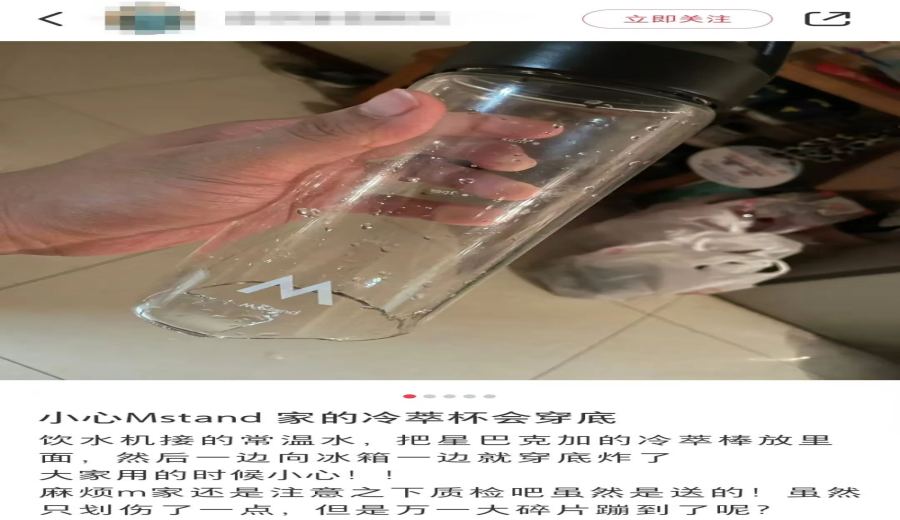
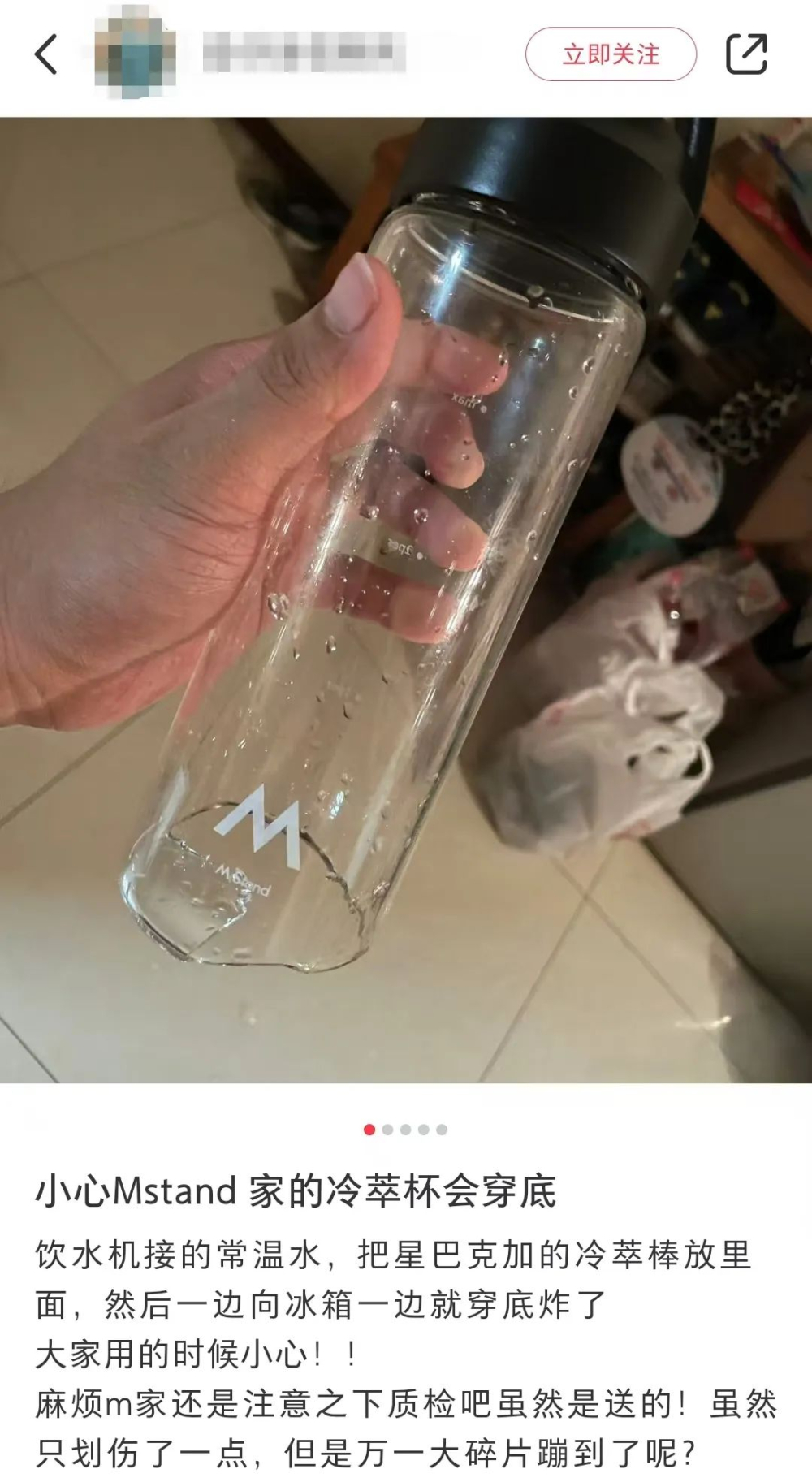
Some consumers reported that the pitcher’s bottom suddenly cracked while holding cold brew liquid under normal use, with flying glass shards even causing hand injuries. More users mentioned that the bottle mouth or joint area broke unexpectedly—for example, one user was carrying a full pitcher when the mouthpiece suddenly snapped, causing the entire contents to spill and shatter. It’s worth noting that the pitcher is labeled as being made of ordinary glass,with a heat resistance limit of only about 50°C. The official recommendation is to use it only for cold drinks or cold brew, and to avoid impacts or uneven pressure.
Despite this, many users who reported issues emphasized that they only used room-temperature water for cold brewing and handled the process with care, never pouring in hot water or exposing it to high temperatures. One customer who purchased the set on the first day of sale mentioned that the evening they poured the cold brew pack and cold water into the new pitcher, they heard an unusual sound when screwing on the lid. Upon closer inspection, they found a crack had already appeared at the bottle mouth. These cases suggest that the problem may not stem from high temperatures or external force, but could involve material or manufacturing defects.
In fact, this isn’t the first time Mstand’s peripheral products have faced quality concerns. The previously released “basket bag,” which sold well due to its resemblance to a luxury brand’s design, was found by many users to have handles that broke easily—even after just one or two uses—earning it the nickname “a hundred bucks for two days of joy” among netizens. The latest cold brew pitcher issue has reignited discussion, highlighting that while the brand pursues eye-catching designs, it still needs to improve its oversight of product durability and safety.
When selecting a glass cold brew pitcher, experts recommend prioritizingheat-resistant borosilicate glass, which has a low thermal expansion coefficient and can withstand greater temperature variations, reducing the risk of cracking due to thermal shock. Additionally, the joint between the bottle mouth and the pitcher body should be smooth and flawless, with a sturdy structural design to prevent breakage from uneven pressure. Users should also avoid sudden temperature changes and handle the pitcher gently, particularly minimizing stress on the bottle mouth when carrying it.
Based on multiple cases, consumers generally hope brands will not only focus on aesthetics when designing peripheral products but also strictly control material and manufacturing quality—especially for fragile materials like glass and ceramics, ensuring structural strength and usage safety to prevent accidental injuries during normal use. For coffee lovers who enjoy making cold brew at home, choosing a durable and safe cold brew device is undoubtedly a key prerequisite for enjoying ice-cold coffee.
The above content is compiled by CoffeeHunters, a coffee news website.


