







Introduction:Eritrea announced the suspension of all Ethiopian Airlines flights to and from the country starting at the end of September, raising concerns about the export and transport of Ethiopian coffee and other goods. This article delves into the background of the flight suspension, official statements, potential geopolitical factors, and explores its actual impact on Ethiopia’s coffee export channels, helping readers understand the challenges facing the coffee industry amid current global supply chain shifts.
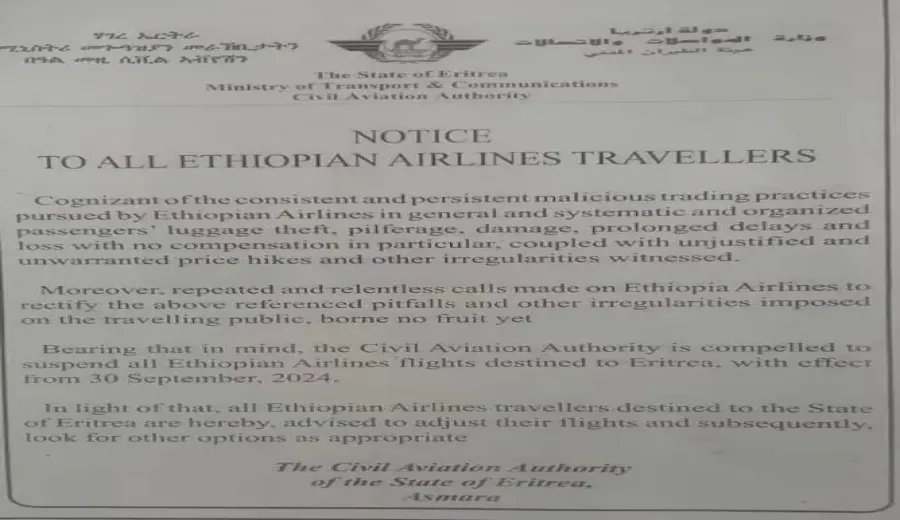
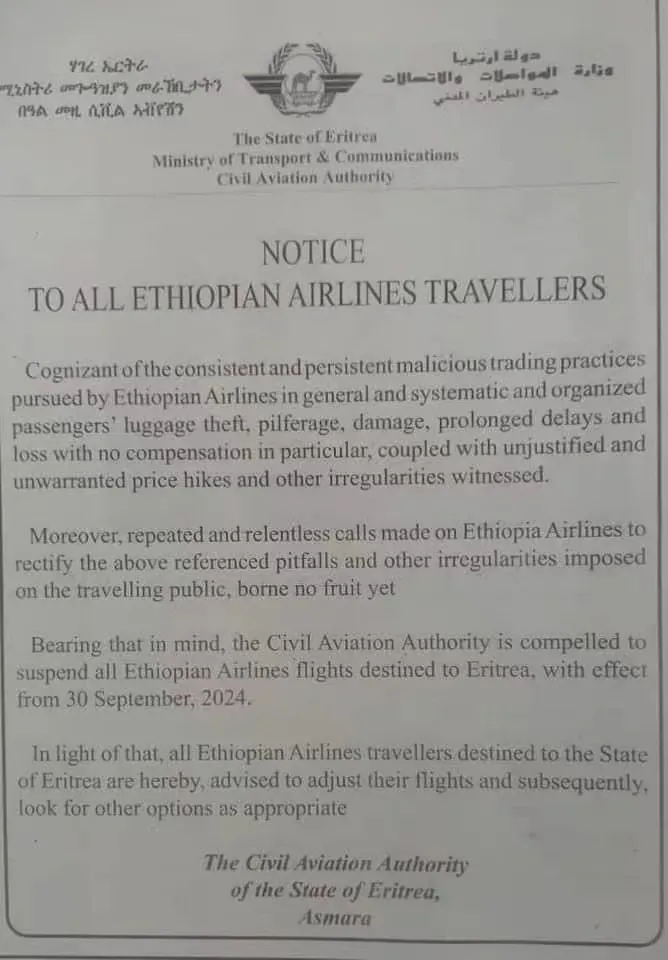
On July 24, the Eritrean government announced that, starting from September 30, 2024, it would completely suspend all Ethiopian Airlines flights to and from the country. The official reason given was accusing Ethiopian Airlines of “malicious commercial practices,” including issues such as lost baggage, damaged cargo, severe flight delays, and unreasonable fare increases. Despite repeated demands from Eritrea for improvements, the airline allegedly took no effective measures, leading to the eventual decision to halt flights.
According to a statement signed by the Director General of Eritrea’s Ministry of Transport, Communications, and Information Technology, the flight suspension was a carefully considered decision. It also advised passengers originally planning to travel to Eritrea via Ethiopian Airlines to adjust their travel plans in advance and choose alternative transportation methods. An official letter sent to Ethiopian Airlines’ regional manager also clearly stated that all flights to Eritrea would be suspended as of September 30.
In response, Ethiopian Airlines said it had received notification from the Eritrean Civil Aviation Authority but had not yet made the specific reasons public. The airline only stated that it is actively communicating with the relevant party to seek clarification and hopes to resolve the issue in a friendly and swift manner. Notably, Ethiopian Airlines previously operated ten regular weekly flights to Asmara, the capital of Eritrea. At one point, the Eritrean government even requested increasing the frequency to fifteen flights per week, but shortly afterward, it suddenly announced the decision to suspend flights.
From a historical perspective, Eritrea was originally part of Ethiopia until it declared independence through a referendum on May 24, 1993. However, the two countries fought a fierce war from 1998 to 2000 due to a border dispute, and peace was not restored until 2018, when the border was reopened. But the war caused Ethiopia to lose its access to the sea, becoming a landlocked country, which has long put pressure on its import-export-dependent economy. Nowadays, Ethiopia mainly relies on the nearby port of Djibouti for cargo transport, especially for the export of high-value goods such as coffee.
Some analysts have pointed out that the flight suspension may also be related to the tense relations between Ethiopia and another neighboring country, Somalia. Earlier, Ethiopian Prime Minister Abiy Ahmed signed a memorandum of understanding with the leader of the Somaliland region in northern Somalia, hoping to gain access to the ports of Somaliland. However, this agreement came with a condition — Ethiopia would have to recognize Somaliland’s independence, which has not been officially fulfilled to this day. The Somali government strongly opposes the memorandum, viewing it as a violation of national sovereignty, while Eritrea has grown increasingly close to the Somali government, with the Somali Minister of Defense having visited Eritrea three times this year alone.
Currently, Ethiopia is not only facing internal conflicts and ongoing tensions with multiple neighboring countries, but despite recently strengthening trade cooperation with the United Arab Emirates, its overall export environment remains challenging. In particular, the Red Sea crisis has disrupted international shipping, and the Port of Djibouti, as Ethiopia’s main cargo hub, has also been severely affected recently. Reports indicate that MSC, which accounts for 80% of the Port of Djibouti’s business, has suspended operations, resulting in serious congestion of goods, including Ethiopian coffee, at the port.
Even more problematic is that neither Eritrea nor Somalia is willing to provide port support, and alternative ports such as those in Kenya are not only much farther away, but also come with high transportation costs and uncertain delivery timelines. For Ethiopia’s coffee industry, the uncertainty in export logistics not only affects order fulfillment but could also undermine its competitiveness and reputation in the global specialty coffee market.

Overall, the Eritrean flight suspension is not just an adjustment in air transport, but a reflection of the broader deterioration in Ethiopia’s overall foreign trade environment. Coffee, as an important economic crop and key export commodity of the country, its supply chain stability will directly impact farmers’ incomes, export value, and the stability of global coffee supply. Over the coming months, how Ethiopia breaks through its logistics bottlenecks and ensures the smooth export of high-demand goods such as coffee will be a focal point of continued industry attention.
The above content is compiled by CoffeeHunters, a coffee news website.


