







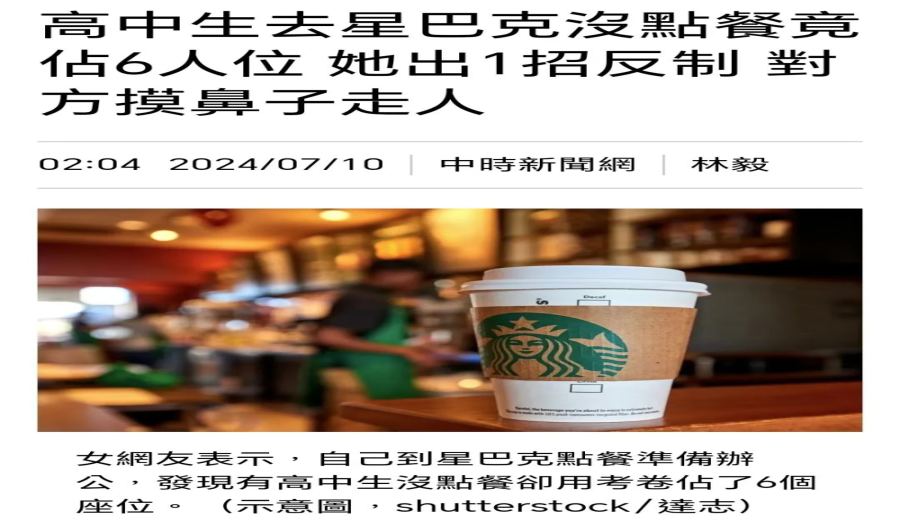
Introduction:Recently, Starbucks introduced a new policy of 15-minute seat reservation for in-store seating and actively assists customers with table-sharing when the store is full. This measure stems from a discussion triggered when a customer handed over an abandoned exam paper left by a seat-occupier to the counter. This article delves into the details of the new policy, examines its implementation effectiveness, and shares practical seat usage tips to help you more smoothly find a seat during busy hours.
Starbucks has officially implemented a new measure in response to the common issue of seat occupation in its stores: if customers are waiting for companions, the seat reservation time is limited to 15 minutes; when the store is fully occupied, staff will proactively assist customers with table-sharing arrangements. The introduction of this policy originated from an earlier incident where a female customer at Starbucks noticed several individuals occupying seats with personal belongings but not actually using them, including exam papers scattered on the tables.
The customer took the exam papers to the counter, and the staff promptly cleared the occupied seats, allowing other customers in need to sit down. It is understood that once the owner of the exam papers learned their items were being held, the seat-occupiers chose to leave the store. This incident sparked heated discussions on social media platforms, with many netizens praising the customer’s approach, deeming it satisfying and justified.
However, although some customers choose to handle seat occupation themselves, most consumers still hope that the brand will introduce more effective management measures rather than leaving it to customers to resolve each time. Recently, some netizens noticed a new notice appearing in certain Starbucks stores, clearly stating that due to limited seating resources, if customers are waiting for friends, the seat reservation time is limited to 15 minutes; when the store is full, staff will proactively assist with table-sharing services.
This notice surprised many netizens, who felt that Starbucks was finally addressing the long-standing issue of seat occupation. Most consumers expressed support for the policy, hoping it would effectively alleviate the shortage of seats in stores and ensure that every customer entering the store could have a place to sit. However, some netizens are concerned that this notice may only apply to specific stores, rather than all Starbucks branches across Taiwan.
In response to public inquiries, Starbucks officially stated that the notice indeed represents the latest policy for physical stores, with specific execution details subject to individual store notices. The company further explained that due to varying conditions across stores, whether to post the notice is at the discretion of staff based on the actual situation, which is why not all stores display this “limited-time seat reservation” sign.
Starbucks explained that the introduction of this policy is mainly in response to numerous past complaints about non-consuming seat occupation, aiming to uphold customer rights through gentle reminders and enhance the overall in-store experience. However, some consumers remain skeptical about the actual effectiveness of the new policy, believing that a single notice may have limited impact on inconsiderate customers.
Some netizens worry that even if staff intervene or ask occupants to leave, some customers may still refuse to cooperate, potentially leading to disputes or complaints. Therefore, it has been suggested that Starbucks consider implementing a minimum spending requirement or a paid seating policy, and roll out such regulations across all Taiwan stores, using a more mandatory approach to reduce seat occupation while also ensuring staff can provide higher-quality service.
In summary, Starbucks’ newly introduced 15-minute seat reservation rule is a proactive attempt to tackle the issue of seat occupation in its stores. Although its effectiveness remains to be seen, for consumers, understanding and making good use of these new policies, along with some practical seat-finding tips, will help more smoothly secure a seat during busy times and enjoy a quality cup of coffee.
The above content is compiled by CoffeeHunters, a coffee news website.


