







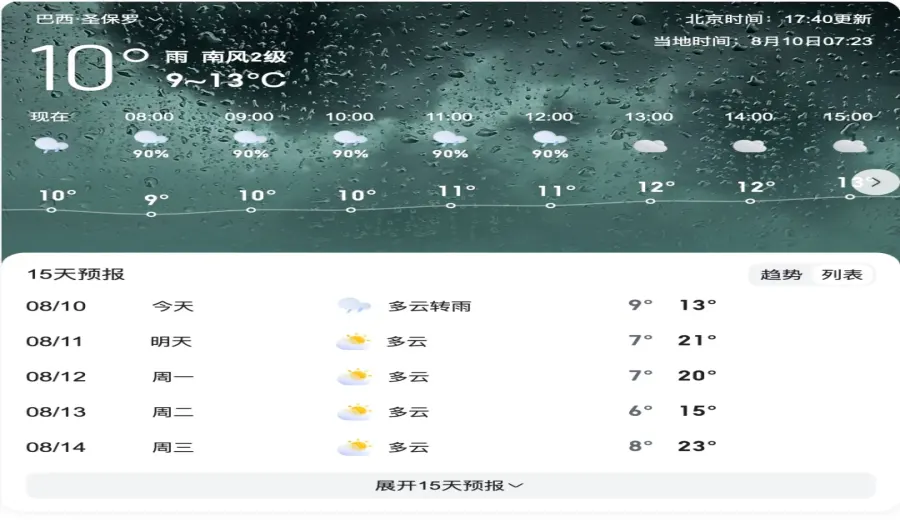
Introduction:A rare polar cold snap recently hit southern Brazil, causing temperatures in several major coffee-growing regions to plummet, with some areas experiencing drops of up to 14°C. Frost has become frequent, and localized snowfall may also occur. This cold front not only threatens local crops but, with the anticipated return of La Niña, is expected to exacerbate severe weather conditions, further impacting global coffee supply and price trends. This article provides an in-depth analysis of the affected areas, risk zones, and market ripple effects.
Recently, a powerful polar cold air mass formed in southern Brazil and rapidly spread to multiple regions across the country, causing sharp temperature drops in some areas—with the largest decline reaching 14°C—along with significant frost and snowfall. As the world’s largest coffee producer, Brazil’s southeastern key coffee-growing regions are now caught in the double whammy of low temperatures and frost, a situation that is causing serious concern.
According to the latest data released by Brazil’s meteorological department on August 9, a new wave of cold air has gathered in southern Brazil and is expected to cause a significant drop in maximum temperatures in several state capitals over the coming days, with temperature differences in some areas reaching as much as 14°C.
This polar-originating cold air mass is currently advancing southeastward. Due to Brazil’s overall dry and hot climate so far this year, this cold front has become the first strong cold air system this year to comprehensively cover the central-western and southeastern states.
Monitoring data from Brazil’s National Institute of Meteorology shows that noticeable temperature changes have already occurred in the southern and southwestern parts of Mato Grosso do Sul, as well as the southern and southeastern regions of São Paulo, and are gradually spreading to other central-western states, other parts of São Paulo, Rio de Janeiro, and Minas Gerais. This cold wave will envelop most of Brazil, with even some northern areas not spared, as significant cooling is expected across the majority of the country.
In particular, temperature drops are exceptionally sharp in certain states. For example, some areas in Paraná may see minimum temperatures drop to as low as 2°C, while parts of São Paulo could reach 6°C, with actual temperatures in mountainous regions potentially even lower, possibly challenging historical low records.
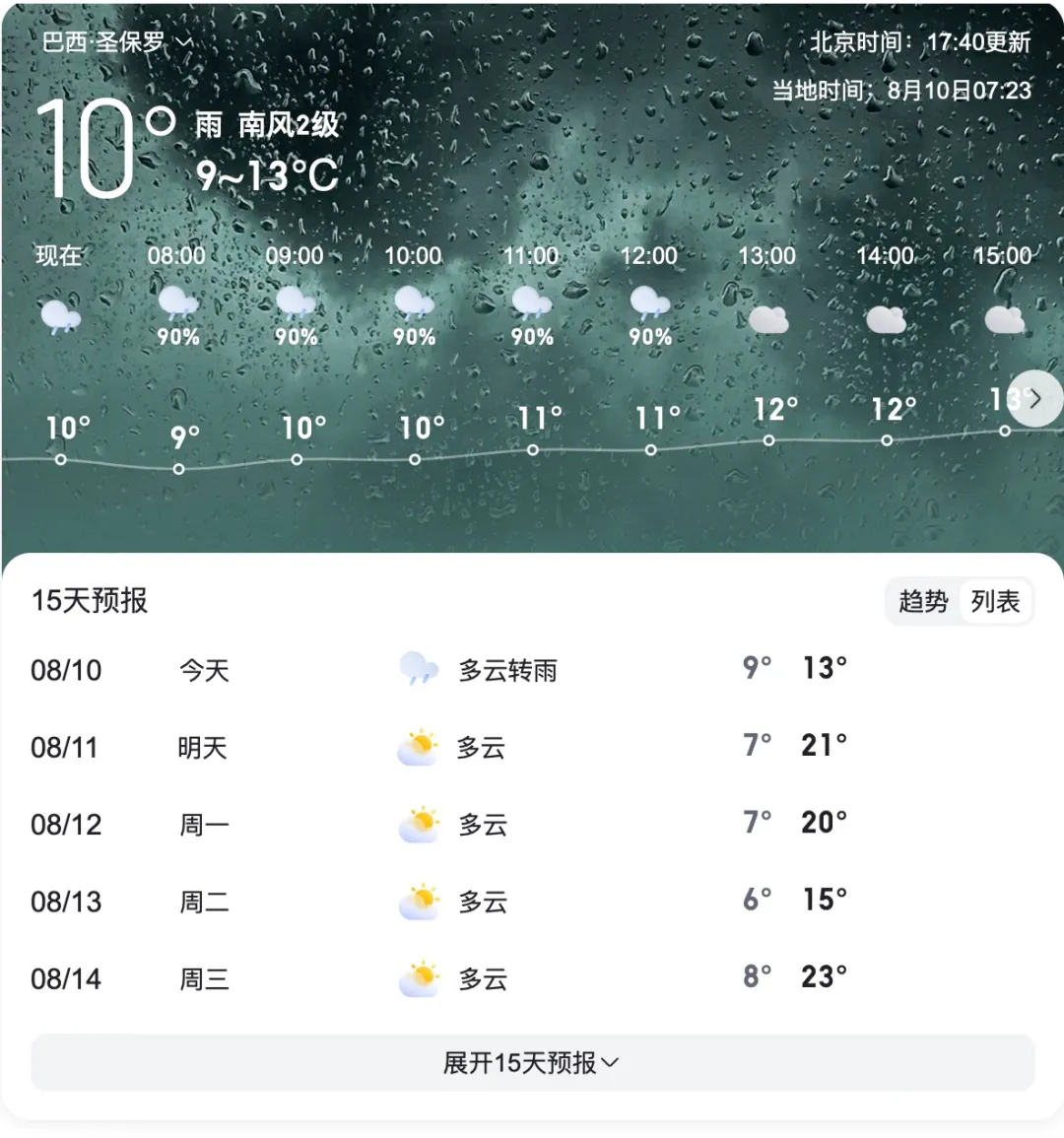
At the same time, Brazil’s National Institute of Meteorology has issued warnings to the public, noting that as the cold, dry air continues to advance, the likelihood of frost will significantly increase. This is because the cold air mass raises the chances of rainfall in the southern and southeastern regions during winter, thereby creating favorable conditions for frost formation.
Currently, the central-eastern and southern parts of Mato Grosso do Sul in southern Brazil, the vast majority of São Paulo, certain areas of Minas Gerais, and the mountainous regions of Rio de Janeiro have been designated as high-risk zones for frost. Additionally, mountainous areas in Rio Grande do Sul and Santa Catarina may also experience localized snowfall, posing additional challenges to local agricultural activities.
In fact, even before this cold wave arrived, Brazil was already facing lower-than-expected coffee yields due to prolonged drought. Now, what worries local producers even more is the impending return of the La Niña weather phenomenon. According to observational data from Brazil’s meteorological department, sea surface temperatures in the central and eastern equatorial Pacific are continuously declining, and this downward trend is expected to persist for several months, indicating that the development of La Niña is gradually strengthening, with a possible official emergence as early as mid-to-late August.
Once La Niña returns, it will further worsen the adverse weather conditions in Brazil’s southeastern regions—not only is rainfall likely to decrease, but temperatures will also remain consistently low, leading to more severe frost. The southeastern region is home to Brazil’s primary coffee-growing areas, and this dual blow of low temperatures and frost is bound to have a significant impact on both the yield and quality of Brazilian coffee.
As the world’s largest coffee producer and exporter, Brazil’s extreme weather event has quickly been reflected in the international coffee futures market. News of the cold snap caused immediate surges in both Arabica and Robusta coffee futures prices. Furthermore, according to the July Coffee Market Report published by the International Coffee Organization, the coffee price index in July rose by 48.9% compared to the same period last year. Even though coffee export volumes increased by 3.8% compared to the previous year, prices remained high. With multiple countries also facing challenges in coffee production and the added uncertainty brought by the upcoming La Niña, there is continued pressure for coffee prices to rise further in the future.
The above content is compiled by CoffeeHunters, a coffee news website.


