








Introduction:To brew a well-balanced espresso, the key lies not in the coffee beans but in how you distribute and tamp the grounds. If these two steps are not done properly, not only will extraction efficiency suffer, but channeling is also likely to occur—resulting in espresso that’s either too sour or too bitter. This article takes an in-depth look at the principles, common mistakes, and practical techniques of coffee distribution and tamping to help you improve extraction consistency and craft smoother, more layered espresso shots.
Many people assume that crafting a balanced espresso hinges on the choice of coffee beans or grind size. In reality, however, distribution and tamping are the core steps that determine extraction uniformity. These seemingly simple actions, if mishandled, can easily trigger channeling—causing some coffee particles to be over-extracted while others are under-extracted—ultimately leading to imbalanced flavors, swinging from overly acidic to overly bitter.
This article starts with fundamental principles, detailing the purpose of distribution and tamping, common errors, useful techniques, and actionable tips to help you consistently pull professional-grade espresso shots at home.

Distribution: Ensuring Even Coffee Ground Dispersion to Prevent Channeling
Both distribution and tamping aim to prevent "channeling." Channeling refers to the way hot water, under 9 bar of pressure, chooses the path of least resistance and rushes through instead of evenly saturating all coffee grounds. When coffee grounds are unevenly distributed in the portafilter—such as piled up like a small hill or unevenly to one side—it naturally creates pathways for the water to “take shortcuts.”
In such cases, the coffee grounds along these channels get over-extracted quickly, releasing excessive bitterness and sharp acidity, while areas untouched by water remain under-extracted. The final shot ends up unbalanced—too sour or too bitter. Therefore, the first step in distribution is to evenly spread out the coffee grounds that have landed in the portafilter, avoiding any localized clumping.

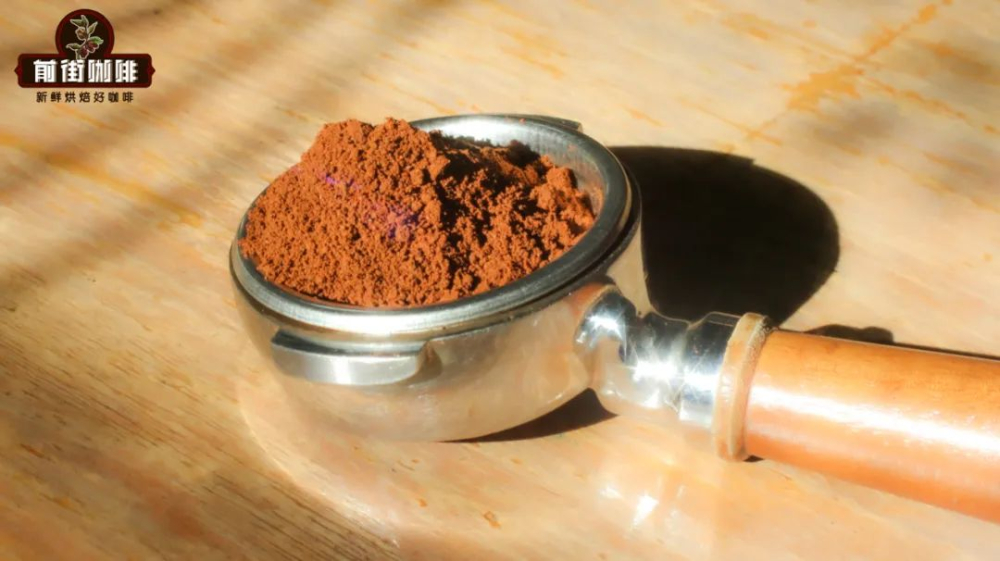
Many people let the grinder drop the coffee grounds directly into the portafilter basket, often resulting in a mound that is high in the center and low around the edges—or noticeably uneven left to right. Using a distribution tool right away in such cases often proves ineffective, or may even worsen the problem.
This happens because when the distribution tool is pressed down, it exerts downward force on the coffee grounds, compacting the already dense central mound first, while the looser outer grounds are merely smoothed over. This leads to a puck structure that is “loose on the outside, tight in the center.” Though the surface may appear level, internal channels are still evident, which can easily cause irregular flow paths during extraction.
Additionally, even if the surface of the coffee bed looks even, pressurized hot water will still tend to flow through the gaps between the puck and the portafilter wall rather than penetrating the entire bed. This is why coffee often flows from the edges toward the center of the portafilter during extraction, leaving the middle section of the puck potentially under-extracted.
To improve this, it is recommended to first use your fingers to gently scrape the central mound from side to side after dosing, evening it out before using a distribution tool for uniform spreading. For an even better result, you can also use a distribution needle to effectively break up coffee clumps and create a fluffier, more consistent bed. Another option is to use a dosing funnel, which allows coffee to slowly cascade into the center of the portafilter from the sides, reducing the difficulty of manual distribution. However, for shops with high volume demands, this method might be time-consuming, so choose the approach that best fits your needs.
Tamping: Stabilizing the Coffee Bed to Guide Even Water Flow
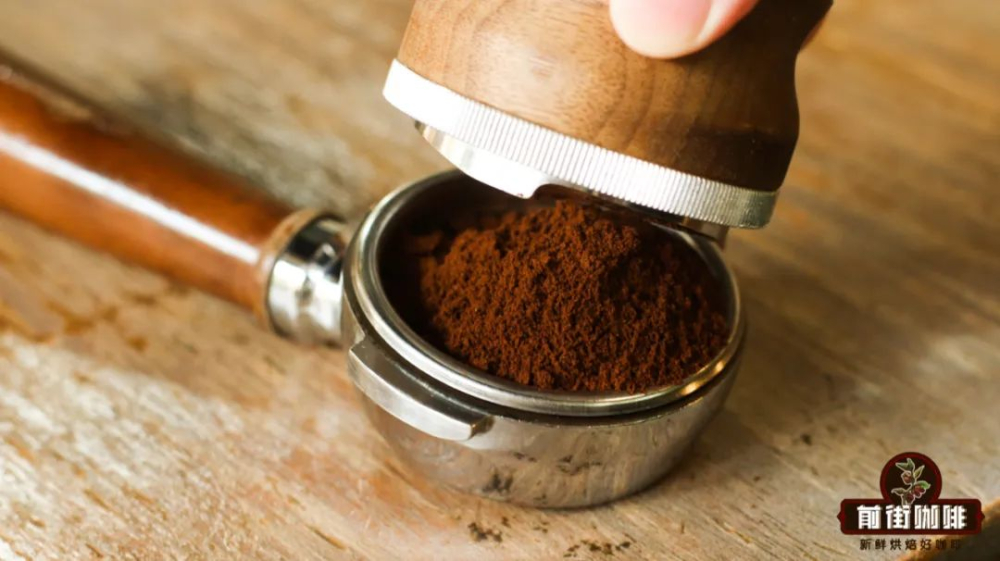
Once the coffee grounds are evenly distributed, the next step is tamping. The goal of tamping is to compress the coffee grounds tightly together, forming a structurally stable puck that prevents the high-pressure water from easily disrupting the bed and causing uneven extraction.
The key to tamping lies in applying even pressure with proper technique and the correct posture. Many people tamp with their arm not vertical or apply uneven force, leading to inconsistent puck density—some areas overly compressed, others too loose—which in turn affects how water flows through.
A common tamping method is to hold the tamper handle firmly with the thumb and index finger on either side, while the remaining three fingers and palm stabilize the base. Keep your arm vertical to the portafilter and apply steady downward pressure. While the motion seems straightforward, mastering it requires continuous practice and feel to ensure consistent tamping quality each time.
If tamping is done improperly, even a well-distributed coffee bed can end up with a loose structure, allowing water to concentrate through weaker spots and form new channels. Therefore, tamping is not just about pressing hard—it’s a critical step in ensuring the overall extraction process runs smoothly.
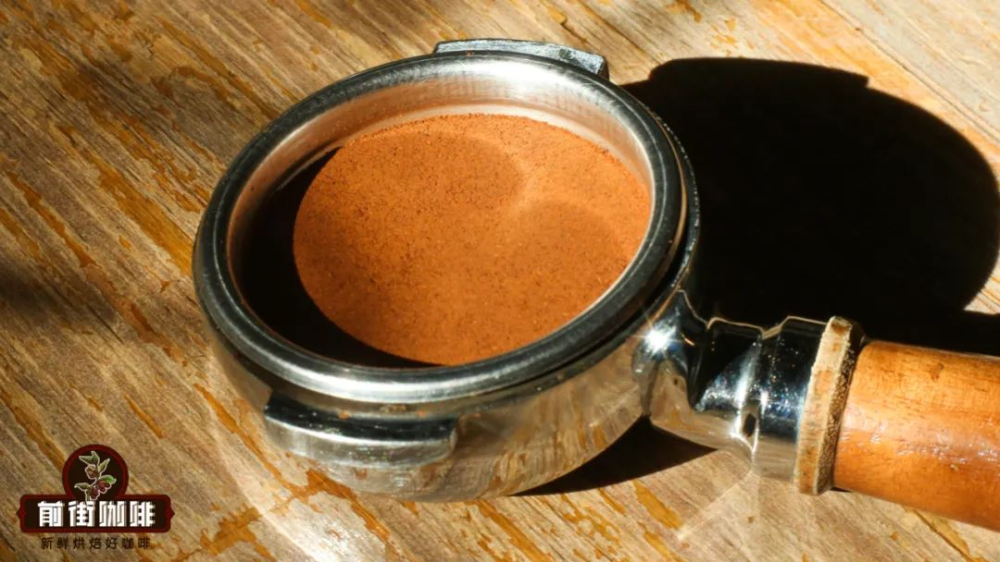
In summary, brewing a balanced and smooth espresso relies heavily on two essential steps: distribution and tamping. With proper distribution techniques to avoid uneven coffee layers, and stable, even tamping to create a solid puck structure, you can significantly reduce the chances of channeling—ensuring every drop of espresso showcases the full range of flavors and aromas it’s meant to deliver.
The above content is compiled by CoffeeHunters, a coffee news website.


