








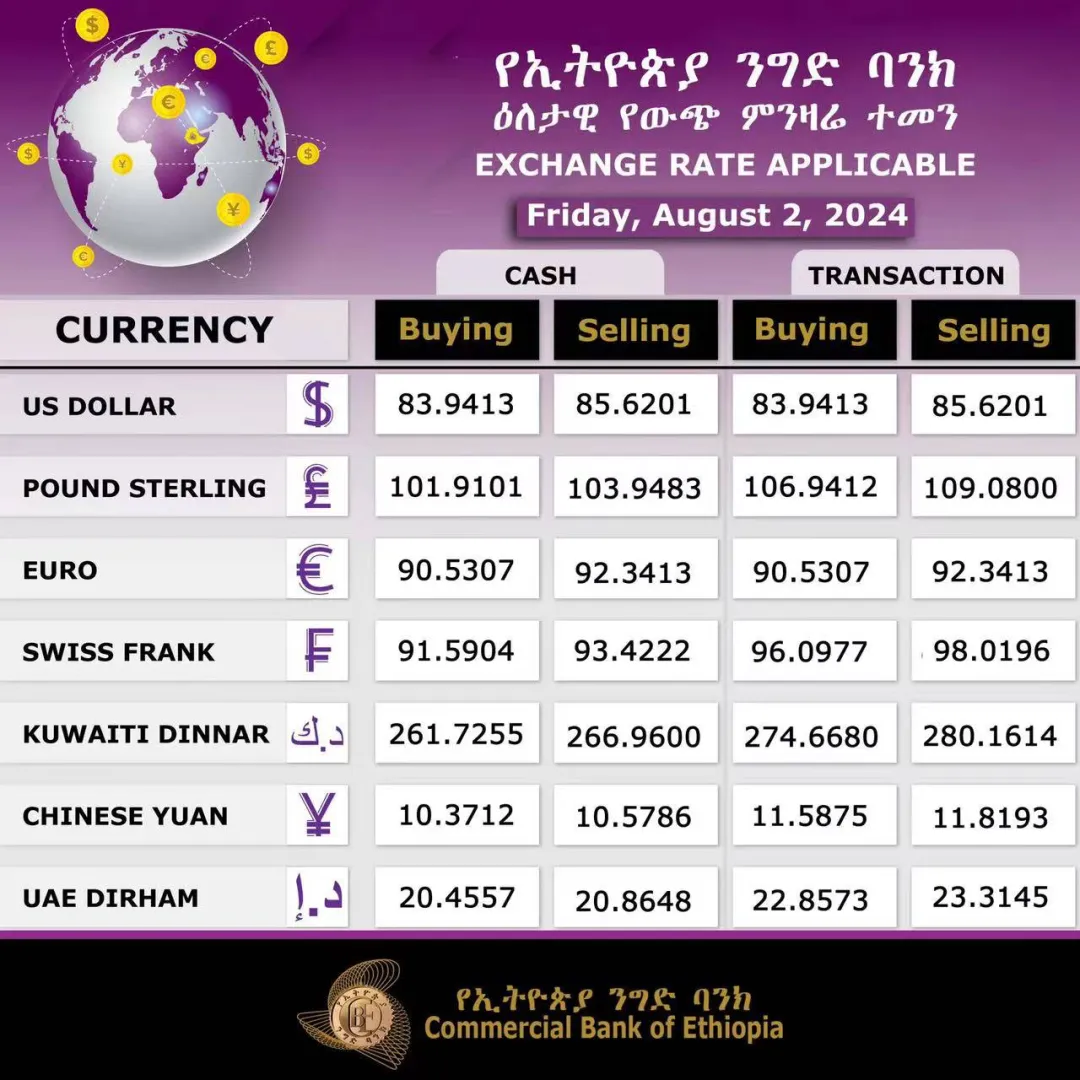
Introduction:Since Ethiopia implemented a new foreign exchange policy in late July, the birr-to-dollar exchange rate has plummeted within just a few days. By August 2, it had fallen to 83.94 birr per dollar, triggering soaring prices and putting pressure on people's livelihoods. Although currency depreciation provides short-term benefits for agricultural exports such as coffee, climate disasters, shipping crises, and domestic unrest continue to cast a shadow over the industry’s future. This article delves into the real impact of sharp exchange rate fluctuations on the local economy, prices, and the coffee sector, while also exploring the challenges and responses amidst changing conditions at origin.
Since Ethiopia introduced its new foreign exchange policy on July 31, the birr-to-dollar exchange rate has been adjusted downward three times within just three days, dropping to 83.94 birr per dollar by August 2, marking a recent low. This dramatic volatility has placed heavy pressure on local residents, with some citizens worried that if the trend continues, even staple foods such as injera (Ethiopian flatbread) may become a luxury.
In response to the rapid fall in the exchange rate and rising prices, the Addis Ababa Trade Bureau acted swiftly, announcing on August 1 sanctions against 387 businesses suspected of price gouging. The bureau pointed out that some businesses took advantage of the relaxation of foreign exchange controls and currency depreciation to improperly raise prices and failed to clearly display selling prices, constituting malicious profiteering. The bureau warned that if such behavior continues, stricter measures including revocation of business licenses will be imposed to ensure market order and protect consumer rights.
Despite official emphasis on maintaining economic stability, this round of foreign exchange reforms has sparked considerable skepticism. The opposition party, the Ethiopian Citizens for Social Justice Party, publicly criticized the government’s move to let the market determine the exchange rate at this time as “extremely risky and poorly timed.” The party stated that Ethiopia has a weak production base and is highly dependent on imports; liberalizing the exchange rate will exacerbate imported inflation, plunging the public into greater economic hardship, and the government must take full responsibility for this.
Looking back to July 31, the Ethiopian government announced a series of reforms to the foreign exchange system aimed at alleviating long-standing foreign exchange shortages, enhancing export competitiveness, and attracting foreign direct investment. However, once the policies took effect, the birr exchange rate dropped sharply, falling to 83.94 birr per dollar within just a few days, leading to an across-the-board rise in the prices of daily necessities.
As the country’s main imports include vehicles, petroleum, cooking oil, and fertilizers, the depreciation of the currency directly pushed up import costs, which in turn drove up prices. Moreover, Ethiopia’s economy is primarily agriculture-based, with over 85% of the population engaged in farming or animal husbandry. The demand for agricultural inputs such as fertilizer is high, and rising costs are directly reflected in farming expenses. Although the government has pledged to provide some subsidies and price controls, in reality, the prices of many essential goods, including food and fuel, have surged by 50% to 100%, increasing the burden on consumers and also affecting the production costs of crops like coffee.
Even more challenging is the fact that Ethiopia’s coffee-growing regions rely on stable climates, but natural disasters have been frequent recently. On July 29, a major landslide occurred in the central Sidama zone of the important coffee-producing Sidama region, resulting in six deaths and significant property damage. In addition, the area continues to experience heavy rainfall, prompting the National Disaster Risk Management Commission to issue risk alerts, which could further impact coffee harvests.

On the export front, Ethiopia is highly reliant on maritime transport, but the Red Sea shipping crisis remains unresolved. In July, seven ships were attacked, and shipping volumes at key hubs such as the Port of Djibouti have dropped sharply, driving up transportation costs. Although currency depreciation makes birr-denominated coffee more competitively priced on the international market, providing a short-term boost to exports, the industry is concerned that variables such as natural disasters, internal unrest, and unstable shipping could lead to a sharp reduction in available coffee stocks for export in the future, causing supply tightness.
Notably, some coffee traders are accelerating the liquidation of their inventories, taking advantage of the birr’s depreciation to secure more foreign exchange. In the short term, the depreciation of the local currency indeed helps boost export earnings from coffee, but industry insiders warn that the temporary subsidies provided by the government are not sustainable. As production costs gradually rise, quotations for the new coffee season will inevitably increase, which may ultimately dampen the purchasing willingness of international buyers.
Overall, although this round of foreign exchange reform and the sharp depreciation of the birr bring short-term benefits to Ethiopia’s major foreign exchange-earning products such as coffee, sesame, beans, and fresh flowers, in the long run, climate risks, logistical bottlenecks, and the fragility of the economic structure will remain underlying concerns for the continued development of the industry.
The above content is compiled by CoffeeHunters, a coffee news website.


