







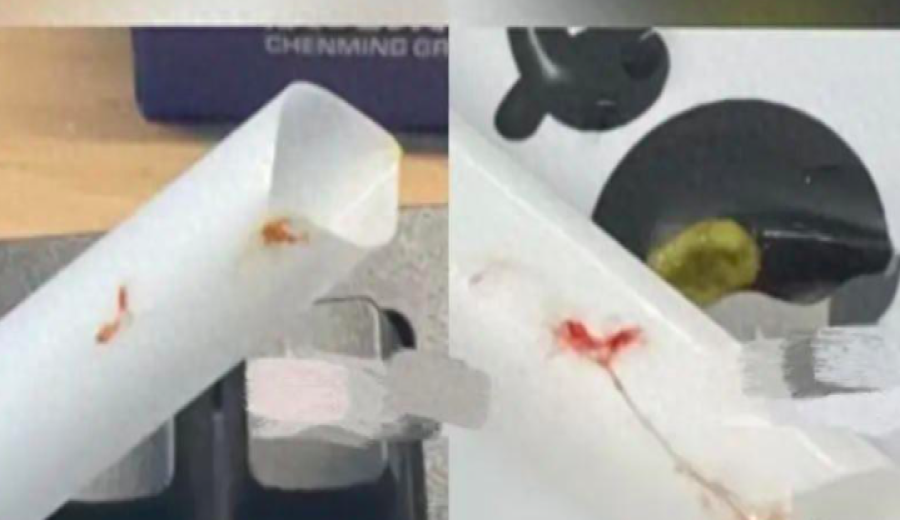
Introduction:A consumer accused Guyiming Tea of serving a drink with a red floating substance resembling blood-streaked phlegm, sparking public concern over the hygiene of freshly prepared beverages. Local market supervision authorities conducted an in-depth investigation into the sources of ingredients, storage conditions, and employee procedures, ultimately clarifying the truth behind the incident. This article details the investigation process and key findings to help readers understand the critical aspects of food safety management in freshly made drinks.
Recently, a consumer shared their experience on social media, claiming to have found a red floating object in a bubble tea purchased from Guyiming, suspecting it to be “blood-streaked phlegm.” The incident quickly triggered widespread public discussion. The customer stated that on July 21, they bought three cups of bubble tea, one of which was found by their child to contain a foreign substance. At first glance, it resembled watermelon flesh, but upon closer inspection, they suspected it was a mucous-like blood-streaked phlegm. As a hospital employee, they asked a colleague from the laboratory to examine it under a microscope, which revealed a large number of red blood cells.
Out of food safety concerns, the customer posted the incident on social media and simultaneously filed complaints with the police and the 12315 platform, prompting the relevant departments to initiate an investigation. This incident once again brought the food hygiene of freshly prepared beverages into the spotlight.
Faced with growing public scrutiny, Guyiming responded swiftly on July 25, stating that they had retrieved surveillance footage from the involved store and carefully reviewed the entire process—from preparing the ingredients and making the drink to serving it. The investigation found that employees wore masks throughout the operation, and no violations or signs of foreign objects being mixed in were observed. Subsequently released surveillance footage also confirmed that the staff had no unusual behavior while making the drink. Notably, after Guyiming’s response, the netizen voluntarily deleted their original complaint post.
Today, the local market supervision bureau issued an official report detailing the investigation. Investigators inspected the involved store’s business license, ingredient sources, and storage conditions on-site, confirming that the main components of the “Passion Fruit Duo” drink—tapioca pearls, coconut jelly, passion fruit syrup, and green tangerine—were all uniformly distributed by the headquarters. Relevant documentation was complete, no foreign objects or sensory abnormalities were found, and the storage environment met standards. The purified water used in the preparation process was treated by a water purification device, meeting hygiene requirements. In addition, the cleanliness of the processing area complied with regulations, all employees held valid health certificates, and none had skin abrasions or bleeding.
The report further noted that although the customer raised concerns about a foreign object in the drink, they failed to provide key physical evidence, such as the straw containing the suspected substance or any remaining drink, making laboratory testing impossible. According to Article 24, Paragraph 1 of the Interim Measures for the Handling of Complaints and Reports on Market Supervision, the regulatory authorities ultimately concluded that it could not be determined that the drink contained the suspected “blood-streaked phlegm,” nor could it be confirmed to be related to the preparation process at the involved store.
This incident highlights the importance of ingredient management, employee hygiene, and operational procedures for freshly prepared beverage businesses. Consumers encountering similar situations are advised to properly retain any foreign objects and remnants of the drink to facilitate effective testing by the authorities. Meanwhile, businesses should continue to strengthen hygiene controls to ensure product safety.
The above content is compiled by CoffeeHunters, a coffee news website.


