








Introduction:Many consumers have been surprised to find that the desserts they enjoy with their coffee at cafés are actually common items from Sam’s Club, yet priced nearly ten times higher. This phenomenon has sparked widespread discussion. What drives cafés to adopt such a business model? This article delves into the cost structure, qualification requirements, and consumer expectations behind café operations, uncovering the truth and current state of the industry behind these high-priced desserts.
Recently, some customers dining at cafés were shocked to discover that what they thought were exquisite, in-house-made desserts were actually Swiss rolls and key lime cakes from Sam’s Club. These budget-friendly desserts, after minimal plating and decoration, were being sold at cafés for nearly ten times the original price, drawing strong complaints from customers.
It is understood that each box of Swiss rolls sold at Sam’s Club contains 16 pieces, with the whole box priced at approximately 59.8 RMB, averaging less than 4 RMB per piece. However, in some cafés, after adding a bit of whipped cream and powdered sugar, the price per piece can soar to 38 RMB — an astonishing price difference that many consumers find hard to accept.
In fact, many cafés do not have the qualifications to bake desserts on-site. Even if they wish to make their own, significant investment is required to create a baking space that meets food safety standards. For most operators primarily focused on coffee, unless they specialize in handmade desserts, they are generally unwilling to incur additional staffing and equipment costs, and instead opt to purchase finished products directly from suppliers.
When selecting dessert suppliers, café owners typically consider factors such as price, consistent quality, and broad appeal, aiming to offer visually appealing menu options while controlling costs. Sam’s Club desserts, known for their cost-effectiveness and consistent quality, have become one of the go-to sources for many cafés.
These desserts sourced from Sam’s Club usually arrive in good condition with presentable appearances. Cafés only need to add simple decorations — such as whipped cream or icing — to enhance their visual appeal and meet customers’ desire to take photos and share them online. Paired with a specialty coffee, such as a Yirgacheffe or Colombian single origin, although it elevates the overall flavor profile, it also further increases the total cost of the meal.
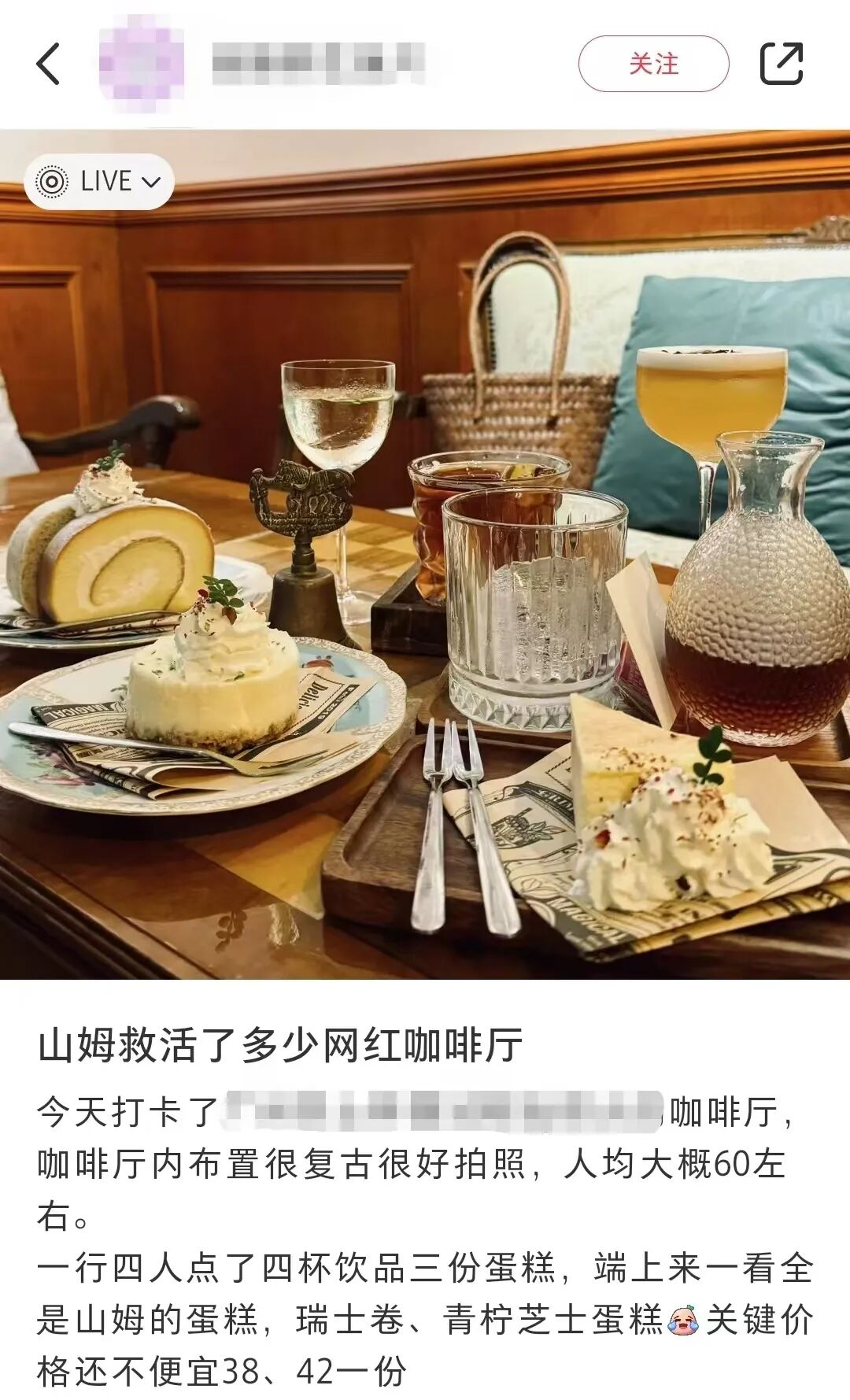
For consumers, visiting a café is often about enjoying relatively high-quality service and products. When they discover that the desserts they’re eating are actually just common supermarket items sold at much higher prices, a psychological gap is inevitable. This is especially true when cafés fail to disclose the origin of the desserts in advance, which can easily lead to customer disputes.
Industry insiders point out that high rents, utilities, and labor costs faced by cafés are also significant factors driving up product prices. Just as drinks in convenience stores may be sold at several times the price in five-star hotels, the pricing of café desserts is also influenced by the overall operational cost structure.
In summary, while selling Sam’s Club desserts may present a perceived value gap for consumers, from a business perspective, it is a practical choice aimed at balancing cost, supply stability, and consumer expectations. For consumers, understanding the reasons behind this practice can help them approach dining and beverage consumption more rationally and make choices that suit them best.
The above content is compiled by CoffeeHunters, a coffee news website.


