








Introduction:The Nyeri region of Kenya is an unmissable golden zone for specialty coffee enthusiasts worldwide. This article takes you through its historical background, geographical environment, and microclimatic conditions to deeply explore how Nyeri produces top-tier coffee beans with bright acidity and rich layers. Discover how this region, embraced by Mount Kenya and volcanic soils, creates its unique "terroir."
Kenyan coffee has long been renowned for its vibrant fruit acidity, complex layers, and rich aftertaste, and the Nyeri region is one of the finest representatives of this exceptional flavor. If you want to delve into the story behind a cup of premium Kenyan coffee—from colonial history to the perfect combination of natural conditions—Nyeri is definitely the best place to start.
The African continent is known as the "plateau continent" due to its high elevation, with an average altitude of about 750 meters and a generally warm climate. The equator runs through the center, with an annual average temperature exceeding 20°C. This environment, along with abundant water sources and diverse terrain, has made coffee a key economic crop in many African countries, with Kenya, Ethiopia, and Tanzania being particularly renowned globally. Kenyan coffee, with its unique juicy body and clear acidity, holds a distinctive place in the international market.
Interestingly, despite Kenya’s proximity to Ethiopia—the birthplace of coffee—its coffee industry developed relatively late. In the 19th century, French missionaries first introduced coffee to this land under British colonial rule. At the time, planting and trade were mostly monopolized by European colonists, while local residents could only serve as laborers. However, the British soon recognized the commercial potential of the coffee industry and gradually expanded cultivation. By the end of the 19th century, Kenya had established nearly 50 large coffee plantations.
Entering the 20th century, as tensions between the colonial government and indigenous people intensified, land reform policies were gradually implemented, and Kenyan locals were finally allowed to own their own coffee farms. Many European-owned lands were also redistributed. This shift not only laid the foundation for the smallholder farming model but also set the stage for the future diversity and quality of Kenyan coffee. In 1934, the government established a coffee auction system and introduced quality grading standards to elevate the overall industry. By the 1950s, related agricultural legislation further safeguarded farmers' land use rights, helping to stabilize production and income.
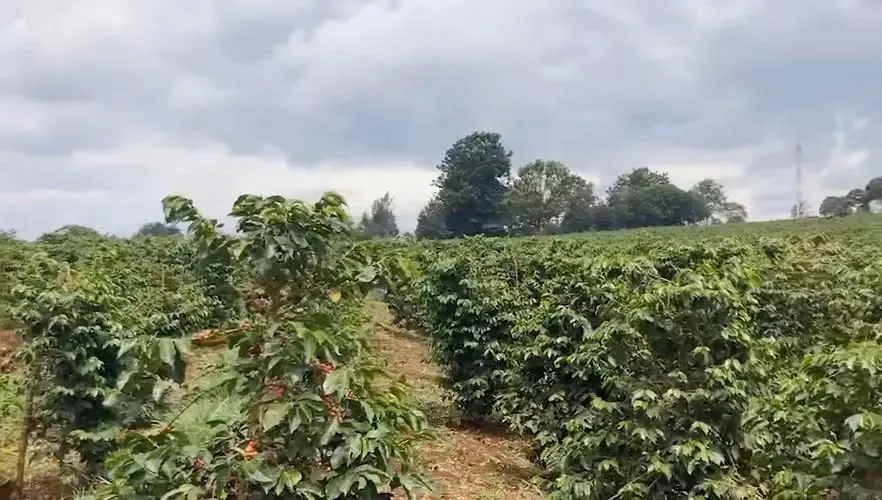
To understand the exceptional quality of Kenyan coffee, one must consider its unparalleled natural environment. Located in eastern Africa, Kenya is not only traversed by the equator but also shaped by the East African Rift Valley, creating diverse landscapes and microclimates. Most of the country lies in highland areas with an average altitude of over 1,500 meters, featuring a tropical monsoon climate. The highlands enjoy mild and pleasant weather, while the coastal regions are more humid and hot. The rainy seasons are concentrated from March to June and October to December, with annual temperatures ranging between 12 and 24°C—ideal for coffee cultivation.
The presence of numerous volcanoes not only adds to the landscape’s diversity but also enriches the soil with minerals. Among them, Mount Kenya, a dormant volcano located in the central highlands, stands at an impressive 5,199 meters, making it the second-highest peak in Africa. This mountain is not only a geographical landmark but also a key factor in nurturing renowned regions like Nyeri.
The Nyeri region is situated in central Kenya, adjacent to Mount Kenya and Mount Aberdare, while also being influenced by the eastern end of the East African Rift Valley. Its coffee farms are mostly distributed on slopes at altitudes of 1,200 to 2,300 meters. The high elevation creates significant day-night temperature variations, which help coffee cherries ripen slowly and accumulate richer flavor compounds. Meanwhile, the volcanic soils are rich in potassium, phosphorus, and various trace elements, complemented by clean water from melting alpine glaciers, all of which contribute to Nyeri coffee’s distinctive aroma and taste profile.
In summary, Nyeri’s status as a key region for premium coffee in Kenya and even globally is the result of its historical context, geographical conditions, and the meticulous efforts of its farmers. If you enjoy pour-over coffee with bright acidity, distinct layers, and a long-lasting aftertaste, the beans from the Nyeri region are definitely worth exploring and savoring.
The above content is compiled by CoffeeHunters, a coffee news website.


