








Introduction:Recently, a video of a CoCo employee eating watermelon while cutting it has sparked heated discussions among netizens, exposing hygiene loopholes in the back-of-house operations of food and beverage establishments. This article delves into the food safety risks behind the incident, discusses the importance of standardized back-of-house procedures, and offers practical advice on handling beverage ingredients to help readers understand how to avoid common hygiene pitfalls.
Recently, a video taken at a CoCo tea shop went viral on social media platforms. In the footage, an employee is seen preparing fresh watermelon as an ingredient for beverages but directly cuts off a piece of the flesh and eats it without wearing gloves, then continues to handle the remaining portion.
What may seem like a harmless act in a home setting crosses a food safety red line in the back-of-house operations of the food and beverage industry.Professional back-of-house operations require all staff who directly handle ready-to-eat food to wear gloves.This is to prevent saliva contamination or the risk of cross-contamination.
After the video was exposed, public reactions were mixed. Some consumers believed that the employee daring to eat the ingredients signified their freshness, even interpreting it as alternative proof of quality assurance. However, more people expressed concern that this behavior could lead tofood hygiene issues,especially since the employee continued to handle the ingredients without changing gloves, potentially contaminating the entire batch with saliva.
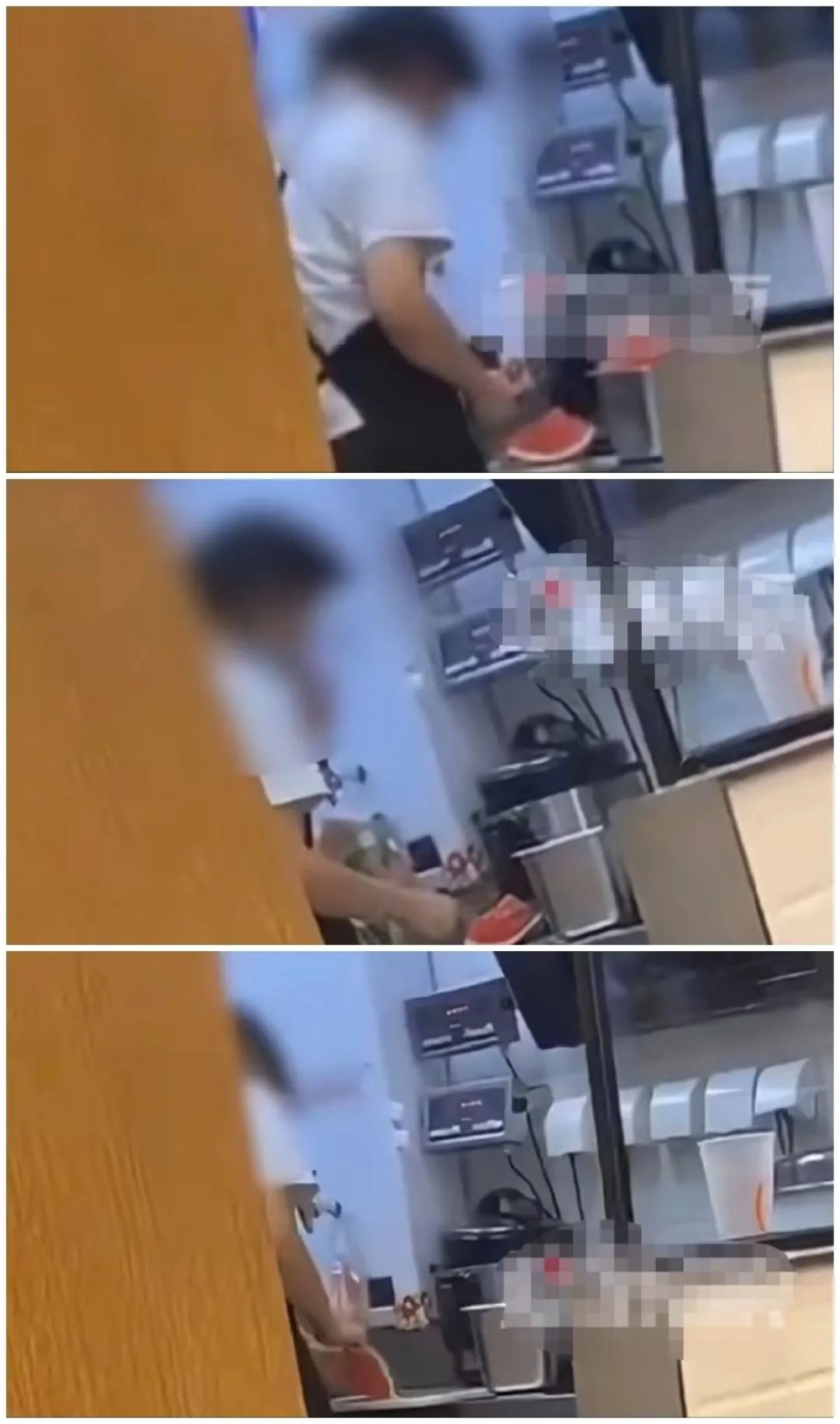
Industry experts pointed out that even if the employee’s intention was to test the sweetness or quality of the watermelon, such behavior still poses three major risks: first is therisk of saliva contamination,as the human mouth contains a large number of microorganisms; second isunfair distribution of ingredients,as employees might take the best parts for themselves first; and third isdamage to the company’s image,raising consumer concerns about hygiene management.
The store manager involved later responded that they had noticed the online video and were conducting an internal investigation, including reviewing surveillance footage and questioning the on-duty staff. However, as they had not received authorization from headquarters, they could not disclose the specific handling results. While this response shows that the business is taking the issue seriously, it also highlights thelack of implementation of standard operating procedures (SOPs)in reality.
Back-of-house hygiene management in the food and beverage industry has always been a focal point of consumer concern. Professional practices should include: thoroughly washing hands and wearing gloves before handling ready-to-eat food, using dedicated tools for taste testing rather than directly taking ingredients, and setting up separate tasting areas, among other basic measures. These standards not only ensure food safety but are also the cornerstone of maintaining brand reputation.
The above content is compiled by CoffeeHunters, a coffee news website.


