







Introduction:Luckin Coffee recently announced plans to open 50,000 convenience stores over the next three years, with an additional 8,000 outlets scheduled for the second half of this year, aiming to create a dense network where “there’s a Luckin within a hundred meters.” However, currently, the actual number of operational stores is just over 6,800, still far from the target. Faced with Luckin’s counterattack backed by 20,000 stores, the competition between the two has shifted from price wars to location battles. How will this “fratricidal” rivalry reshape the market landscape? This article takes an in-depth look at the expansion strategies and real-world execution of both major brands.
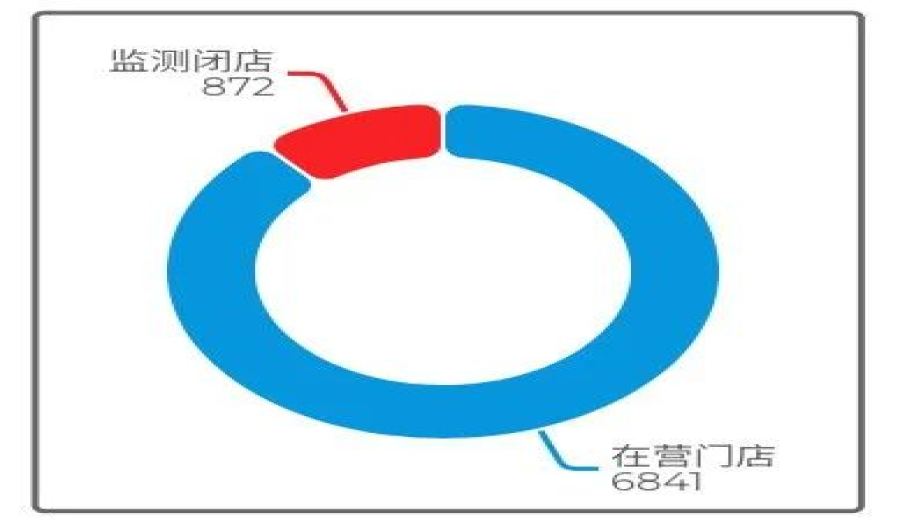
Luckin Coffee recently put forward an ambitious expansion plan: to reach 50,000 stores within three years, and to add 8,000 convenience stores in the second half of 2024, with the goal of making Luckin stores “within a hundred meters” of consumers. However, according to market monitoring data, as of the end of July 2024, the number of actually operating Luckin stores is only 6,841, with 872 already closed. The overall store count remains below 8,000, showing a significant gap from the target.
The backdrop to this expansion plan is the strong counterattack from its main rival, Luckin. As early as 2022, Luckin quickly gained recognition with its “9.9 RMB” affordable coffee strategy, often locating stores near those of Luckin, creating obvious “head-to-head competition.” Luckin then followed suit with price cuts, triggering an industry-wide price war that not only prompted major brands like Starbucks to adjust their strategies but also led to the closure of many small and medium-sized coffee shops.
However, prolonged price competition has placed a heavy burden on both sides. In early 2024, Luckin took the lead in adjusting its strategy, narrowing the scope of the 9.9 RMB discount and shifting the focus of competition to a “location battle.” It is understood that to curb Luckin’s expansion, Luckin has not only accelerated its penetration into lower-tier markets but has also densely opened stores in high-traffic areas such as office buildings, campuses, and residential communities in first- and second-tier cities.
Data shows that Luckin has added more than 7,754 stores in just six months, bringing its total store count to over 20,000, setting an unprecedented expansion speed in the industry. To seize potentially high-quality locations, Luckin is even willing to pay high rents to open directly operated stores just about 200 meters away from Luckin outlets, and encourages franchisees to set up new outlets within 500 meters of existing ones. While this move has effectively blocked Luckin’s expansion, it has also led to a decline in sales at some high-performing stores, with some even seeing their sales halved, further impacting Luckin’s “same-store sales” metric. Reportedly, this figure dropped by about 20% in the first quarter of 2024, with the second quarter outlook even less optimistic.
Faced with Luckin’s location blockade, Luckin’s expansion speed has been noticeably hindered, with its store count lingering around 6,000 for a long time. To break the deadlock, Luckin launched a low-barrier store model, “COTTI Express,” in May 2024. This model focuses on asset-light operations and can be set up within existing venues such as convenience stores and chain restaurants, occupying just a single counter space. Staff can undergo simple training to also handle coffee preparation, significantly reducing rental and labor costs. According to the brand, this model is highly adaptable to various scenarios and can flexibly integrate into diverse commercial environments.
Market sources indicate that within two months of launching “COTTI Express,” Luckin has successfully opened over 100 in-store outlets, and recent trends show a gradual increase in new store openings between June and July. However, these developments are still a long way from the short-term goal of “8,000 convenience stores,” let alone the grand vision of 50,000 stores in three years. In the “location battle” with Luckin, it remains uncertain whether Luckin can break through its current bottlenecks and effectively secure key market positions.
In summary, the competition between Luckin and Luckin has evolved from a simple price war into a more nuanced battle over network layout and market penetration. In the future, the ability to more effectively control high-traffic locations and optimize single-store efficiency will be the key to determining the outcome of this protracted struggle. For consumers, this competition also means that in more aspects of daily life, they will be able to enjoy coffee products more conveniently.
The above content is compiled by CoffeeHunters, a coffee news website.


