







Introduction:Although Espírito Santo is not Brazil’s largest coffee-producing state, its unique geography of mountains and sea has fostered a diverse coffee landscape dominated by Robusta with specialty Arabica as a complement. This article clearly analyzes the state’s climatic characteristics, main variety distributions, and highlights representative high-altitude farms, while also introducing the flavor profile of entry-level Cerrado coffee to help you gain a deeper understanding of Brazil’s coffee diversity.
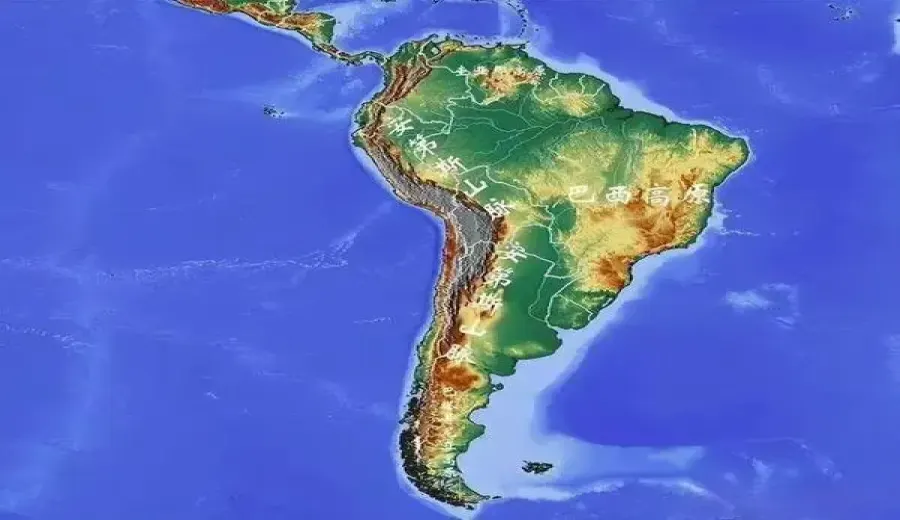
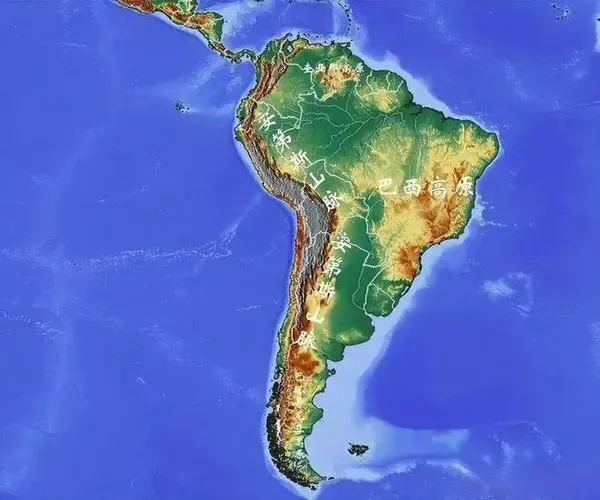
South America is not only the fourth-largest continent in the world but also boasts rich topography such as the Andes Mountains and the Brazilian Highlands due to its volcanic activity and varied terrain. The region is mostly tropical and subtropical, with warm and humid conditions providing ideal growth environments for coffee trees, giving rise to well-known coffee-producing countries like Brazil, Colombia, and Ecuador.
Among them, Brazil, with its vast territory of 8.5149 million square kilometers spanning 26 states, has 17 states engaged in coffee cultivation, firmly holding the top spot in global coffee production. This achievement stems from its exceptional geographical and climatic advantages—its terrain is mainly divided into the Central-South Plateau at elevations above 500 meters and the Northern and Western Plains below 200 meters, with coffee cultivation primarily concentrated in the climatically suitable southern regions.
Most of Brazil has a tropical climate, with the central area being tropical savanna and the south transitioning into subtropical monsoon humid climate, maintaining an average annual temperature between 16–19°C. Coupled with mineral- and organic-rich volcanic sedimentary debris soil and brown clay, which offer excellent drainage, along with numerous rivers, these factors create an ideal cradle for coffee trees. Coffee seeds first took root in Pará and gradually expanded nationwide. By the mid-19th century, driven by surging demand from European and American markets, Brazil’s coffee industry rapidly rose, once accounting for 30% of global production and becoming a vital economic pillar.
However, during the Cold War in the 20th century, global coffee oversupply led to a sharp price drop, prompting Brazil to participate in the International Coffee Agreement to regulate exports. It was not until 1991, when Brazil exited the agreement and established the Brazilian Specialty Coffee Association (BSCA), that efforts were made to promote the development of domestic specialty coffee regions and markets.
Currently, Brazil’s coffee production is concentrated in four states—Paraná, São Paulo, Minas Gerais, and Espírito Santo—accounting for 90% of the nation’s total output. Among them, Minas Gerais is renowned for its famous sub-regions such as Cerrado and Sul de Minas. The semi-washed Cerrado beans produced here are often the first choice for many coffee beginners exploring Brazilian flavors, characterized primarily by chocolatey notes and nutty aromas, with a balanced and smooth taste.
Compared to other well-known producing regions, Espírito Santo has a smaller planting area but stands out uniquely due to its special geographical conditions.Montanhas do Espírito Santo(The Espírito Santo Mountains) In Portuguese means “mountainous region.” This area has elevations ranging between 700 to 1000 meters and lies adjacent to the Atlantic Ocean, constantly influenced by sea breezes, forming a unique microclimate.
In this environment, the local cultivation mainly focuses on the wind-resistant Robusta variety, accounting for about80%of the state’s total production.However, in the southern part of the state, where elevation and temperature conditions are more suitable for Arabica, the performance of this variety has become increasingly impressive in recent years. For example, theCórrego da Liberdade Farmachieved 88.88 points and ranked 5thin the 2023 Brazilian COE (Cup of Excellence) washed category competition, showcasing the potential of Espírito Santo’s Arabica.
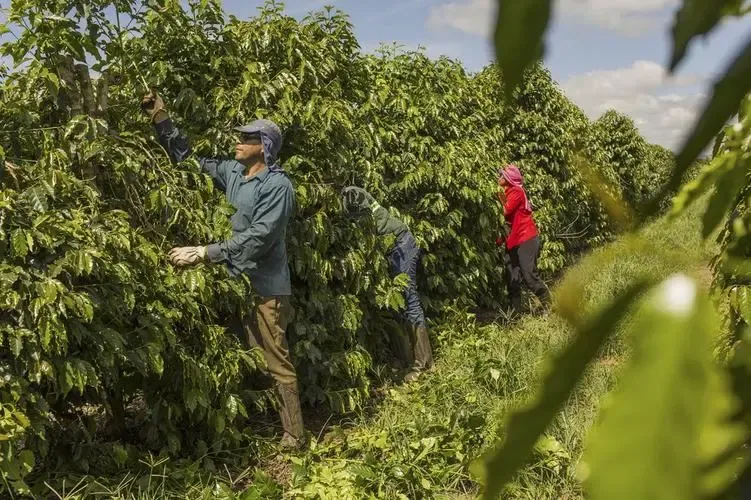
Córrego da Liberdade Farm is managed by fourth-generation coffee farmer Jeremias Lietig Braga. His family history dates back to his great-grandfather—a pioneer who emigrated from Germany to the Espírito Santo Mountains and began cultivating coffee there. To this day, Jeremias and his wife jointly manage the farm and operate a small processing facility, personally overseeing everything from harvesting to post-harvest processing to ensure every batch of coffee beans maintains a high-quality standard.
In summary, although Espírito Santo is not a major contributor to Brazil’s overall coffee output, its mountain-and-sea intertwined geography has successfully fostered a planting model that equally emphasizes Robusta and specialty Arabica. Whether you’re seeking stable everyday flavors or aiming to explore the nuanced profiles of high-altitude Arabica, this state is well worth a deeper look for coffee enthusiasts.
The above content is compiled by CoffeeHunters, a coffee news website.


