







Introduction:When brewing anaerobically processed coffee beans using pour over methods, do you often encounter issues such as overly short extraction times and flat flavor profiles? This practical guide explores how anaerobic fermentation affects the internal structure of coffee beans, leading to faster drawdowns, and provides detailed grind adjustment strategies to help you extend extraction time and enhance the richness and sweetness of your coffee. It’s especially suitable for beginners and intermediate brewers looking to refine their skills.
Have you ever experienced this scenario: using the same brewing technique and parameters, conventionally processed coffee beans typically complete extraction in about two minutes, but when switching to anaerobically processed beans, the brew often drips through in just a minute and a half or even less? The resulting cup tastes dull and thin — a classic sign of under-extraction. So why do anaerobically processed beans drain so much faster?
The key lies in how anaerobic fermentation alters the internal tissue structure of the coffee bean. Compared to traditional processing, anaerobic fermentation takes place in a sealed environment, allowing the beans to absorb more sugars, thereby enhancing their sweetness. However, this process also reduces the density of the coffee bean cell walls. Coupled with the effects of sugar adhesion, it leads to more intense chemical reactions during roasting. As a result, beans roasted to the same level will have a looser internal structure, lower overall density, and higher brittleness after anaerobic processing.
This structural difference directly impacts the grind. When using the same grind settings, anaerobically processed beans yield coarser particles with more space between them, making it easier for hot water to penetrate. This reduces resistance as water passes through the coffee bed, significantly shortening extraction time — sometimes to under a minute and a half. The outcome is underdeveloped flavors and a thin, one-dimensional cup.

To address this, the primary goal is to extend the contact time between hot water and coffee grounds — in other words, slow down the drawdown. In practice, there are several methods you can try, such as reducing pour speed, increasing the number of pours, adjusting water flow rate, switching to a slower-dripping filter cone, or — most directly and preferably — grinding finer.
Why is adjusting grind size the most recommended approach? Because compared to other variables, grind adjustments offer the most controllable impact on overall brewing parameters and can directly influence extraction efficiency. Especially for beginners new to pour over or anaerobic beans, minimizing variables helps accurately assess the results of each change. If fine-tuning the grind doesn’t fully resolve the issue, you can then adjust other parameters based on actual flavor feedback.
Take a real-world example: a café typically uses an EK43 grinder set to position 10 when brewing medium-light roasted conventional beans. At this setting, the 20-mesh sieve yield is around 80%, achieving a balanced extraction. However, applying the same grind setting to anaerobically processed beans results in an actual sieve yield of only about 75% due to the beans being more brittle and prone to breakage — leading to coarser effective grind size.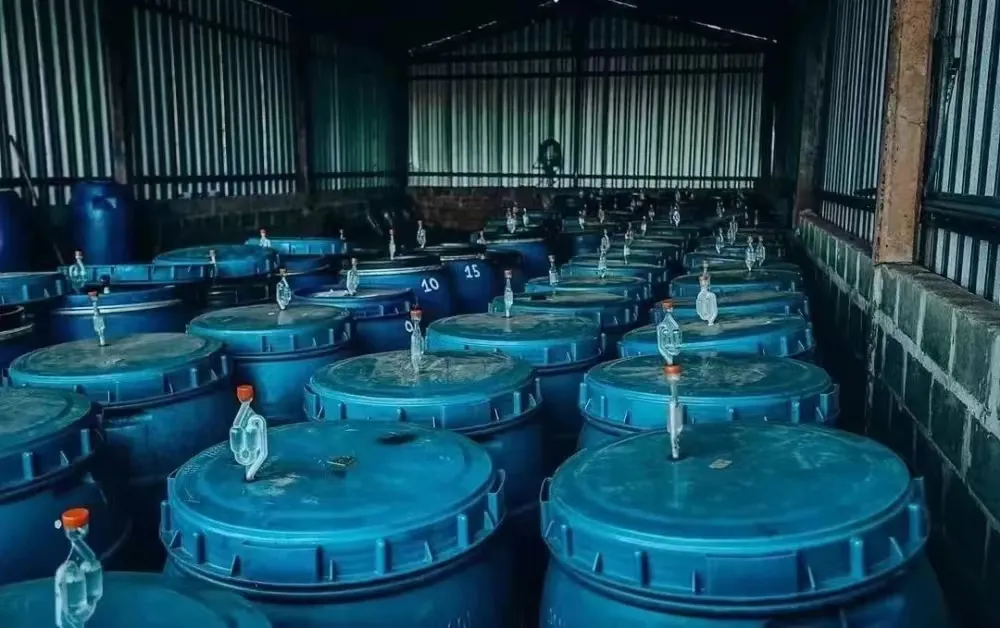 Under this grind setting, brewing a single cup of anaerobically sun-dried Geisha (or “希爪”) may only take 1 minute and 35 seconds, resulting in a dull and thin flavor profile.
To remedy this, it’s recommended to adjust the grind setting down by one notch — for instance, from 10 to 9.5 — bringing the sieve yield back above 80%. This yields a finer grind and a denser coffee bed. Practical testing shows that this adjustment extends extraction time to 1 minute and 54 seconds, with a noticeable improvement in flavor: increased complexity, enhanced sweetness, and a more well-rounded cup.
Of course, further fine-tuning might still be needed after adjusting the grind. If signs of slight under-extraction persist — such as overly bright acidity, lack of sweetness, or thin body — consider raising the brew water temperature slightly or reducing the pouring speed a bit to boost extraction. Conversely, if over-extraction occurs — with prominent bitterness or astringent mouthfeel — you can reverse the approach by lowering the temperature or slightly increasing water flow to restore balance.
In summary, due to their unique fermentation and roasting characteristics, anaerobically processed beans do present distinct brewing challenges compared to traditional beans. By mastering the critical skill of grind adjustment and complementing it with fine-tuned water temperature and flow rate, you can effectively lengthen extraction time, fully unlock the potential of anaerobic beans, and enjoy a richer, more layered coffee experience.
The above content is compiled by CoffeeHunters, a coffee news website.


