







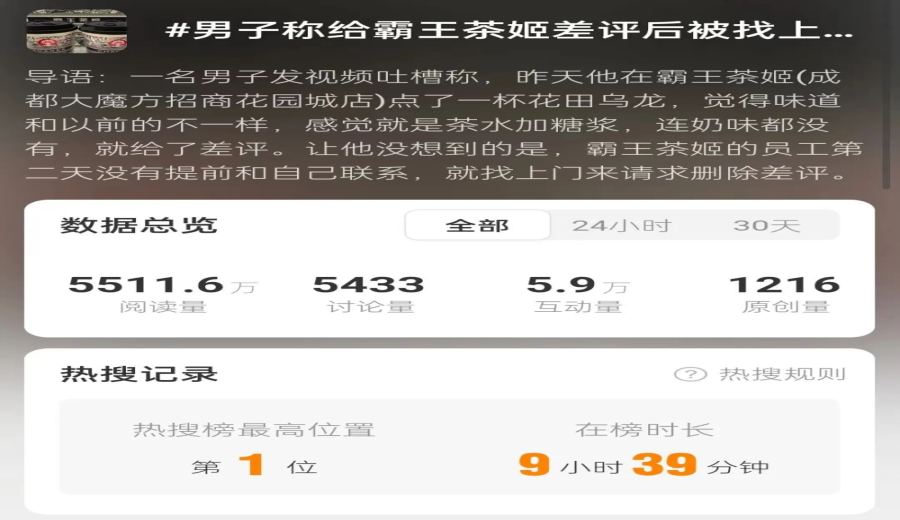
Introduction:When a customer left a negative review due to a beverage’s taste not meeting expectations, only to be visited by a staff member asking for its removal, this controversial incident at Chagee has sparked public discussion about the tension between consumer rights and business service evaluations. This article delves into the full story of the incident, clarifies appropriate ways for businesses to handle negative reviews, and offers practical advice for consumers to protect their own rights.
Recently, a consumer in Chengdu, Sichuan shared an experience on social media that ignited widespread online discussion. After purchasing a drink at a local Chagee outlet, they noticed a significant difference in taste compared to previous experiences. Although they did not request a refund or remake, they chose to leave a negative review on the order. The next day, however, a staff member actually came to their home, hoping the customer would retract the negative review — a move that quickly divided opinions online.
Footage released by the consumer shows a staff member wearing Chagee’s black uniform standing outside their residence, speaking to them while holding a phone. Although no conflict ultimately occurred, the employee explicitly expressed a desire for the customer to handle the issue by calling, which many netizens described as “terrifying.” Such direct home visits to demand review deletions not only cause discomfort but also prompt scrutiny over how businesses handle customer complaints.
As the incident gained traction online, many users shared similar experiences, noting that they had been called by stores after leaving low ratings, with some saying the persistent calls stopped only after they removed their reviews. In this case, the fact that the staff member went directly to the customer’s home raised further public doubts about whether such actions comply with review platform policies and consumer rights.
Under public pressure, Chagee’s customer service responded by stating that the store sought contact with the customer in hopes of friendly communication to understand areas needing improvement. The store manager involved explained that since they were unable to reach the customer via delivery riders, the store, or the platform, the staff member opted to visit in person to address the negative review. However, this explanation did little to quell the controversy, especially when “couldn’t get through by phone” was cited as the reason for the home visit — raising further questions about its legitimacy.
In truth, consumers have subjective opinions about beverage flavors, and leaving a negative review is a reasonable and protected right.If businesses, out of concern for online ratings and employee performance evaluations, take overly aggressive actions to delete reviews, they may not only violate platform rules but also more easily damage brand reputation.Rather than asking customers to remove reviews, a more proactive approach would be to deeply understand the root of the issue and thereby improve product and service quality.
Industry insiders point out that it is actually quite common for customers to leave negative reviews when a beverage’s taste does not meet their expectations — especially in the highly competitive tea beverage market, where consumer expectations for flavor consistency are growing. In addition to establishing more comprehensive customer complaint feedback systems, businesses should also reduce negative reviews caused by unstable product quality through regular staff training and quality control processes.
For consumers, when leaving a review, in addition to expressing dissatisfaction, they can also specify the issues, such as a drink being too sweet, the tea flavor being too weak, or the temperature being insufficient. Such details can help the shop make further improvements. If approached by staff or the business to delete a review, consumers have the right to remain silent or refuse, and can also raise their concerns through official platform channels.
The negative review controversy at Chagee highlights the dilemma faced by modern food and beverage services when dealing with online reviews. How to balance protecting consumer freedom of speech while maintaining store service quality and employee evaluations remains an ongoing issue for the industry to explore.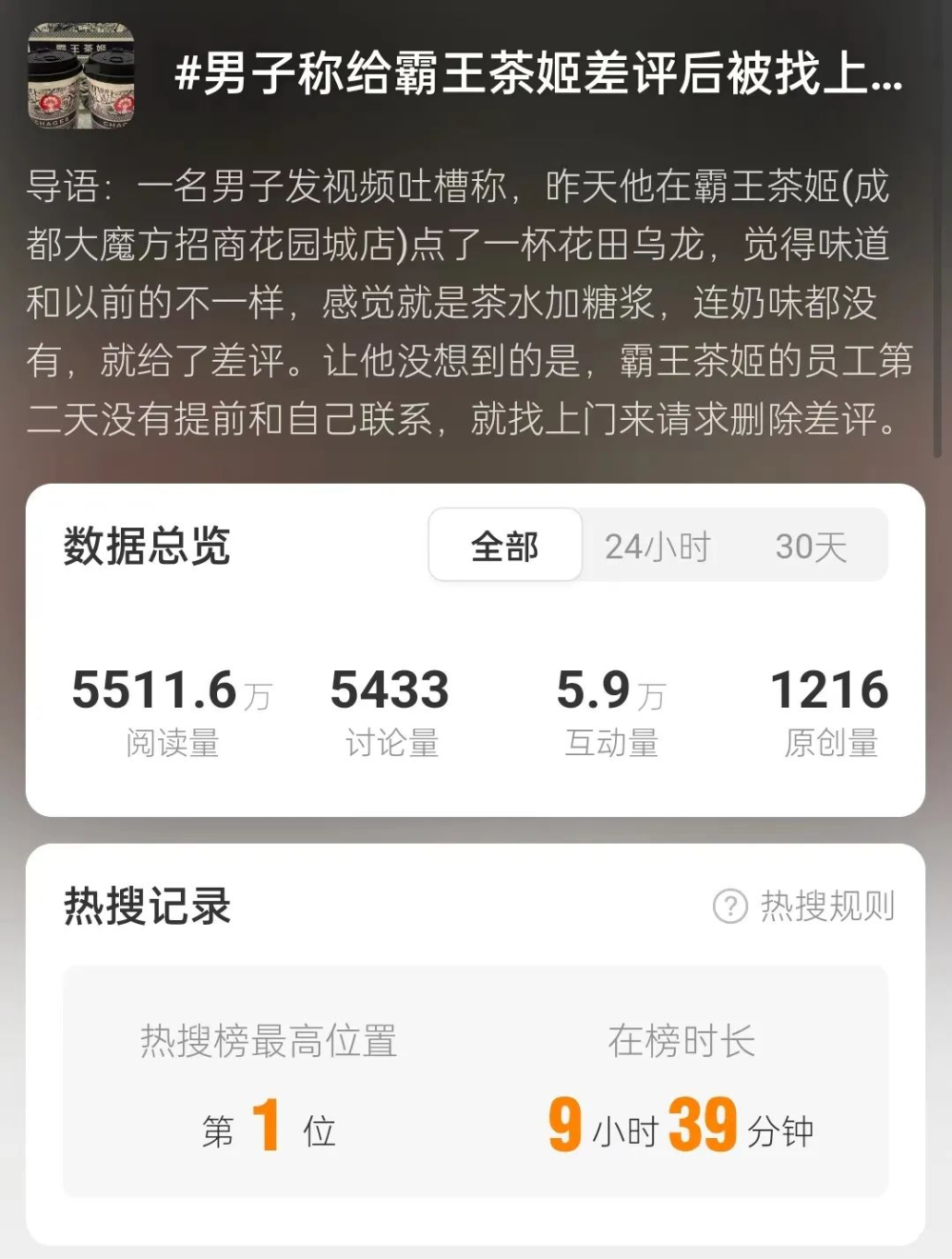
In summary, businesses should adopt a positive attitude toward consumer feedback, striving to improve product and service standards through concrete actions, rather than focusing solely on short-term ratings. Only in this way can they earn long-term trust and support from customers in an intensely competitive market.
The above content is compiled by CoffeeHunters, a coffee news website.


