







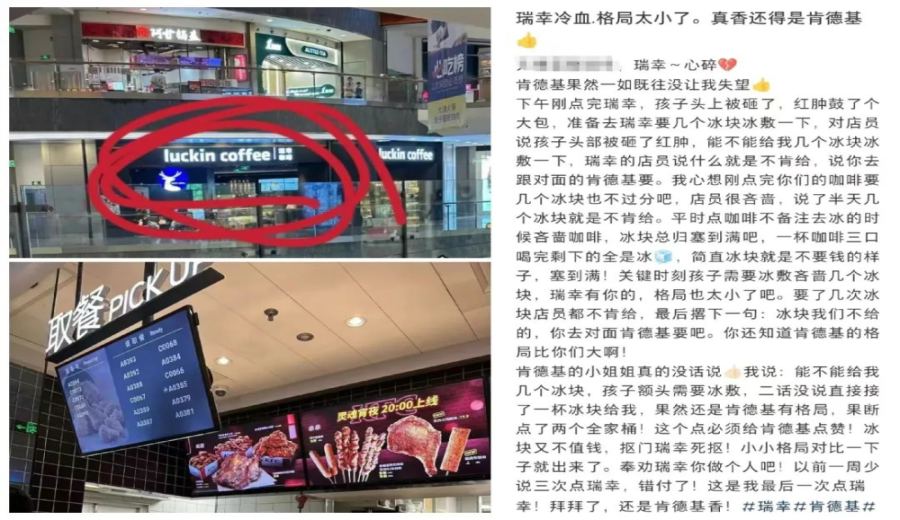
Introduction:When a child was injured and urgently needed ice for cold compress, Luckin refused to provide ice cubes citing company policy, sparking widespread online discussion. Why don’t major coffee chains offer ice cubes alone? Is it due to food safety concerns or are there other reasons? This article delves into the reasons behind the “no ice” policies of well-known chains like Luckin, explores whether employees should be more flexible in emergencies, and discusses how consumers can better understand these regulations.
Recently, an incident where a Luckin Coffee outlet refused to provide ice cubes to a customer for their child’s cold compress sparked extensive discussion on social media. A parent, whose child had suffered a head injury, asked the staff for a few ice cubes to reduce swelling but was turned down by the employee, who cited company policy and even suggested going to the KFC across the street for help. The incident not only disappointed the parent but also led many netizens to reflect: should chain beverage brands show more flexibility when faced with customers’ urgent needs?
In fact, Luckin’s policy of not providing ice cubes alone is not new. Many consumers have shared similar experiences of being denied ice on social platforms, and both the brand and its employees have explained multiple times that this rule stems from past food safety disputes. It is understood that previously, a customer requested ice cubes from an outlet and later sent them for testing independently, which led to an economic dispute and significantly damaged the brand’s image. As a result, Luckin established strict internal policies prohibiting employees from providing ice cubes to customers individually, and installed surveillance cameras at the counter area to ensure compliance. Employees found violating the rules may face penalties such as bonus deductions.
Not only Luckin, but also other well-known chains including Starbucks, Cotti Coffee, and McDonald’s have similar policies of “not providing ice cubes to customers.” Even some independent coffee shops choose to politely decline requests for ice cubes to avoid potential food safety risks. The primary intention behind these policies is to prevent the misuse of semi-finished products like ice cubes or unnecessary disputes, thereby safeguarding brand reputation and food safety.
However, should such strict policies be rigidly enforced in the face of special customer situations—like a child injured and urgently needing ice for a cold compress? Many netizens believe that these emergency needs are different from regular requests for ice. If employees could show some flexibility, they could not only help solve the problem immediately but might also earn positive word-of-mouth for the brand and even cultivate loyal customers. After all, “rules are rigid, but people are flexible.” In special circumstances, if employees can adjust appropriately based on the actual situation, a win-win outcome is often achievable.
On this matter, some employees revealed that although ice cubes are considered semi-finished products and cannot be provided alone according to regulations, mixing them with drinking water to create an ice-water mixture is regarded as a finished product, meeting serving standards and thus avoiding the risk of policy violation. However, not all outlets accept such workarounds, so some employees advise customers to seek help at nearby eateries, such as KFC, which can both help the employee avoid penalties and resolve the customer’s urgent need.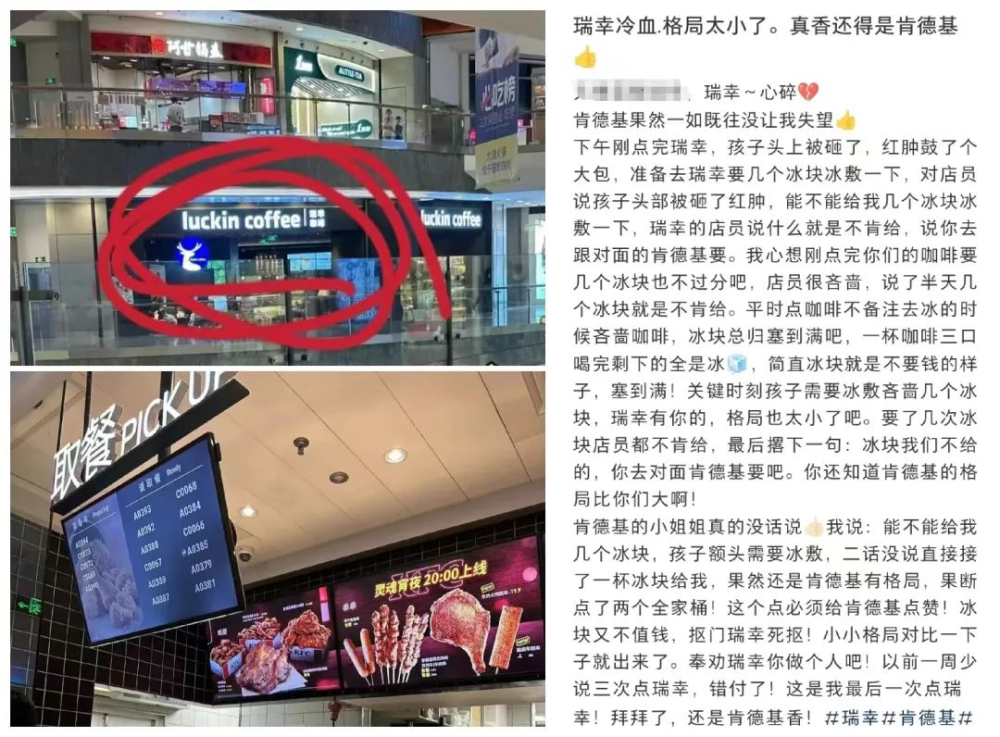
In summary, the no-ice policies adopted by chains like Luckin are mainly based on past experiences and food safety considerations. However, striking a balance between regulation and flexibility when facing customers’ urgent needs remains a topic worth discussing. For consumers, understanding the brand’s rationale is important, but there is also an expectation for more humanized treatment in special circumstances. For brands and employees, finding ways to maintain compliance while preserving reasonable flexibility will be key to improving service quality in the future.
The above content is compiled by CoffeeHunters, a coffee news website.


