







Introduction:As the world’s largest coffee-exporting country, Brazil is currently facing a double blow from inefficient ports and abnormal weather patterns. This article delves into the delays at major ports such as Santos, reveals how high temperatures and drought are affecting the quality of coffee beans in core producing regions like Minas Gerais, and evaluates the further impact of labor shortages amid the pandemic on the supply chain—helping coffee professionals and enthusiasts stay on top of market trends.
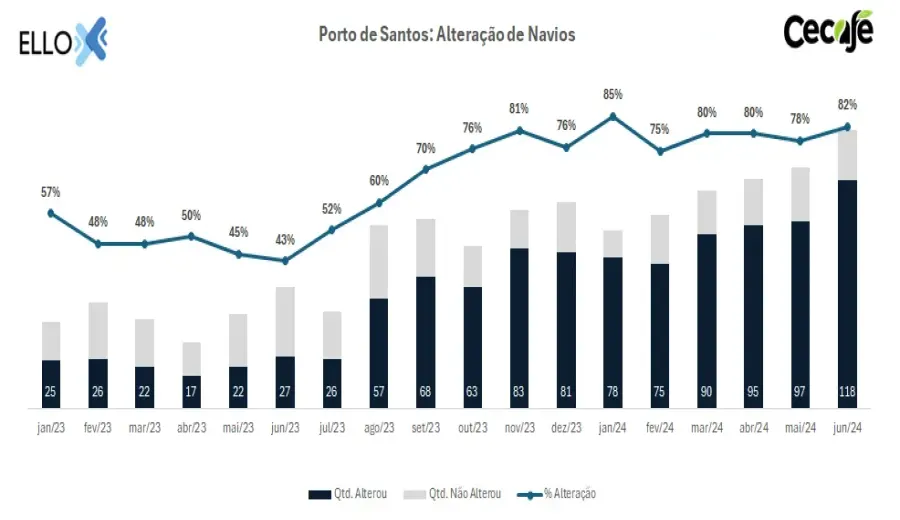
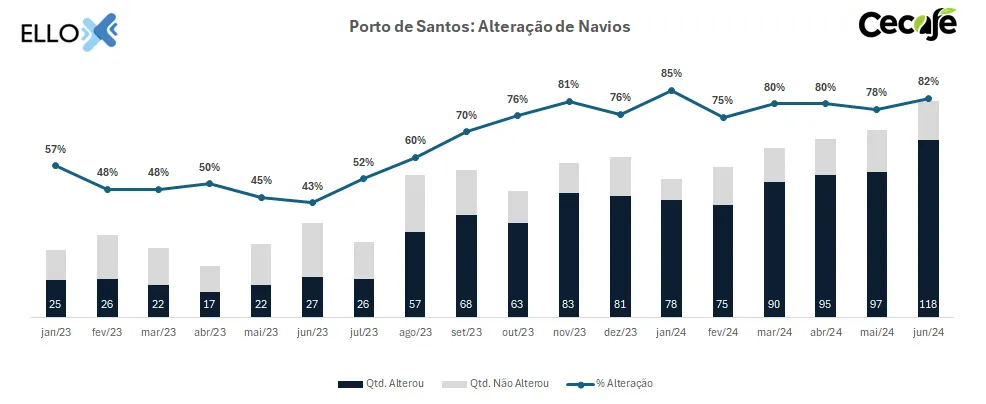
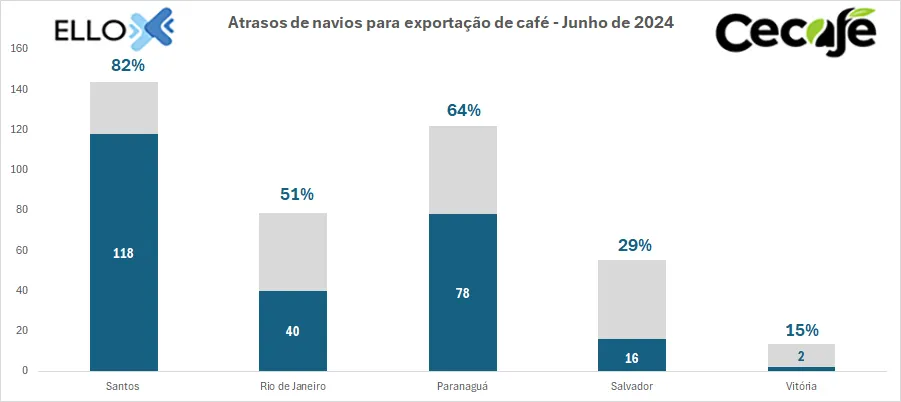
The Brazilian coffee industry is grappling with its most severe operational challenges in nearly a decade. The latest data shows that in June 2024, the container delay rate at major ports soared to 62%, resulting in over 1.23 million bags (each 60 kg) of coffee beans being stranded domestically, directly causing an estimated foreign exchange loss of $290 million. Among these, the situation at the Port of Santos is the most critical, with its delay rate reaching as high as 82%, a historic high.
A detailed report released by the Brazilian Coffee Exporters Council (Cecafe) on July 19 revealed that 413 container ships were involved in coffee exports that month, but as many as 254 experienced delays or were forced to reroute at major ports. The survey covered 30 major exporting companies and found that in June alone, due to a combination of factors including schedule adjustments, insufficient terminal capacity, and labor shortages, the equivalent of 1.23 million bags of coffee could not be shipped on time. These stranded goods not only caused exporters to lose approximately 1.588 billion Brazilian reais (about $290 million), but also led to an additional operational cost of about 4.7 million reais for related businesses.
The situation at the Port of Victoria is equally concerning. The port is grappling with a complex set of issues, including long queues of ships, a shortage of containers, chaotic gate management, and insufficient loading and unloading resources, all of which increase the risk of cargo damage. Some goods have been forced to be rerouted to other ports, further driving up overall logistics costs. Statistics show that in June, 374,000 bags of coffee could not be shipped at the Port of Victoria, accounting for 30% of the national total for the month, resulting in an estimated foreign exchange loss of 480 million reais (about $89.5 million).
Beyond logistical bottlenecks, extreme weather also poses a significant threat to Brazil’s coffee-growing regions. A warning issued by Brazil’s National Meteorological Institute on July 19 indicated that the Midwest and Northeast regions are experiencing unprecedented high temperatures, with maximum temperatures in multiple cities exceeding 35°C, and some areas even reaching extreme highs of 37°C to 38°C. It is expected that in the coming days, dry and hot air masses will continue to intensify, expanding the high-temperature range to most parts of the country, while the duration of high-temperature weather will also lengthen.
Particularly in core coffee-producing regions like Minas Gerais, which is currently in the harvest season, although dry weather aids harvesting operations, the persistent high temperatures and drought have had a visibly negative impact on coffee tree growth. High temperatures can easily scorch coffee leaves, while also facilitating the reproduction and spread of pests and diseases. Coupled with recent below-average rainfall, this has led to generally smaller coffee bean sizes, affecting both overall yield and quality.
According to statistics from the local agricultural consulting agency Safras, Brazil has currently completed the harvesting of 66% of this year’s total production. However, the ongoing drought has resulted in actual output falling short of market expectations. Experts predict that due to the continued impact of high temperatures, the final yield may be 2 to 3 million bags (each 60 kg) lower than originally estimated. This will have a significant impact on the global coffee market’s supply-demand balance and may keep coffee prices at a high level.
Notably, data from Brazil’s health authorities show that the dengue fever epidemic has continued to worsen since 2024. As of mid-July, the cumulative number of suspected and confirmed cases nationwide has reached 6,365,727, resulting in 4,691 deaths, with another 2,381 cases pending confirmation. Brazil currently has the highest number of confirmed and suspected dengue cases globally, and the high temperatures have exacerbated the severity of the disease, further intensifying the issue of human resource shortages and indirectly affecting the efficiency of coffee harvesting and export operations.
In the face of these challenges, the president of the Brazilian Coffee Exporters Council stated that although the Port of Santos remains an important hub for global coffee transportation, its delay rate has been continuously climbing since 2022 and remains at a high level of around 80%. The industry is universally calling on the government to take effective measures as soon as possible to improve port infrastructure and operational efficiency, in order to ensure the global competitiveness of Brazil’s coffee industry.
The above content is compiled by CoffeeHunters, a coffee news website.


