







Introduction:Kung Fu Coffee, once hailed as an innovative representation of "Eastern tea meets Western coffee," saw its Shenzhen flagship store — built with an investment exceeding six million yuan — cease operations after just seven months. This incident has not only sparked discussions on the brand’s operational strategy but also once again brought the development bottlenecks of the "tea-coffee" category, an emerging market segment in China, under the spotlight. This article will delve into the reasons behind the closure of Kung Fu Coffee’s first store and explore the challenges and opportunities facing the tea-coffee segment in terms of market acceptance, talent pool, and brand positioning.
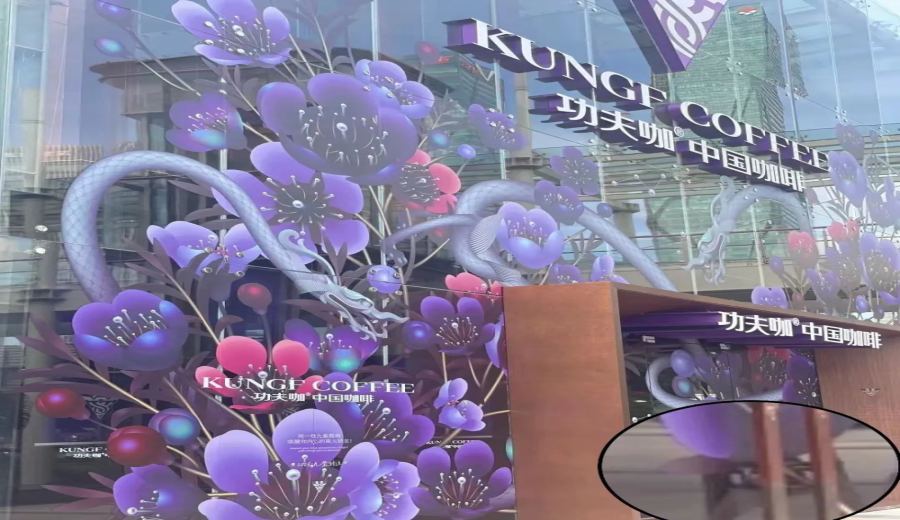
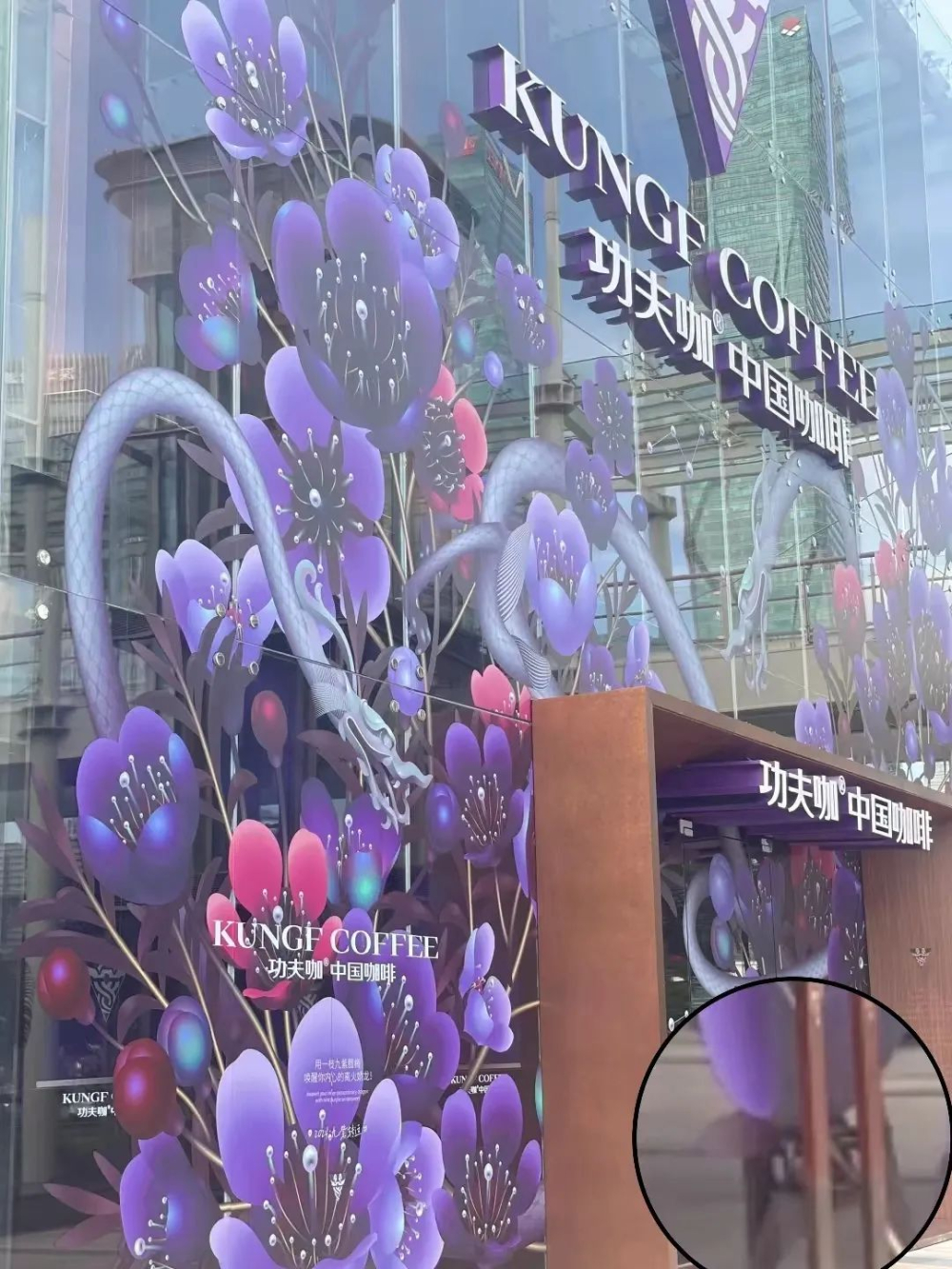
Making a high-profile debut with the core concept of "Eastern tea meets Western coffee," the nationwide first outlet of Kung Fu Coffee — its flagship store located in Shenzhen’s Royal Plaza — quietly closed after just seven months of operation. Developed by the team behind the well-known beverage brand "Benlai Buyao You" (Originally Shouldn’t Exist), the store was initially reported to have invested over six million yuan. With a strong purple color scheme paired with traditional Chinese cultural elements such as sculptures of Fuxi and Nuwa, Tai Chi patterns, and large murals, it successfully attracted a wave of young consumers for photo ops, briefly becoming an internet sensation in late 2023.
According to public information, Kung Fu Coffee’s Shenzhen flagship store officially opened on December 2, 2023. Its initial performance was impressive: official sources revealed that within the first ten days of opening, the daily average number of beverages sold reached 1,200, peaking at 1,800 on the busiest day, with daily revenue hitting around 35,000 yuan at its highest. Encouraged by such promising figures, the brand subsequently expanded to new locations in Shenzhen’s Longhua and Futian districts, and further ventured into markets such as Huizhou and Xinjiang.
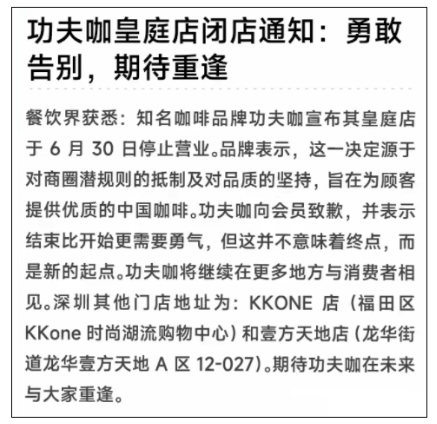
However, this once-popular store officially ceased operations on June 30, 2024, and is now marked as “closed” on the Meituan app, with no related information available on the brand’s official mini-program either. Although the brand explained the closure was due to considerations regarding the hidden rules of the commercial area and a commitment to product quality, the market generally suspects it may be related to unresolved disputes over property lease contract changes. Notably, according to data from Zhaomen Canyan (Narrow Gate Catering Insights), the Kung Fu Coffee brand still has at least three stores operating normally, and there have been recent moves to open a new outlet in Dongguan, indicating the brand has not completely abandoned its expansion plans.
In terms of consumer feedback, reviews of Kung Fu Coffee are distinctly polarized. Some customers praise its unique spatial design and photo-friendly ambiance, but many others bluntly state that the drinks are “not tasty,” criticize the “poor spatial flow,” or even dismiss the brand as merely offering “superficial flair.” They argue that although it promotes itself as “Chinese coffee,” it fails to genuinely reflect Chinese spirit in both product and brand culture. In particular, the store’s purple color palette and modern sculpture style greatly contrast with the traditional, tea-infused imagery commonly associated with “Chinese-style cafés,” making it difficult for some consumers to resonate with the concept.
In fact, as an innovative fusion category combining tea beverages and coffee, "tea-coffee" has been around in the market for some time but has consistently faced challenges related to consumption habits and market positioning. Brands such as Chagee and Heytea have launched related products, but most have been seasonal or limited-time trial offerings, rarely becoming long-term mainstays. For most consumers, coffee and milk tea serve distinct purposes — the former for energy, the latter for relaxation — while tea-coffee is often viewed as a novelty choice. Once the trend fades, consumers tend to return to their original beverage preferences.
Moreover, industry insiders point out that although tea-coffee products may appear to be a simple combination of tea and coffee, achieving a balanced flavor that meets consumer expectations actually places higher demands on R&D and production teams. Currently, professionals who are adept in both coffee and tea remain scarce in the market. Many brands launching tea-coffee series often lack sufficient technical expertise and market research, resulting in inconsistent product flavors or difficulty in appealing to target audiences. This is also one of the key reasons why Kung Fu Coffee and other tea-coffee brands tend to hit bottlenecks after rapid expansion.
Overall, the closure of Kung Fu Coffee’s Shenzhen flagship store is not just an adjustment in the operational strategy of a single brand but reflects the multiple challenges facing the tea-coffee category — an emerging market segment in China — in terms of brand positioning, product innovation, consumer education, and talent cultivation. Whether Kung Fu Coffee can adjust its pace, refine its products, and find a clearer market position on its expansion journey remains to be seen over time. For the entire tea-coffee industry, finding a genuine synergy between Eastern tea culture and Western coffee culture will be the key factor in determining which brands can truly stand out.
The above content is compiled by CoffeeHunters, a coffee news website.


