







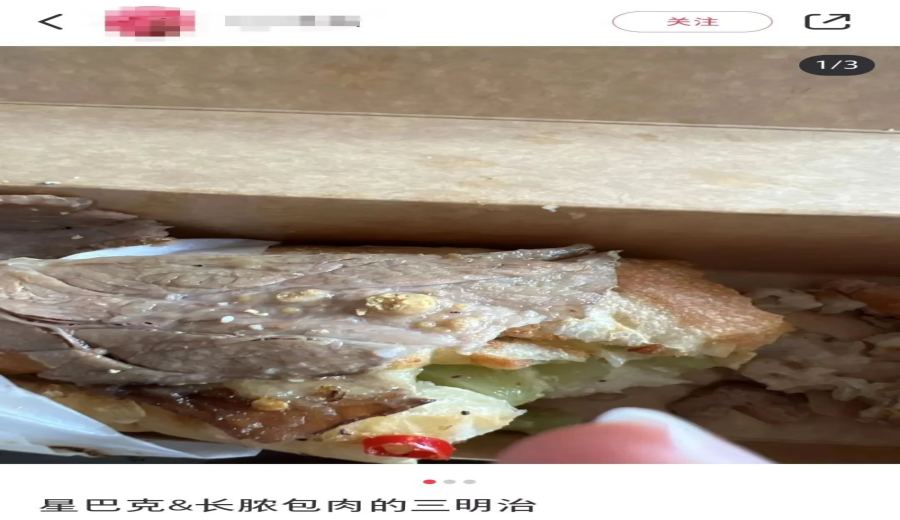
Introduction:A consumer discovered yellow bumps on beef slices in a sandwich delivered by Starbucks, raising concerns about food safety. This article details the incident, official responses, inspection results, and explores possible causes of foreign objects on cooked beef surfaces. It also offers advice to help consumers identify and handle such issues, ensuring a safer dining experience.
A customer ordered a Starbucks sandwich through a third-party delivery platform. While eating, they found multiple yellow bumps on the surface of the beef slice inside the sandwich, resembling pus-filled spots. The sight shocked them and raised food safety concerns. They immediately contacted the store for an explanation and refund, and also called the 12345 complaint hotline to report the issue.
Starbucks responded that the beef slice showed no quality issues upon inspection, thus refusing a refund or compensation. Relevant authorities also inspected the involved store and confirmed that its business qualifications and hygiene conditions met regulations. Since the order was placed via a third-party platform, after coordination, the platform voluntarily refunded the purchase amount.
The incident sparked widespread discussion on social media, with many netizens sharing their own experiences. They expressed shock at not usually inspecting the ingredients inside sandwiches and began to question the food safety of other meat products. One consumer admitted: "Just thinking about the possibility that this could have been something I ate without hesitation gives me chills" and "I never lift it up to look."
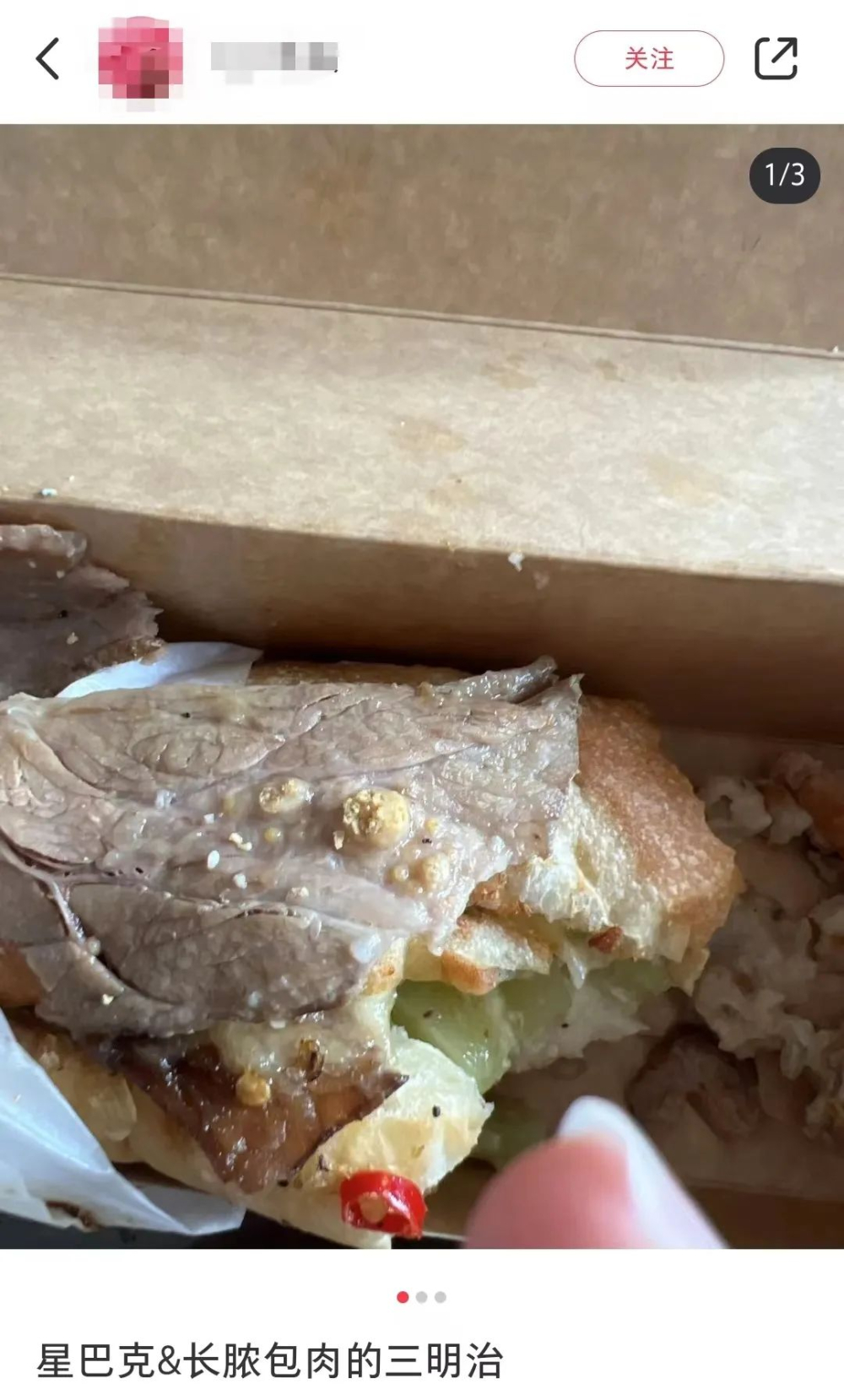
In fact, similar cases of yellow particles appearing on cooked beef are not unprecedented online. Some netizens have shared instances where freshly steamed beef at home also developed varying amounts of yellow substances. However, the cause of these yellow bumps remains inconclusive, with various speculations circulating online.
One theory suggests that these yellow particles may be natural bumps caused by blood vessels contracting after the beef is cooked, which is considered normal and safe to eat. However, some suspect that the foreign objects might be gel or other substances injected into the beef during processing, raising concerns about the safety of 'processed meat products.' Additionally, some netizens speculate that the bumps could be parasites or mold in raw meat, or even pus reactions from injection sites—but these claims lack scientific evidence and remain speculative online.
Based on current information, without professional test reports, it is difficult to determine whether these yellow bumps are indeed a food safety issue or if they pose health risks. Consumers encountering similar situations are advised to pause consumption if in doubt and report the issue to the platform or store to protect their rights.
This incident also reminds consumers that even when dining at well-known chain brands, basic vigilance about food appearance should be maintained. Simple inspection of ingredients before eating can help detect abnormalities early. For those who frequently purchase light meals like sandwiches, it is recommended to choose reputable suppliers and pay attention to the product preparation process and storage methods to reduce food safety risks.
The above content is compiled by CoffeeHunters, a coffee news website.


