







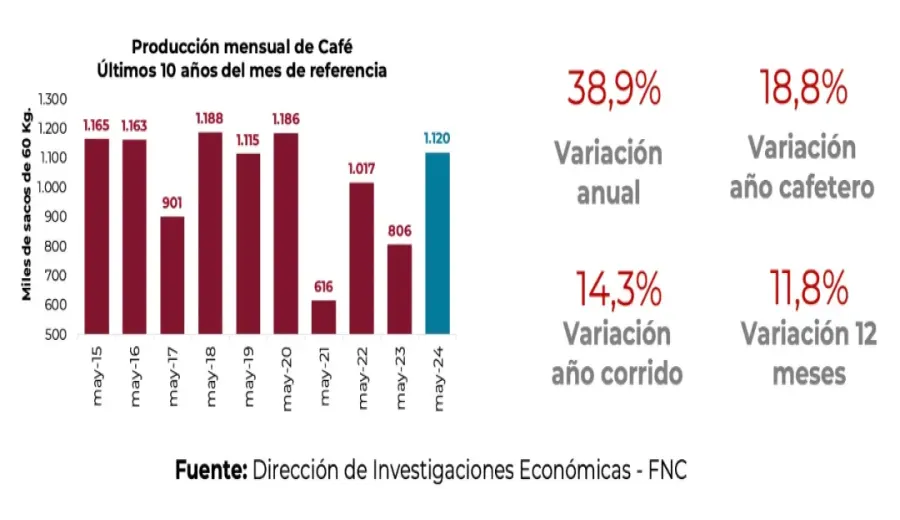
Introduction:According to the latest data from the Colombian Coffee Growers Federation (FNC), in May 2024, Colombia’s coffee production exceeded 1.12 million bags, a year-on-year surge of nearly 40%, reversing the decline caused by the La Niña phenomenon last year. Export performance has also rebounded, but domestic prices have seen a slight dip due to fluctuations in international futures and exchange rates. This article delves into the key factors behind the production recovery, the reasons for market price changes, and how the FNC-hosted “Colombia Tierra de Diversidad” coffee quality competition enhances the visibility of specialty beans through its competition mechanism, helping coffee farmers expand international business opportunities.
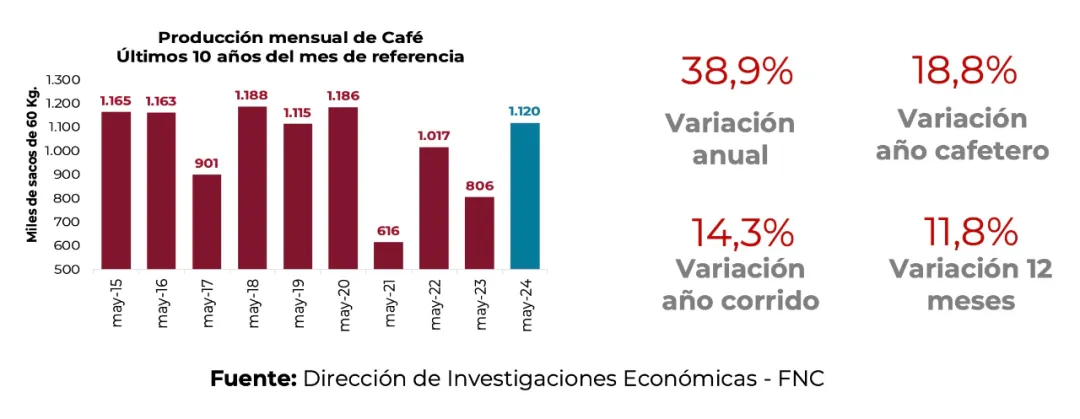
According to official statistics from the Colombian Coffee Growers Federation (FNC), in May 2024, national coffee production reached 1.12 million bags (each bag weighing 60 kilograms), a significant increase of 38.9% compared to 806,000 bags in the same period of 2023, marking a remarkable recovery. This outstanding performance is mainly attributed to improved weather conditions — in May 2023, the impact of the La Niña phenomenon led to a significant contraction in production during the first half of the year; whereas in the first half of 2024, although threatened by drought induced by the El Niño phenomenon, the impact was relatively contained. Coupled with the official onset of the rainy season in May, which effectively alleviated the drought, coffee tree growth stabilized and production subsequently rebounded.
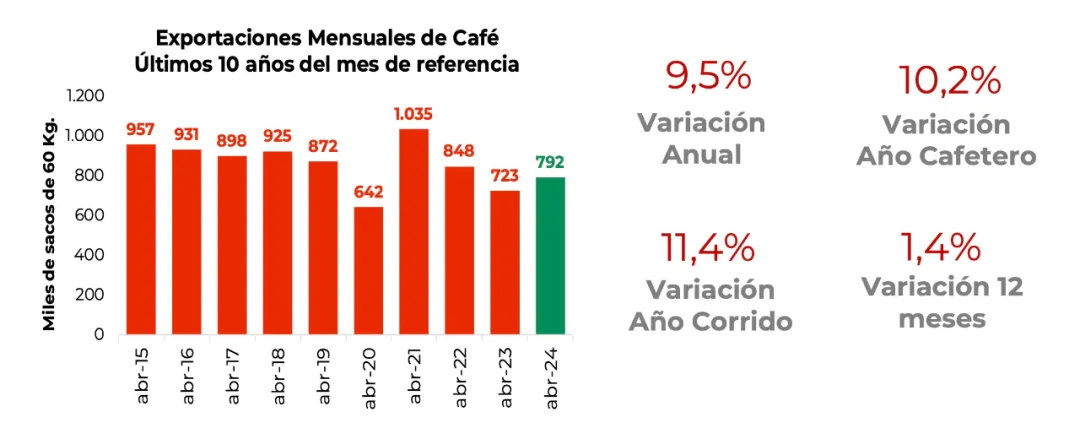
The export market also brought good news: in April 2024, Colombia’s coffee exports amounted to 792,000 bags, a 9.5% increase compared to the same period in 2023, indicating continued growth in international demand. Looking at the full-year cumulative data from May 2023 to April 2024 (12 months), total exports reached 11 million bags, reflecting an annual growth of 1.4%, demonstrating stable market demand.
However, domestic coffee prices have seen a slight adjustment. In May 2024, the average price per carga (125 kilograms) was 1,596,129 Colombian pesos (approximately 412 US dollars), a 4% drop from April and a more significant decrease of 15.8% compared to 1,895,968 pesos in the same month of 2023. Experts analyze that the price decline is mainly influenced by three factors: first, the New York coffee futures contract price fell by 4.2% month-on-month; second, exchange rate fluctuations weakened the purchasing power of the Colombian peso; and third, the narrowing price gap between domestic and international coffee compressed profit margins.
Despite the positive production and export performance in May, the market remains cautious about subsequent weather conditions. Recently, several Latin American countries have been hit by heavy rainfall, with neighboring countries of Colombia such as Brazil, Chile, Ecuador, and Guatemala experiencing floods and landslides, resulting in severe casualties and infrastructure damage. Although Colombia has not yet faced similar disasters, it is currently at the peak of the rainy season. Meteorological authorities have issued warnings, urging farmers to conduct early inspections of drainage systems and prepare for disaster prevention to avoid potential crop losses.
Notably, Colombia’s southwestern Cauca Department, once plagued by increased activities of armed anti-government groups, faced challenges to local coffee farm operations due to frequent bomb attacks and shootings. However, recent developments are positive — the National Liberation Army (ELN) of Colombia, through a cross-faction representative meeting, issued a statement reaffirming its willingness to comply with the content of the peace agreement reached with the government, injecting a boost of stability into the producing region.
To further enhance the international competitiveness and brand value of Colombian coffee, the FNC is actively organizing the ninth edition of the “Colombia Tierra de Diversidad” Coffee Quality Competition. This event is positioned similarly to the internationally renowned “Best of Panama (BOP)” competition, with the core goal of building a direct platform connecting coffee farmers with global buyers. Participants submit specialty coffee beans with unique flavor profiles (such as fruity Caturra or balanced and rich Castillo), which are then scored by an international jury following strict cupping standards (including acidity, sweetness, aftertaste, and other dimensions). Winners not only receive prizes and certifications, but also gain exposure through the competition to attract partnerships with high-end roasters and brands, thereby increasing cultivation income. This initiative not only helps highlight the diversity advantages of Colombia’s coffee-growing regions, but also deepens international market recognition of the quality of “Colombian coffee.”
The above content is compiled by CoffeeHunters, a coffee news website.


