








Introduction:When drinking iced coffee in the sweltering summer heat, many people worry that melting ice cubes will dilute the flavor. As a result, numerous coffee enthusiasts have turned to using stainless steel ice cubes for cooling. But can these metallic ice cubes truly serve as a perfect substitute for traditional ice? This article presents a practical comparison between stainless steel ice cubes and homemade ice cubes in terms of cooling speed, flavor retention, and usability, and also offers tips on blending different types of ice for pour-over brewing, helping you find the best solution tailored to your preferred flavor profile.
During peak summer, an iced pour-over is often the go-to choice for many coffee lovers to beat the heat. However, as time passes, melting ice can easily water down the coffee or make it taste flat. Some readers have wondered—would switching to stainless steel ice cubes improve this situation? In response, we conducted a practical test to evaluate the actual performance of stainless steel ice cubes in terms of cooling effectiveness, flavor impact, and convenience, comparing them comprehensively with traditional homemade ice cubes.
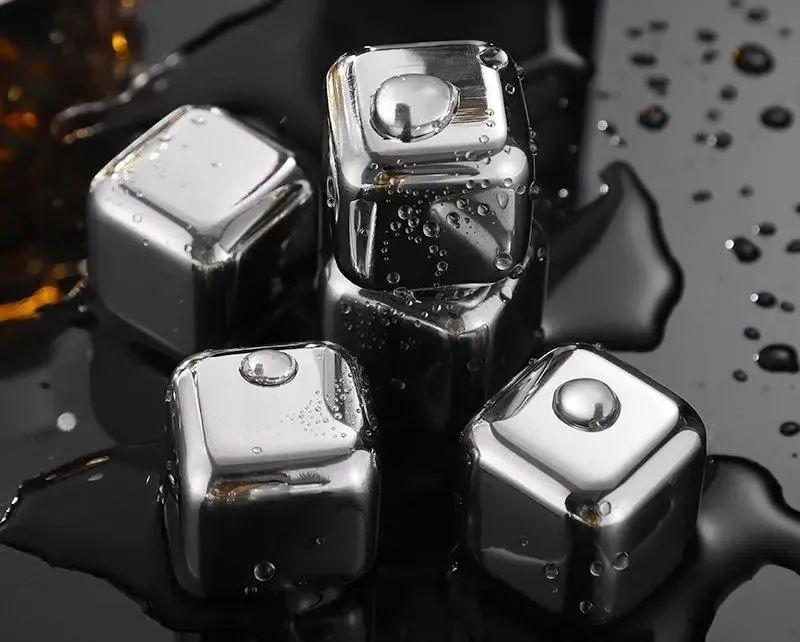
So-called stainless steel ice cubes are typically encased in shells made of grade 304 or 316 stainless steel, filled with a colorless and odorless liquid—commonly a mixture of water and alcohol, or water and glycerin. A gentle shake reveals the sound of liquid sloshing inside. These cubes are usually about 1.5 cm on each side, resembling tiny dice. Since they don’t melt, some consider them an ideal option for maintaining the chilliness of iced coffee.

Stainless steel ice cubes offer several clear advantages: First, they do not melt as temperatures rise, so as long as they remain colder than your beverage, they can continue providing cooling effects, and can be reused simply by rinsing with water and returning them to the freezer. Second, compared to homemade ice cubes that require at least 4 to 6 hours to freeze, stainless steel cubes only need about 1 hour in the freezer before they’re ready to use, making them more convenient for those who want to make iced coffee on short notice.
However, since they are called “ice cubes,” what most people care about is their cooling capability. To verify the real-world performance of stainless steel ice cubes when used in coffee, we designed a comparative experiment. We selected two sets of samples with identical volume and initial water temperature: one group contained a single conventional 2.5 cm cubic homemade ice cube (about 30 grams), while the other used two 1.5 cm stainless steel ice cubes (each about 29.7 grams, with the total weight similar to that of a single homemade ice cube). The experimental environment involved 100 ml of room-temperature (27°C) plain water.
The results showed that during the first two minutes after adding the ice, the homemade ice cube exhibited significantly higher cooling efficiency than the stainless steel ones. By 2 minutes and 30 seconds, the water temperature in the homemade ice group had quickly dropped to 12°C, whereas the stainless steel group only reached 19°C. Additionally, due to the higher density of metal, stainless steel ice cubes tend to sink to the bottom of the cup, leading to the lower layer of water cooling first, while the upper layer showed little change. After 5 minutes, the homemade ice cube had almost completely melted, with the water stabilizing at 8.1°C, while the stainless steel group remained at 16°C, showing limited cooling impact. Even when tested with room-temperature cola and milk, the stainless steel ice cubes still performed noticeably worse in terms of cooling.

Since stainless steel ice cubes don't perform as well as homemade ones in pure cooling capacity, could they still play a supportive role in iced pour-over coffee—helping maintain a lower temperature and balance of flavors? We adjusted the original iced pour-over recipe by replacing the usual 120 grams (about 4 cubes) of homemade ice cubes with 2 homemade cubes and 4 stainless steel cubes (totaling around 180 grams). The goal was to reduce dilution from melted ice and attempt to balance rapid cooling with flavor performance.
For the test, we used Ethiopian Sidamo Huikui 8.0, with a coffee dose of 16 grams, a brew ratio of 1:10 (160 grams of hot water), a water temperature of 92°C, a grind size of 9.5 on the Ek43s, using a V60 filter cone and a three-pour technique. For comparison, we also brewed the same coffee using the standard iced pour-over method with 4 homemade ice cubes (120 grams). After both brews were completed, the resulting coffees were poured into pre-chilled ice glasses for tasting.
The results showed that the mixed ice group (2 homemade + 4 stainless steel) resulted in a final coffee temperature of 18.9°C. The coffee had a mildly cool mouthfeel, with flavors of raisin, sweet orange, and black tea, along with a rounded body—but overall, the cooling sensation was limited, and the temperature gradually rose again after about 17 minutes. In contrast, the pure homemade ice group brought the coffee temperature down instantly to 6.9°C, offering bright notes of citrus, blueberry, and cranberry, with a clean and vibrant acidity, as well as a stronger chilled sensation. However, after the ice cubes fully melted around 11 minutes later, the temperature began to rise and there was a slight decline in flavor.
Overall, while stainless steel ice cubes have the advantage of not melting and being reusable, their cooling efficiency and ability to preserve flavor are noticeably inferior to traditional ice cubes in practical iced coffee applications—especially in iced pour-over processes where quick cooling is essential. Moreover, the metal material may also increase the risk of clinking or scratching glassware, so extra care is needed when using them. Therefore, unless the priority is extending the cold retention time of iced coffee without concern for cooling speed, homemade ice cubes remain the better choice when pursuing vibrant flavors and a chilled drinking experience.
This also explains why most professional coffee shops still primarily use traditional ice cubes—as the main cooling method—for their iced pour-overs or cold brews, rather than opting for stainless steel ice cubes. For coffee enthusiasts who wish to balance chilling effect with flavor performance, trying a mix of a small number of stainless steel ice cubes along with homemade ones might help you find your own optimal balance.
The above content is compiled by CoffeeHunters, a coffee news website.


