







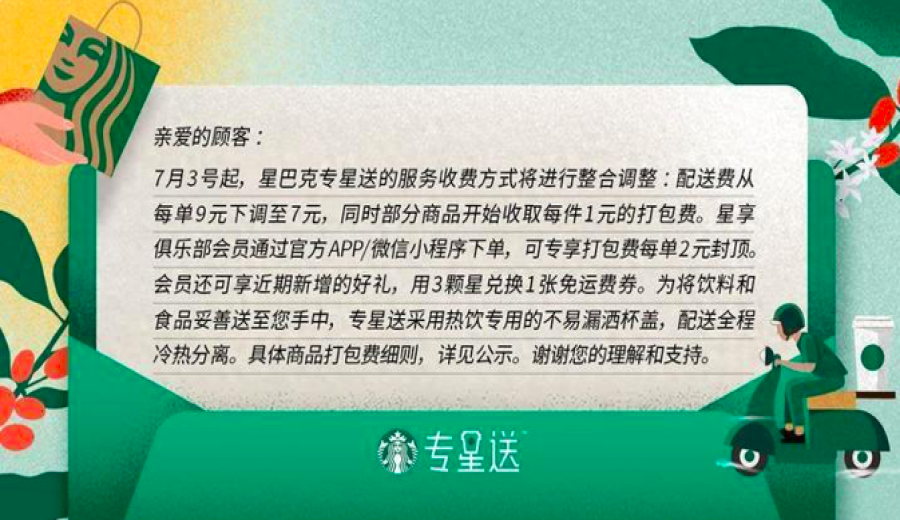
Introduction:Recently, Starbucks China adjusted the pricing structure of its Starbucks Delivers service. The delivery fee per order has been reduced from 9 RMB to 7 RMB, but a new packaging fee of 1 RMB per item (with a maximum of 2 RMB per order) has been introduced. This change has drawn attention from many consumers: will their actual expenditure increase or decrease? Which orders are most affected? This article details the specifics of the new policy and analyzes its potential impact on consumer decisions and the delivery market, helping you choose the most economical takeaway option.
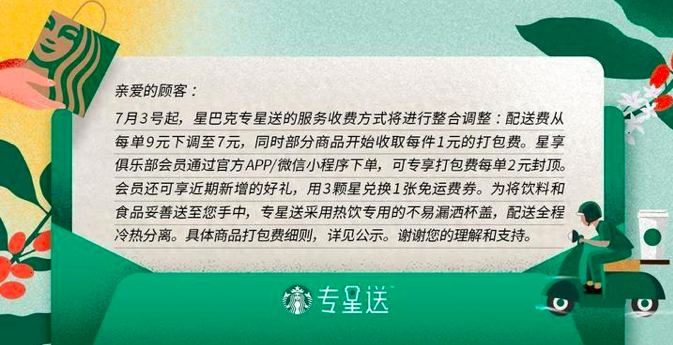
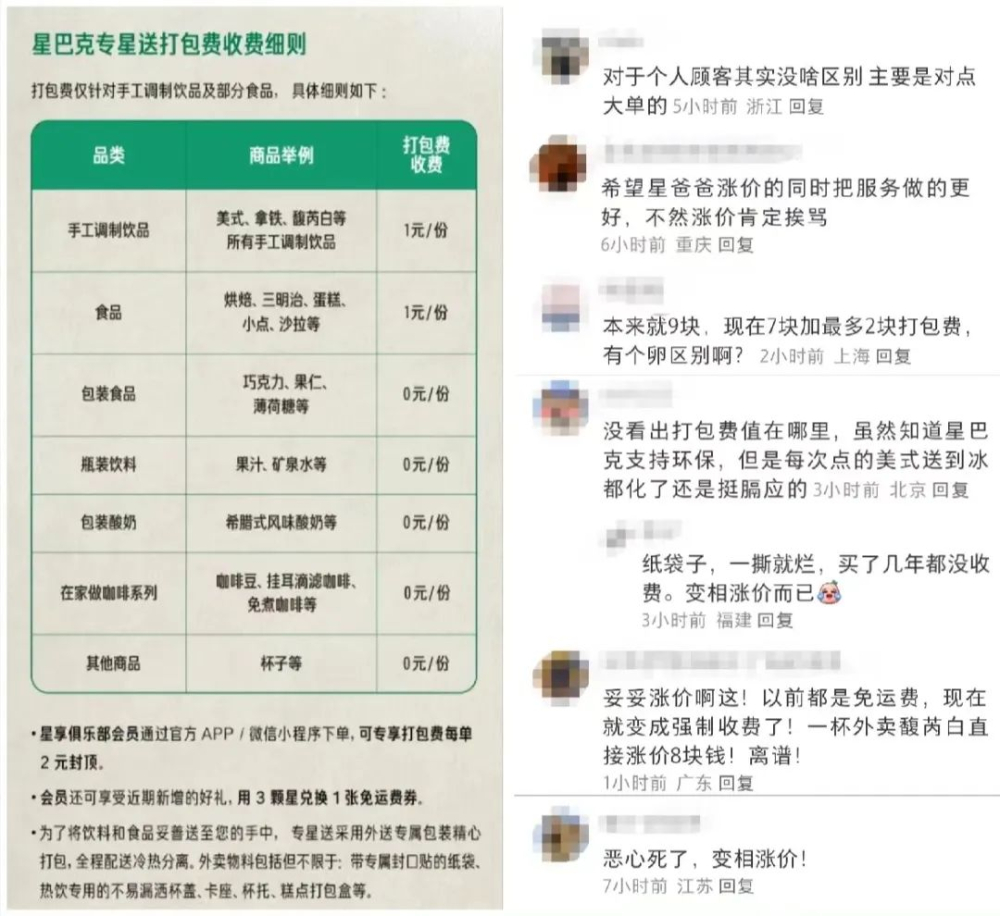
Starbucks China announced changes to the fee rules for its Starbucks Delivers service. The most notable adjustment is the reduction of the delivery fee from the original 9 RMB per order to 7 RMB, but with the introduction of a new packaging fee mechanism—1 RMB per item (such as beverages and sandwiches), capped at 2 RMB per order. While this adjustment may seem like "lower delivery fees, higher packaging costs," its actual impact on consumers varies depending on the contents of the order.
Taking a common order as an example, if a customer orders two drinks, the total of the delivery fee and packaging fee after the adjustment remains 9 RMB, the same as before; however, if only one drink is ordered, the new system saves 1 RMB. For single-item customers, the cumulative difference can be significant if they frequently use the delivery service.
However, in reality, many Starbucks members have already reduced delivery costs through free delivery promotions—for instance, certain regions offer free delivery during specific time slots, or free delivery once the order amount reaches a certain threshold. After the implementation of the new fee rules, unless the order meets the free delivery criteria or the customer uses points to redeem a free delivery voucher, users will have to pay at least 1 RMB in packaging fees, potentially increasing the overall delivery cost.
It is worth noting that the packaging fee is not included in the current free delivery promotions—that is, no matter how users obtain free delivery,the packaging fee still must be paid separately.Therefore, even if the delivery fee is waived, there may still be an additional expense of 1 to 2 RMB per order.
Faced with the new fee structure, many consumers are beginning to seek alternative solutions, turning to third-party delivery platforms to reduce expenses. However, in practice, although some platforms can offset the 7 RMB delivery fee through promotional discounts,the packaging fee still applies, and some platforms do not set a cap on the packaging fee.If an order includes multiple items, the final packaging fee paid could even exceed the official channel’s charges.
In fact, it is not uncommon for the food and beverage industry to adjust delivery-related fees. Earlier this year, KFC also reduced its home delivery fees and introduced a packaging fee mechanism; tea brands such as HEYTEA and Chun Shui Tang have also flexibly charged service fees based on the composition of delivery orders and the use of packaging materials. This wave of adjustments may reflect changes in the overall operational costs of delivery services.
According to a report by Southern Metropolis Daily, Starbucks has not only adjusted its fees but also upgraded its delivery packaging—for example, using special anti-spill lids, custom delivery boxes, and implementing separate delivery for hot and cold beverages—to enhance the quality of beverage delivery and the consumer experience. These changes may not be directly reflected in the price, but in the long run, they help maintain the brand’s service standards.
Industry observers believe that while the additional packaging fee may affect the choices of price-sensitive users, it may also prompt consumers to reconsider their need for delivery, opting instead to visit stores or choose pickup services, thereby increasing in-store traffic. For Starbucks, striking a balance between improving service quality and controlling user costs will be key to its future delivery strategy.
The above content is compiled by CoffeeHunters, a coffee news website.


