







Introduction:A coffee shop launched a group-buying promotion titled “1-Yuan Beauty Coffee: Choose One of Three,” available exclusively to women under 35 during specific time slots. The promotion sparked online backlash and boycotts after including a note stating, “The boss is picky—if you’re not deemed beautiful, you’ll have to pay the difference.” Although it was briefly taken down by the platform, it quietly returned, triggering a second wave of controversy. What legal boundaries did this campaign cross? And are the criticisms from consumers and netizens legally justified? This article delves into advertising laws, civil regulations, and explores the boundaries of online speech.
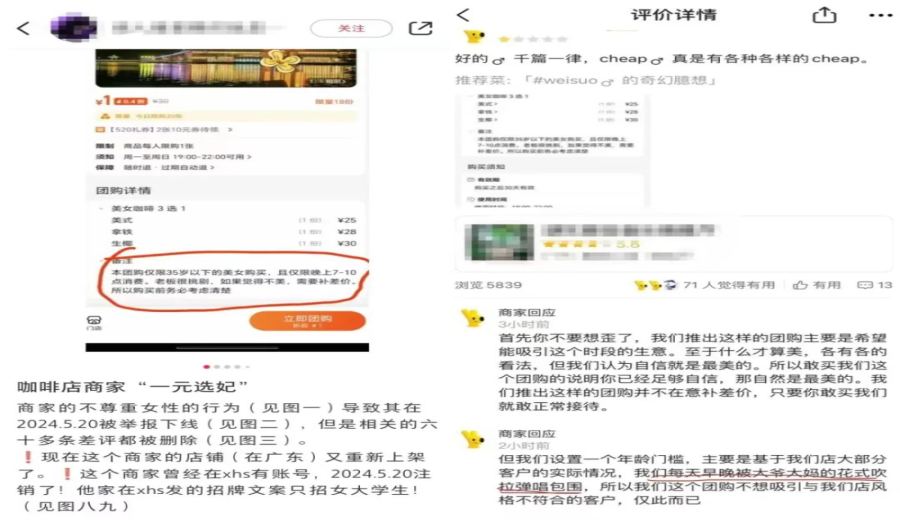
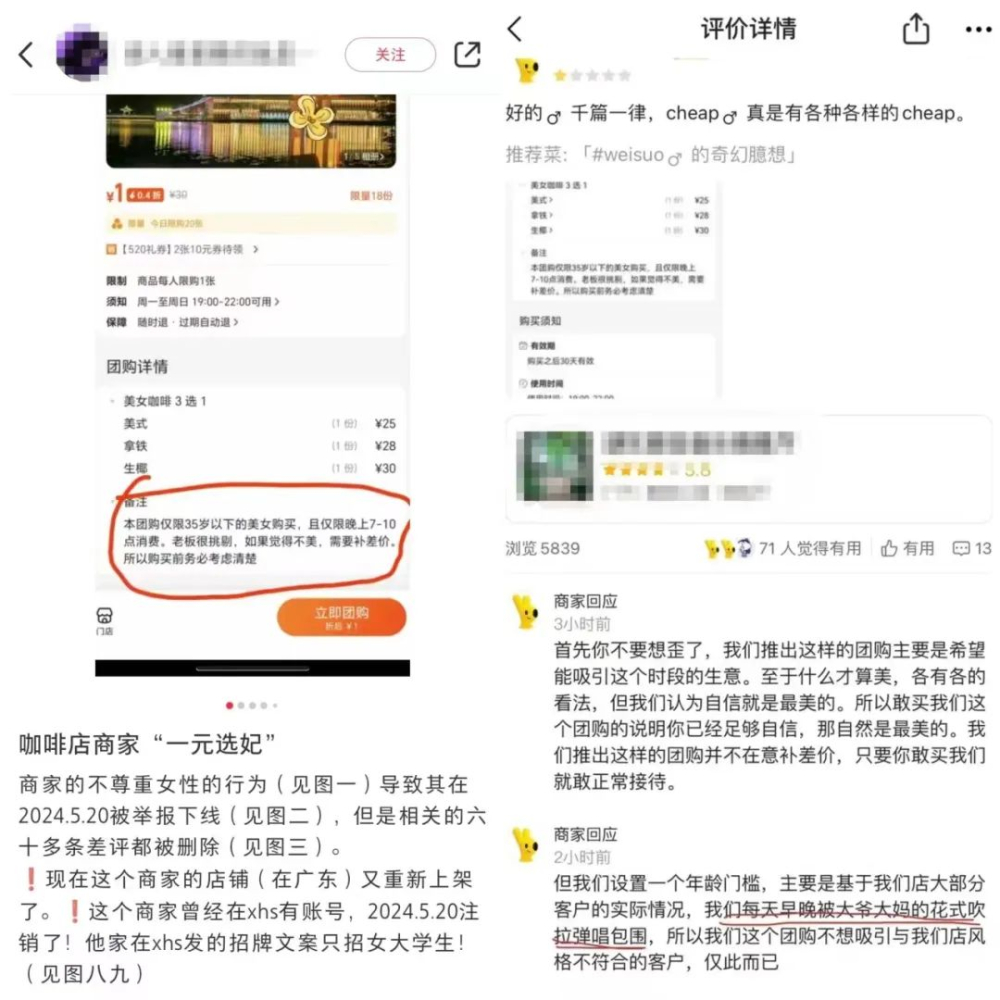
Recently, a coffee shop listed a promotional campaign on a group-buying platform called “1-Yuan Beauty Coffee: Choose One of Three.” The detailed rules specified that only female customers under 35 could purchase the offer between 7 p.m. and 10 p.m., with an additional controversial note in the remarks section reading, “The boss is picky—if you’re not deemed beautiful, you’ll have to pay the difference.”
After the campaign went live, its conditions and the wording in the remarks quickly struck a nerve with the public, sparking intense dissatisfaction online. Many netizens criticized the promotion for objectifying women and discriminating based on age, and they spontaneously left a large number of low ratings and negative reviews on the platform to express their boycott.
Under public pressure, the shop initially explained that the age restriction was meant to match the overall style of the store and was not intended to show bias or malice toward female customers. However, this explanation failed to gain widespread acceptance. By May 20, the platform had removed the shop’s listing, and on the same day, its official social media account was also deactivated.
Yet, not long after, the coffee shop quietly reappeared on the group-buying platform. The previously controversial “1-Yuan Beauty Coffee: Choose One of Three” package was gone, along with the dozens of negative reviews that had accumulated. Nevertheless, many netizens remained displeased with the shop’s return and once again left low ratings, leading to its swift removal for a second time.
Regarding this incident, legal experts pointed out that the merchant’s “1-Yuan Beauty Coffee” campaign may have violated Article 9 of China’s Advertising Law, which explicitly states that advertising content must not include obscene, pornographic, gambling, superstitious, terrifying, violent, or otherwise inappropriate information, nor can it contain language that objectifies or discriminates against specific groups.
Furthermore, such actions may also breach relevant provisions in China’s Civil Code concerning personality rights and equality, especially in setting “beauty or ugliness” as a condition for consumption, which clearly shows disregard for the dignity of consumers and further fuels the controversy.
Legal experts further explained that determining whether such advertisements are illegal requires a comprehensive assessment of their content, the purpose of the advertisement, and its potential impact on the public. For example, whether using the belittlement of women’s appearances as a gimmick to attract traffic, or whether it sets a negative example for societal values, are key evaluation points.
On the other hand, while the spontaneous low ratings and boycott actions by netizens fall under the umbrella of freedom of speech, which is protected by law, legal experts caution that if some comments escalate from rational criticism to personal attacks, insults, or even malicious rumors—causing actual harm to the merchant’s reputation—they may constitute online violence. Those involved could bear corresponding civil liabilities for infringement and may even face administrative penalties.
This incident also highlights the importance of content review mechanisms on group-buying platforms. Industry experts suggest that platforms should establish stricter and multi-layered review processes, comprehensively evaluating promotional materials such as text, images, and videos uploaded by merchants—from aspects like legal compliance, social impact, and linguistic sensitivity.
At the same time, platforms should combine AI review technologies with professional human screening to enhance the ability to identify and respond to potentially non-compliant content swiftly, ensuring that inappropriate or controversial information is blocked at the first instance and avoiding subsequent issues caused by blind spots in automated reviews.
In summary, campaigns like “1-Yuan Beauty Coffee” not only raise ethical and legal questions in commercial practices but also serve as a reminder to both merchants and platforms that they must strictly adhere to legal boundaries in marketing and review processes, respecting the equal dignity and worth of every consumer.
The above content is compiled by CoffeeHunters, a coffee news website.


