







Introduction:The Bugisu region of Uganda is renowned for its high altitude and volcanic soil, making it one of the few golden zones in the country dedicated to cultivating Arabica coffee. This article delves into how Mount Elgon fosters uniquely flavored coffee beans, covering everything from varieties and processing methods to regional climate conditions, helping you grasp the key knowledge for selection and brewing, as well as understanding the evolution of Uganda’s coffee industry.
Africa is not only a paradise for wildlife but also one of the world’s major coffee-producing regions. As one of the few African countries with native coffee tree species, Uganda’s coffee industry has gradually transitioned from scattered early-stage cultivation to modernization and internationalization. Among its three main producing regions, Bugisu stands out with its exceptional geographical environment as the primary source of the country’s Arabica coffee, and it produces uniquely distinctive flavors due to its proximity to the majestic Mount Elgon.
About three-quarters of the African continent enjoys an average annual temperature exceeding 20°C, along with vast highland areas and abundant rainfall, providing ideal natural conditions for coffee growth. Situated on the East African Plateau near the equator, Uganda maintains a cool climate thanks to its high elevation, with an average annual temperature of around 22.3°C. The rainy seasons are concentrated between March and May, and September to November, with annual rainfall typically ranging from 1,000 to 1,500 millimeters—perfectly suited for the growth and development of coffee trees.
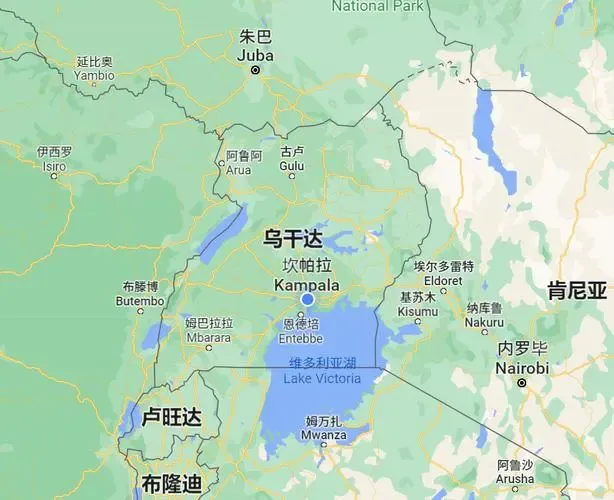
Uganda is not only a significant coffee producer in Africa but also one of the few countries globally with native coffee varieties. The local wild Robusta variety was first discovered along the shores of Lake Victoria, while Arabica varieties were introduced in the early 20th century from Malawi or Ethiopia. However, because Arabica is less resistant to pests and diseases and requires more complex cultivation and post-harvest management, many farmers prefer Robusta for its stronger disease resistance and easier care, resulting in its long-term dominance, accounting for about 80% of the national production.
Looking back at history, Uganda’s coffee industry accounted for just 1% of the country’s total exports in 1925. It wasn’t until 1929, when the Coffee Industry Board was established and began integrating resources and technology through a cooperative model, that the industry gradually began to develop. By 1940, coffee had become Uganda’s most important export commodity. However, subsequent factors such as abnormal weather, market price fluctuations, and farmers shifting to other crops led to a production decline of around 20%. It wasn’t until the late 1990s, with the adoption of modern techniques and integration into the international market, that the industry gradually recovered. Currently, the annual export volume remains stable at approximately 6.5 million bags (each bag weighing 60 kilograms).
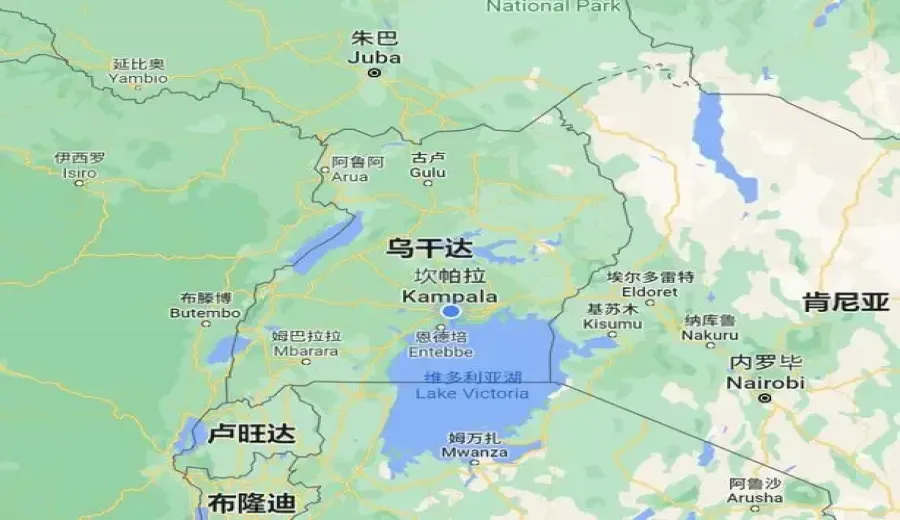
In terms of regional distribution, Uganda’s coffee production can be mainly divided into three major areas: Bugisu, West Nile, and the Rwenzori Mountains, with Bugisu being the most representative Arabica-producing region. Located in eastern Uganda, it lies at the western foothills of Mount Elgon, which borders Kenya. Although this dormant volcano spans both countries, it brings Bugisu rich volcanic soil and a notable altitude advantage.
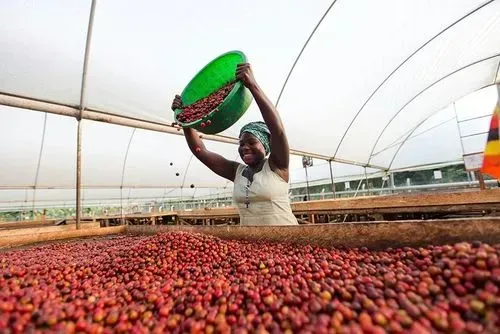
Coffee farms in Bugisu are mostly located at elevations between 1,500 and 2,300 meters. The high altitude not only slows down the ripening process of the coffee cherries but also promotes the accumulation of flavor compounds, resulting in cups with bright acidity and rich layers of flavor. The local volcanic soil is rich in minerals, complemented by a humid climate and significant day-night temperature variations, providing nearly perfect growing conditions for Arabica varieties. The main cultivars planted in this area include Kent, Typica, SL14, and SL28. These varieties demand higher growing conditions, but as a result, they exhibit unique terroir characteristics.
It’s worth noting that most of the coffee in the Bugisu region is grown by smallholder farmers using traditional organic farming methods, with washed processing being the primary method. Some farms also use natural or honey processing to further diversify the flavor profiles. During washed processing, farmers meticulously remove the pulp and mucilage, allowing the coffee beans to retain a clean, bright acidity and delicate sweetness, while honey processing preserves more mucilage, resulting in a rounder, richer mouthfeel and abundant tropical fruit notes.
For consumers who enjoy pour over or specialty coffee, the Arabica coffee beans from the Bugisu region are definitely worth trying. A medium-light roast is recommended to highlight its bright lemony acidity and floral, honey-like aftertaste. When brewing, a coffee-to-water ratio of 1:15 to 1:16 is suggested, with water temperature controlled between 90–93°C, and medium-fine grind size. Using the pour over method will best showcase its intricate flavor layers.
In summary, the Bugisu region of Uganda, leveraging the geographical advantages of Mount Elgon along with its high altitude and unique microclimate, produces Arabica coffee with distinct personality. Whether you’re a coffee enthusiast interested in exploring different origins or a pour over lover seeking fresh flavors, this premium bean from East Africa is a must-add to your coffee flavor exploration list.
The above content is compiled by CoffeeHunters, a coffee news website.


