







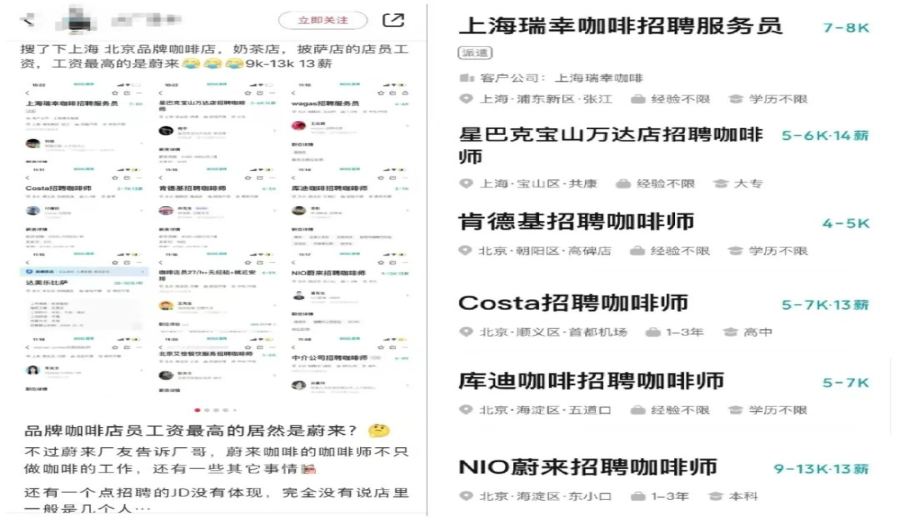
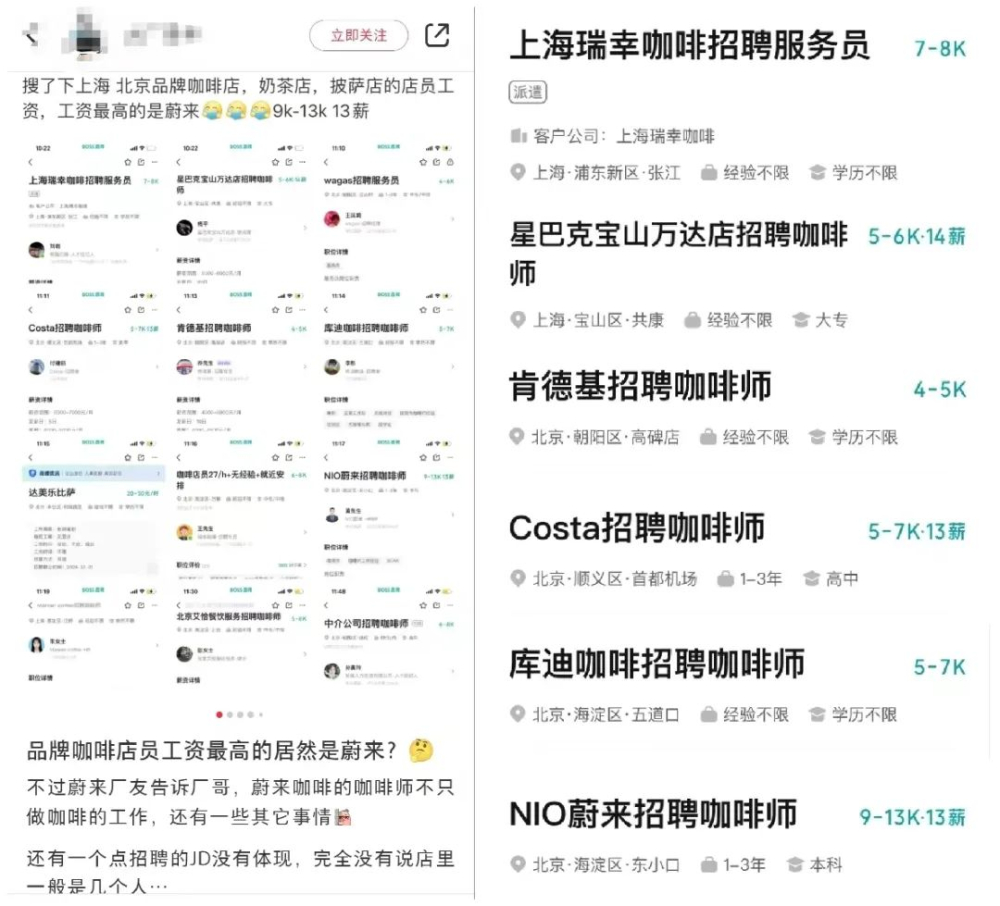
Introduction:The 2023 salary standards for baristas have been revealed, showing significant differences in compensation between chain brands and independent shops. According to the survey, baristas at NIO, a brand under NIO Inc., can earn up to 13K RMB per month, but their job responsibilities are vaguely defined and may involve hidden additional burdens. This article delves into the real salary structure of the industry, from full-time to part-time expectations, and explores how equipment automation impacts the career development of baristas.
Data from the National Bureau of Statistics in 2023 shows that the average annual salary for employees in urban non-private sector jobs reached 120,698 RMB, but the wages of baristas are noticeably lower. Recent data from recruitment platforms reveal that the average monthly salary for baristas at chain brands in first-tier cities is only 5,084 RMB, with the median hovering around 5,000 RMB. Over half of the professionals in this field earn between 4,000 and 6,000 RMB.
Notably, NIO, the coffee brand under NIO Auto, has made a striking entry into the recruitment market. Publicly available information shows that it offers a monthly salary ranging from 9,000 to 13,000 RMB along with a 13th-month bonus. However, upon closer inspection of the job descriptions, most listings provide only vague outlines of actual duties, lacking specific listed responsibilities. Former employees revealed that aside from making basic beverages, they were often required to handle event coordination, product photography, and even temporarily look after customers’ children — tasks far from typical.
The work pace at chain brands is especially intense, with machines running continuously for up to six hours during peak hours, requiring staff to handle a continuous stream of orders under high pressure. Most employees report that from opening shift to closing, it’s difficult to secure even basic time for meals or water breaks. This disparity between the high-intensity work model and the actual salary level is a common phenomenon across the industry.
The industry’s pay structure shows a clear disconnect. Part-time positions typically offer hourly wages ranging from 15 to 30 RMB, which is not only below the market rate for hourly workers (around 55 RMB/hour), but also lower than that of housekeeping staff (about 45 RMB/hour). Some industry workers joke that their hourly income is even less than that of basic cleaning staff, reflecting the unique positioning of labor value within the coffee service industry.
Technological advancements in equipment have had a profound impact on entry barriers. As chain systems adopt fully automated devices with stable performance, reliance on traditional barista skills has significantly decreased. Modern shops are more inclined to train employees to carry out standardized operating procedures, similar to repetitive tasks on an industrial assembly line, which has compressed the premium space for specialized skills.
Independent coffee shops face a completely different set of operational challenges. In the fiercely competitive landscape, many small-scale stores focused on quality endure significant pressure. Balancing the dual considerations of maintaining product quality and controlling costs, operators often struggle to offer more competitive salary packages, further narrowing the upward mobility for professional baristas.
Consumer market perception also plays a key role. The long-standing strategy of low pricing has cultivated consumer habits that view coffee simply as a stimulant beverage. This mindset leads some customers to undervalue professionally crafted coffee, believing that only basic operational skills are needed to make it — indirectly affecting the industry's emphasis on professional certification and technical training.
The above content is compiled by CoffeeHunters, a coffee news website.


