







Introduction:Starbucks has recently filed multiple trademark applications in Russia, sparking widespread speculation in the market about whether it is preparing to re-enter the local market. From its core brand “Starbucks Coffee” to key identifiers such as “Frappuccino,” as well as categories like instant coffee and membership management systems, what lies behind this series of moves? This article will delve into the strategic intent behind Starbucks’ current trademark filings and explore the current state and potential challenges of the Russian coffee market.
Starbucks has recently submitted a series of trademark registration applications with the Federal Service for Intellectual Property (Rospatent) in Russia, covering core brand identifiers such as “Starbucks Coffee” and “Frappuccino,” as well as related categories including instant coffee, on-site beverage preparation, and membership management systems. These applications were filed intensively within a short period of time, immediately drawing significant attention over whether the brand is considering a return to the Russian market.
Since withdrawing from Russia in 2022 due to international developments, Starbucks’ local assets were taken over by the domestic company Pinskiy&Co, which rebranded the operations as “Stars Coffee” and resumed business. However, legal disputes over trademark usage and brand rights between the two parties remain unresolved. Starbucks’ recent reapplication for multiple key trademark categories is seen not only as potentially paving the way for a market re-entry but also as an important move to protect its brand rights.
Looking back to March 2022, Starbucks announced the suspension of all operations in Russia, and two months later formally declared its exit from the Russian market, closing its 130 local stores. Subsequently, the Russian local catering group Pinskiy&Co, in partnership with well-known rapper Timati, acquired these assets for approximately 500 million rubles (about 6 million USD). Since the deal did not include the brand trademarks or product formulas, the new operators launched the “Stars Coffee” brand, replacing Starbucks’ iconic mermaid logo with an image of a woman wearing traditional Russian headdress, while the product line closely mimicked the original Starbucks menu.
During the two years of operation under their management, “Stars Coffee” continued to provide Russian consumers with a familiar coffee experience. Notably, in April of this year, the brand’s operators filed a claim in court seeking to terminate the legal validity of Starbucks trademarks in Russia, adding further strategic significance to Starbucks’ current trademark applications. Beyond considerations of market expansion, these moves clearly also serve the purpose of protecting brand assets.
Analysts point out that Starbucks had accumulated over 15 years of operational experience in the Russian market, establishing considerable brand recognition and a loyal customer base. If it chooses to return, these existing assets could help the brand quickly rebuild its market position. However, the current Russian coffee market environment is vastly different from what it was two years ago—not only has competition intensified and consumer preferences shifted markedly, but the overall political and economic situation remains highly uncertain.
In recent years, Russian consumers have gradually shifted toward locally roasted brands and specialty coffee shops, showing increased price sensitivity while also having higher expectations for product innovation and localized elements. If Starbucks truly intends to make a comeback, in addition to facing the strong competitor “Stars Coffee,” it will also need to reassess the demands of the local consumer market and the structure of operational costs, formulating a more precise market strategy.
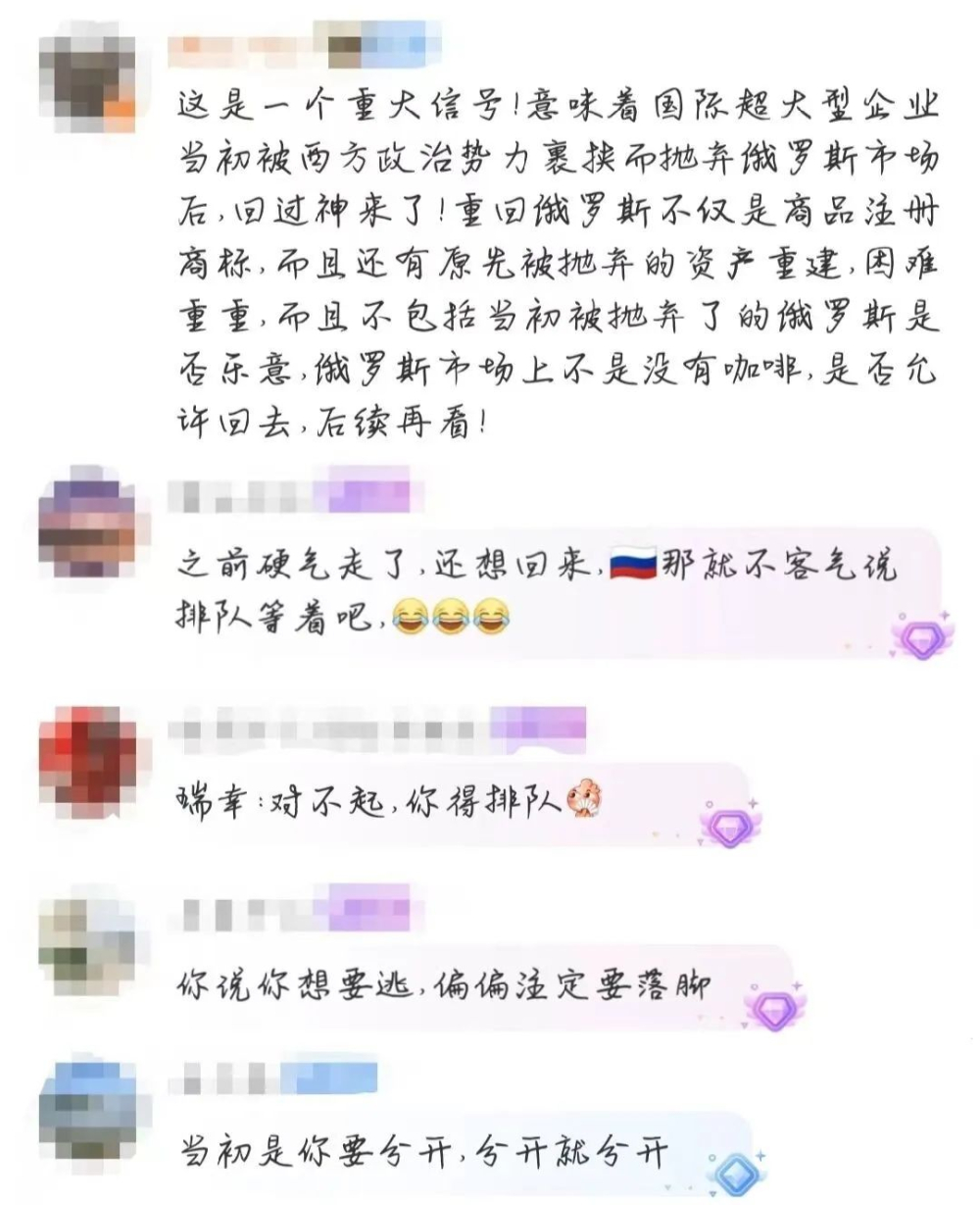
At present, Starbucks has not yet issued an official statement regarding this wave of trademark applications, and the market continues to closely observe the true intentions behind these legal actions. Regardless of whether it ultimately re-enters the Russian market, this series of trademark registrations clearly demonstrates the brand’s emphasis on intellectual property positioning in the region.
The above content is compiled by CoffeeHunters, a coffee news website.


