







Introduction:Seesaw Coffee, once a representative brand of China’s specialty coffee scene, has closed more than 50 stores in just six months, spanning first- and second-tier cities such as Hangzhou and Suzhou. Faced with fierce market competition and price wars, Seesaw has adjusted its strategy by expanding into second- and third-tier cities like Guiyang and Luoyang, and seeking new growth through franchising. This article delves into the reasons behind its store closures, strategic shifts, and how specialty coffee brands can survive in a reshuffled market.
Once regarded as one of China’s leading specialty coffee brands, Seesaw Coffee has recently faced an unprecedented challenge of store contraction. From the end of last year to June this year, as many as 50 stores nationwide have gradually shut down, including multiple cities such as Hangzhou and Suzhou reporting closures, drawing widespread attention from both the industry and consumers.
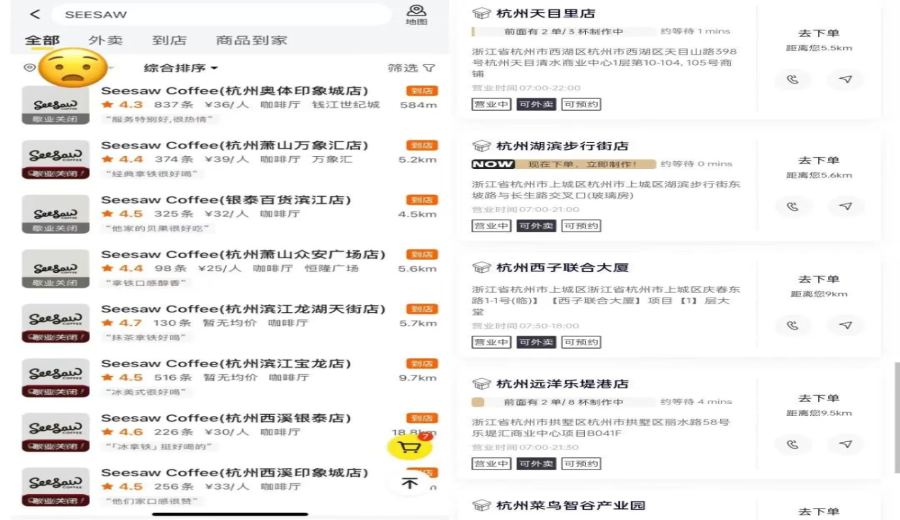
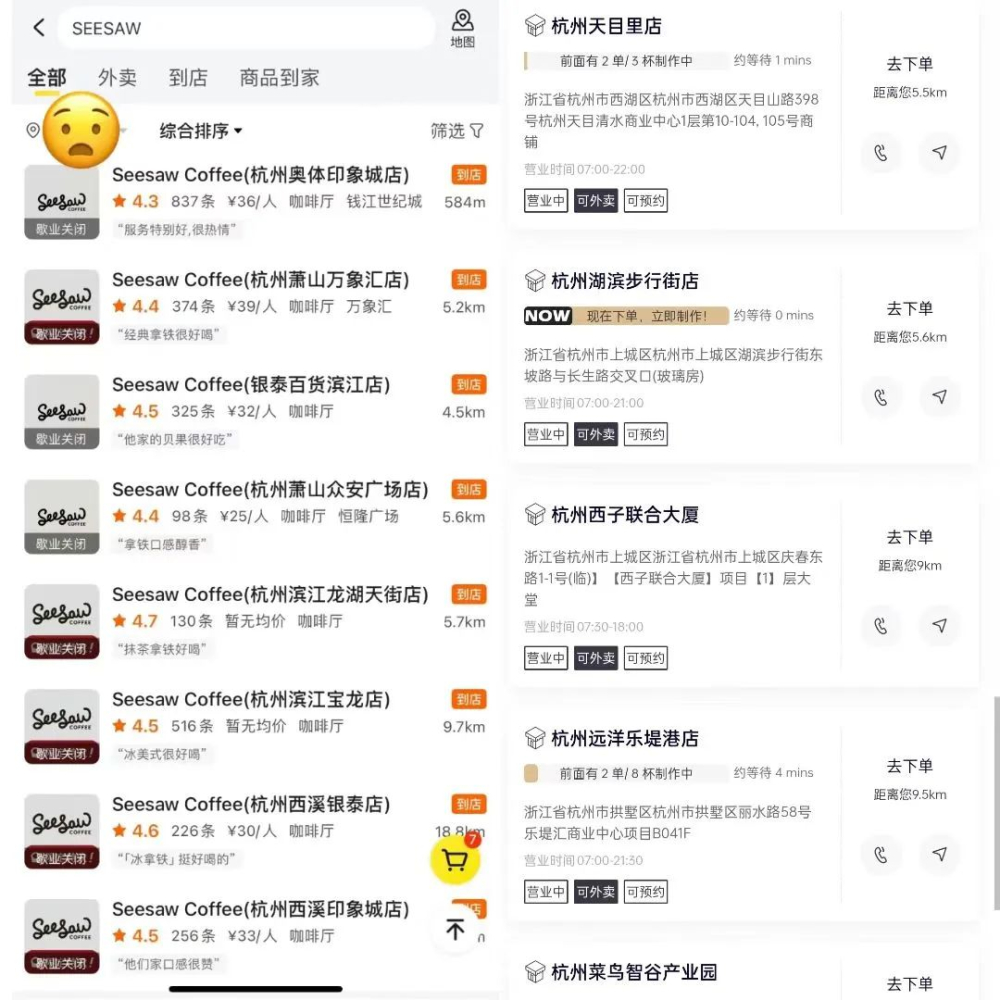
This wave of closures did not come out of the blue. As early as half a year ago, numerous users on social media platforms were sharing reports of Seesaw store closures across different locations, especially in Hangzhou, where several customers noted that multiple outlets, including those at the Olympic Sports Impression City, had quietly shut down—so much so that they could no longer be found on delivery platforms or food review websites. According to the official mini-program, only five stores in Hangzhou remain operational.
Faced with various speculations about the reasons for the closures, Seesaw’s official customer service merely responded vaguely with “due to some reasons” without providing further specifics. However, from various online discussions, comments such as “Seesaw at Suzhou Center is closed” and “Seesaw at Wu Jie has disappeared” have been rampant, indicating that these closures were mostly unexpected, with most outlets eventually being taken over or ceasing operations altogether.
Looking back at Seesaw’s previous expansion strategy, the brand had primarily targeted high-end mall locations in first-tier cities. According to statistics from December 2023, Seesaw had a total of 135 stores nationwide, with over half—70 stores—concentrated in Shanghai, while the rest were distributed across first- and second-tier cities including Beijing, Shenzhen, and Hangzhou. Yet, just six months later, by June 10, 2024, the number of operating stores had sharply declined to 85, covering only nine cities. Although Shanghai remains the city with the most stores, the overall scale has clearly shrunk.
Notably, despite the ongoing closure news, Seesaw has not completely halted its expansion but has instead shifted its strategy, focusing new openings on less competitive second- and third-tier cities such as Guiyang, Luoyang, Cixi, Xuzhou, Yiwu, and Qingdao. Most of these new outlets have made their debut as brand flagship stores, signaling the brand’s attempt to seek breakthroughs in relatively “blue ocean” markets.
This shift is closely related to Seesaw’s strategy of opening up franchising in recent years. In the current environment where the coffee market price war continues to escalate and new brands keep emerging, the operational pressures on various specialty coffee brands are unprecedentedly immense. Compared to many competitors, Seesaw has not demonstrated significant advantages in product positioning, pricing strategy, or brand identity, making strategic adjustments almost inevitable.
From market data, Seesaw’s original layout model, which was primarily mall-based, faces tremendous operational challenges under the dual pressures of reduced consumer foot traffic and persistently high rental costs. In contrast, cities like Guiyang and Luoyang generally have lower rents and labor costs, and the coffee market there is not yet saturated, making them undoubtedly more promising options for brands seeking new directions.
However, shifting towards franchising and second-tier cities is not without risks. How to maintain brand consistency, ensure quality control of franchised stores, and how to uphold the positioning of specialty coffee in more price-sensitive markets are all important issues Seesaw will have to face in the future. Image source: Internet screenshot
The above content is compiled by CoffeeHunters, a coffee news website.


