








Introduction:Many people assume that a moka pot is just a home version of an espresso machine, and that the coffee it brews is equivalent to espresso. However, there are actually significant differences between the two in terms of pressure and extraction efficiency. This article delves into the historical evolution of the moka pot and espresso machines, the development of brewing pressure, and the true mechanics behind crema formation. It helps you understand why coffee brewed with a moka pot cannot be considered true espresso, and offers practical tips to make your moka pot coffee richer and more crema-rich.
Both the moka pot and espresso machines use pressurized methods to extract coffee, which is why they are often mistaken for a home version of an espresso machine—some even believe that coffee made with a moka pot is espresso. But is this really the case? This article will start with the technological evolution of coffee machines, explore how the definition of espresso came to be, and compare the technical innovations of the moka pot from its inception in 1933 to the dual-valve versions introduced by 2020. You’ll learn how the pressure difference between 1–2 bar and 9 bar affects coffee concentration and crema production, thereby clarifying the true role of moka pot coffee.

The reason the moka pot is often seen as a substitute for an espresso machine is mainly because its extraction principle is similar to that of an espresso machine—both use pressure to extract coffee. This results in a strong coffee with a layer of golden to brownish oil on the surface, known as crema, leading many to mistake it for espresso. But when you look deeper into the history and technical details, you’ll find that the two are fundamentally different.
Looking back at the history of coffee machines, the earliest can be traced back to 1884, with the first-generation pressurized coffee machine invented by Angelo Moriondo. However, that was just a prototype and could not yet be considered a modern espresso machine. It wasn’t until 1905, after multiple improvements, that the first truly pressurized coffee machine was born, marking the initial formation of the espresso machine.

This pressurized design significantly increased the speed of coffee extraction and also produced a small amount of crema in the coffee. Although the pressure at that time was only about 1.5 bar—far from today’s 9 bar—it was still a major technological breakthrough at the time. As a result, the term "espresso" was officially included in the Italian dictionary in 1920, defined as "concentrated coffee quickly made under pressure." The moka pot was born against this technological backdrop and market demand.
In 1933, the Italian brand Bialetti launched the moka pot. This simple yet powerful coffee tool uses steam pressure generated by heating to brew coffee, with a pressure range of about 1–2 bar. Although this pressure is not as high as that of modern espresso machines, it is sufficient to extract a strong coffee liquid, with an appearance quite similar to that of espresso at the time. As a result, it quickly became popular in Italian households.
If you want to brew a richer, crema-rich coffee with a moka pot, the key lies in choosing medium to dark roasted coffee beans and ensuring that enough carbon dioxide is produced during the extraction process. Dark roasted beans release more gases when heated, which helps form a more pronounced crema layer. For beginners at home, it is recommended to choose medium to dark roasted blends, such as those with caramel aroma and moderate acidity, which can enhance the flavor performance of moka pot coffee.
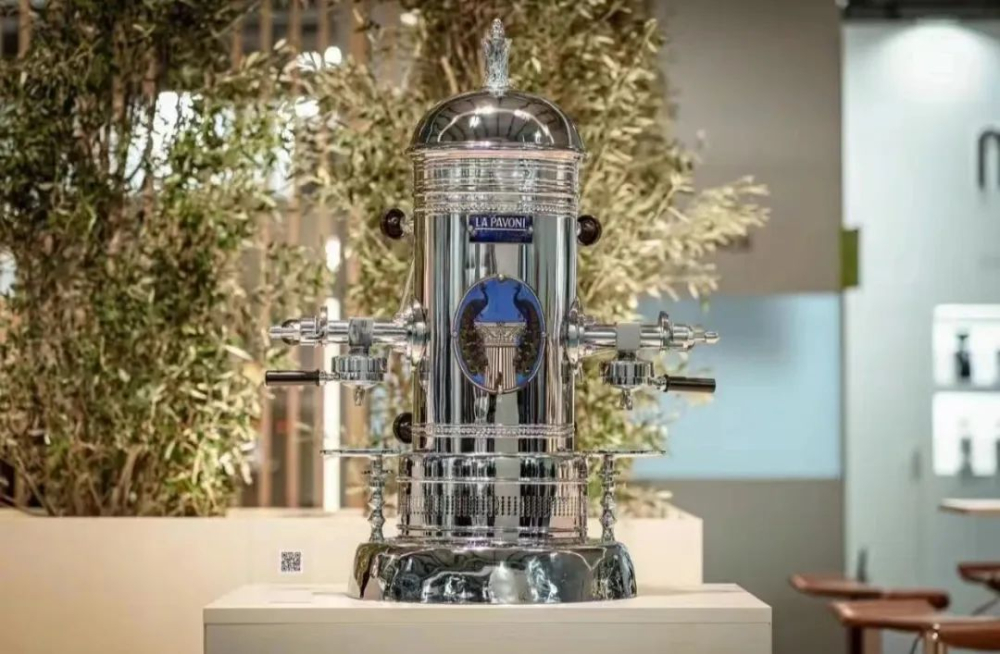
However, with the advancement of coffee technology, in 1961, Faema introduced the first high-pressure espresso machine with a brewing pressure of 9 bar, completely redefining espresso. Under high pressure, substances in the coffee grounds are extracted more thoroughly, resulting in higher coffee concentration and finer, more voluminous crema. From then on, the image of espresso was reshaped, while the moka pot, with its mere 1–2 bar pressure, could not achieve the same extraction effect and gradually became distinct from true espresso.
Because the moka pot requires a longer brewing time to achieve an appropriate extraction rate, it often needs to use more hot water, which also leads to an overall lighter flavor profile compared to espresso brewed under 9 bar pressure. Even though Bialetti introduced a dual-valve version of the moka pot in 2020, increasing brewing pressure to make the coffee richer and the crema thicker, there is still a noticeable gap compared to standard 9 bar espresso.
In summary, although the moka pot can produce a strong, crema-rich coffee, its pressure is far below the 9 bar standard of traditional espresso machines, so it cannot be considered true espresso. It is more akin to a method of making high-concentration, flavorful coffee at home, rather than espresso. If you wish to enjoy an espresso-like taste at home, selecting the right roast level and bean variety will be key to enhancing the performance of your moka pot coffee.
The above content is compiled by CoffeeHunters, a coffee news website.


