







Introduction:Brazil’s 2023/24 coffee harvest is progressing better than in previous years, with both Robusta and Arabica varieties being harvested earlier, helping to alleviate global market supply pressures. Amid reduced output in Vietnam and logistics bottlenecks, international buyers have turned to Brazil for procurement. Coupled with climate variables and the upcoming implementation of the EU Deforestation-Free Regulation, it is estimated that this season’s exports could exceed 46.3 million bags, setting a new historical record. Below, we take you through the latest seasonal developments and market trends.
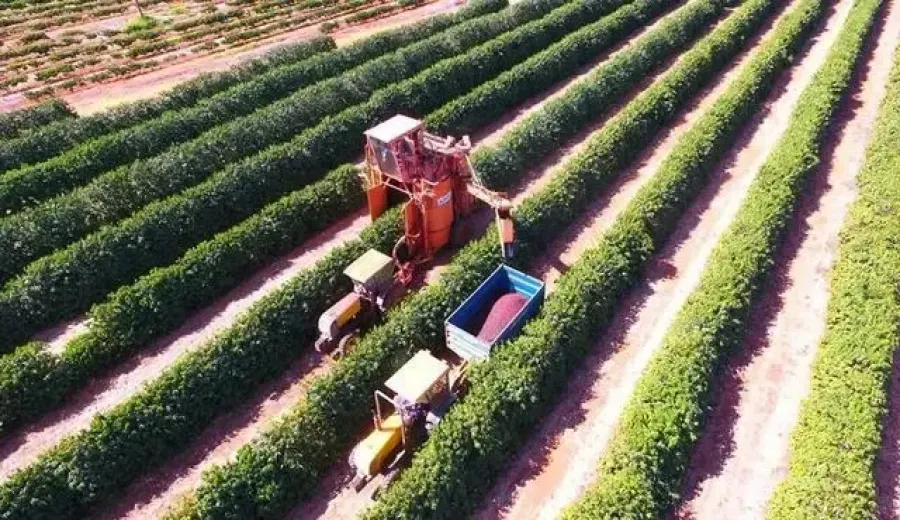
The new coffee harvest season in Brazil is in full swing, with both Robusta and Arabica varieties being harvested noticeably faster than last year, injecting a stabilizing force into the globally tight supply market. According to the latest statistics, the harvesting progress of Robusta has reached 15% of the new season’s total production, higher than last year’s 12%; Arabica has also completed 11%, surpassing last year’s 7%. This progress not only helps shorten market waiting times but also stabilizes the supply-demand balance to a certain extent.
Globally, the coffee market is facing numerous challenges. As one of the major producing regions, Vietnam has recently seen a decline in output. In addition, the Red Sea shipping crisis has led to longer transit times and soaring freight costs on Eurasian routes, causing many buyers to shift their focus to Brazil. As a result, international demand for Brazilian coffee has rapidly heated up, driving overall export performance upward.
The Brazilian Coffee Exporters Council (Cecafé) predicts that the country’s total coffee exports for the 2023/24 season could reach 46.3 million bags (each bag weighing 60 kg), which, if achieved, would set a new record. In fact, in just the first few months of the 2023/24 season—up to April of this year—Brazil had already exported 39.3 million bags of coffee. With international coffee bean prices continuing to rise in May and June, many farms and traders seized the opportunity to accelerate sales, making it highly likely that the final export volume will hit a new high.
In addition to market demand, climate factors have also been a key reason for the accelerated harvest. Brazil’s meteorological authorities have issued warnings indicating that a cold air mass will move southward, with some areas possibly experiencing frost, particularly impacting high-altitude coffee-growing regions. To minimize potential losses, coffee farmers have rushed to accelerate harvesting before the arrival of severe weather, aiming to reduce frost risk as much as possible.
Currently, an extremely cold air mass has reached Rio Grande do Sul in southern Brazil and is gradually moving toward the central-western regions. Particularly in some high-altitude areas of Rio Grande do Sul and Santa Catarina, the minimum temperatures in the coming days could drop to -1°C to -2°C, and the likelihood of frost occurrence cannot be ignored. For coffee farmers, early harvesting has become a necessary measure to prevent losses.
Notably, Brazil is not the only country accelerating exports. According to observations by the International Coffee Organization (ICO), several coffee-producing nations have also recently increased their export volumes. One reason is that many traders are trying to ship out their inventory before the EU’s "Deforestation-Free Regulation (EUDR)" officially takes effect in December. Given that this regulation imposes very high requirements on the traceability and environmental compliance of coffee production, many producing countries are concerned about rising compliance costs or potential export restrictions in the future, and thus have chosen to act ahead of time.
Although the EU announced in March this year that it is considering delaying the implementation of the EUDR and providing adaptation periods based on different countries’ risk levels, the official details and execution plans have not yet been released. This uncertainty has prompted many traders to decide to "ship first and deal with the rest later," to avoid unexpected changes in the future. Industry experts analyze that if coffee export volumes continue to expand in the short term, international coffee bean prices may face some downward pressure.
However, the EU, as the world’s largest coffee consumption market, still maintains strong demand. Major coffee-exporting countries including Brazil, Vietnam, and Colombia will continue to maintain close trade relations with the EU. For consumers, in the coming period, they can not only observe fluctuations in coffee bean supply and prices but also gain insight into how the global coffee industry is responding to multiple challenges such as climate, policy, and logistics.
The above content is compiled by CoffeeHunters, a coffee news website.


