







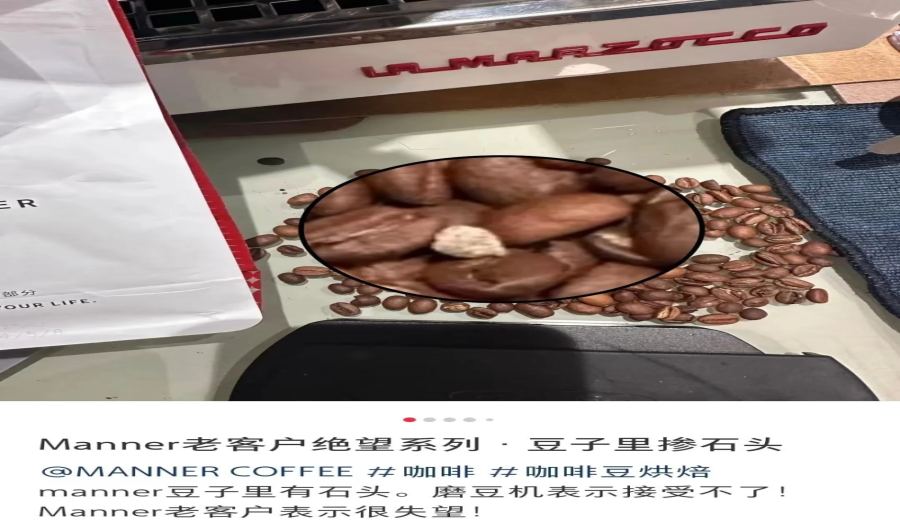
Introduction:Recently, some consumers discovered small pebbles mixed in with Manner coffee beans. Although no damage was caused to the grinder, it sparked discussions about the brand’s screening process. This article delves into the full screening procedure from green beans to roasted beans, explores the potential harm of small stones to grinders, and provides practical pre-pour over bean inspection tips to help coffee enthusiasts avoid potential risks.
Recently, a consumer shared on social media that they found a small pebble in a bag of Manner coffee beans they purchased. Fortunately, they noticed it before pouring the beans into the grinder, avoiding possible machine damage. Although Manner’s customer service responded that coffee beans are agricultural products and it is difficult to avoid imperfections during processing, and emphasized that professional equipment is used during production to screen out foreign objects, this response did not fully alleviate consumers’ concerns.
In fact, this incident has led many coffee enthusiasts to start paying attention to the safety hazards of grinders. Small pebbles can not only affect the flavor of the coffee but may also cause serious damage to the grinder’s burrs—especially for models without bean clamping protection. Once a stone enters, it could create nicks in the burrs or even require part replacement.
So, what screening steps do coffee beans go through from green beans to packaging? Taking Manner’s coffee beans as an example, at the green bean stage, roasters typically use professional equipment for initial sorting to remove obvious defective beans, small pebbles, and impurities such as jute sack threads. This is the first line of defense to ensure coffee quality.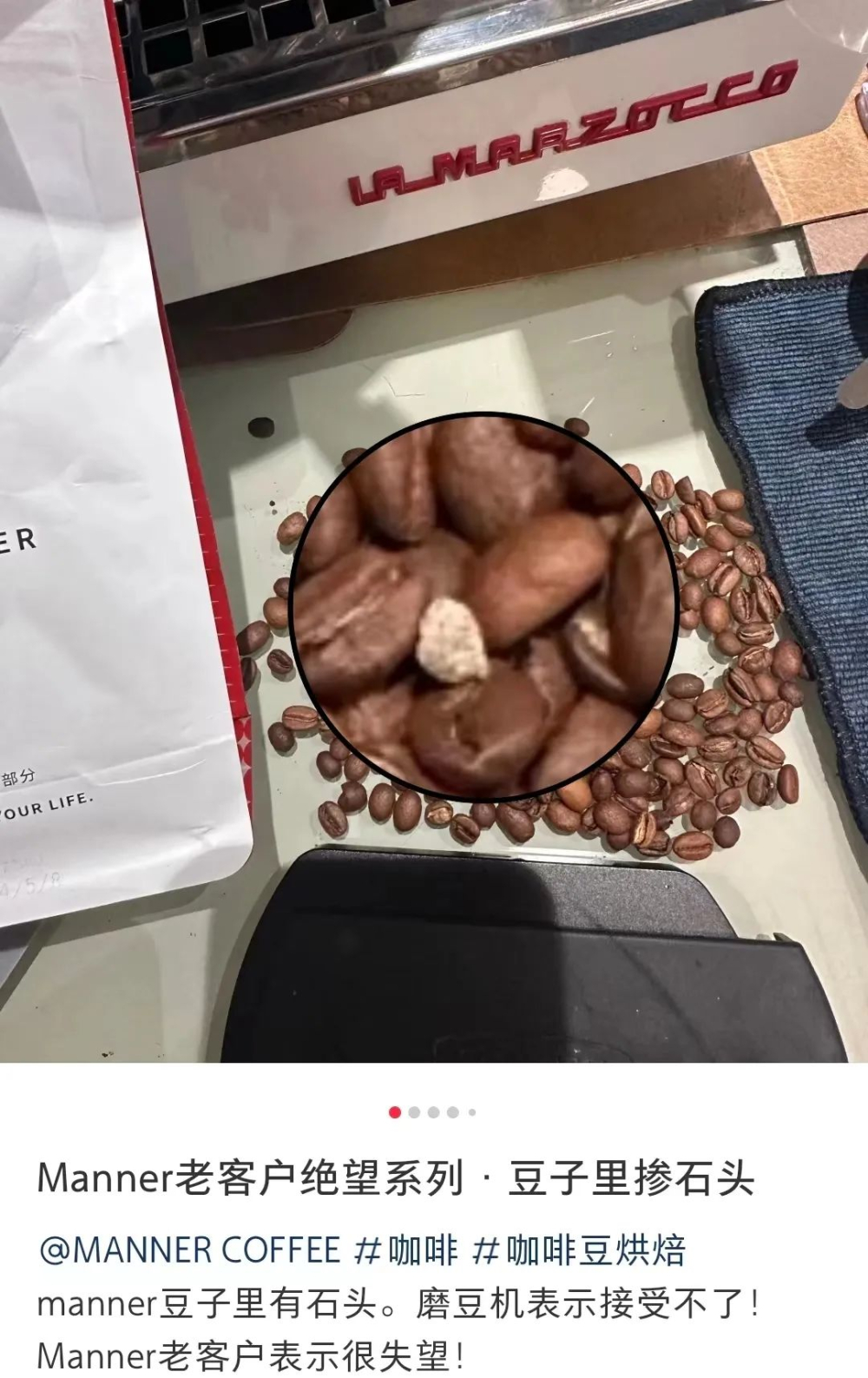
However, even after preliminary screening, it is still difficult to guarantee 100% freedom from defects. After roasting, the beans usually undergo a second screening to further ensure the consistency of bean quality before packaging. Nonetheless, throughout the entire process, no matter how rigorous the machine screening is, there is still a possibility that a very small number of foreign objects may remain—which is why many professional baristas recommend inspecting the beans yourself before brewing.
It is worth noting that the harm small pebbles can cause to grinders is far greater than that of typical defective beans. When stones enter the grinder, their hardness—far exceeding that of coffee beans—can directly cause cracks or chips in the burrs. This not only affects the uniformity of the grind but, over time, may also degrade machine performance and even necessitate repairs. Therefore,it is recommended to develop the habit of inspecting your beans before brewing or using the grinder, especially for models without automatic bean clamping protection.
For consumers, although brands usually have quality control mechanisms in place, coffee beans being agricultural products make it difficult to achieve zero defects. Therefore, in addition to relying on the brand’s screening process, personal inspection before use is also an important step to ensure grinder safety and the quality of coffee extraction. Experienced coffee enthusiasts often pour the beans into a white container before grinding to visually check for any foreign objects.
As of press time, the consumer mentioned that Manner had arranged for a service technician to inspect the grinder, and the issue has been properly resolved. This incident also serves as a reminder to all coffee enthusiasts that while enjoying pour over coffee, one must not overlook the daily maintenance of the grinder and the preliminary inspection of the beans.
In summary, from the initial sorting of green beans, to the secondary screening after roasting, to the consumer’s own inspection before brewing, each step is key to ensuring both coffee quality and machine safety. Understanding these processes not only helps us better enjoy the pleasure of pour over coffee, but also effectively avoids unnecessary damage and risks.

The above content is compiled by CoffeeHunters, a coffee news website.


