








Introduction:Latte art is a highlight of hot lattes, but when customers face a wide selection of patterns, they often struggle to choose. The latte art wheel offers a solution by letting customers randomly select a design, adding an element of fun. However, this approach presents both technical and psychological challenges for baristas. This article delves into the origins of the latte art wheel, its application scenarios, and the enjoyment and pressure it brings to both baristas and customers.
The reason why hot lattes are so popular lies not only in their rich flavor but also in the exquisite latte art designs, which are a key part of their charm. Common patterns like tulips and white swans can enhance the visual appeal of a cup of coffee, bringing joy to those who drink it. Typically, latte art patterns are improvised by the barista, but some skilled baristas prepare a collection of designs in advance for customers to choose from.
However, when there are too many patterns to choose from, some customers become hesitant and face decision fatigue. To solve this problem, an interesting tool has emerged on the market — the latte art wheel. Customers simply spin the wheel, and once the pointer stops, the barista will create a latte with the corresponding pattern on the spot.
This gameplay is similar to opening a mystery box, full of randomness and surprise. Customers enjoy participating and having fun during the selection process. Some Starbucks outlets have even introduced black latte art wheels featuring basic patterns such as hearts and leaves—simple designs that, while not overly challenging, still attract many customers to stop and watch, hoping to see their spun pattern perfectly executed.

However, for highly skilled baristas or customers accustomed to a variety of designs, basic wheels may seem a bit monotonous and lacking in novelty. As a result, some baristas have upgraded the wheel design by expanding the pattern options to include more complex combinations, such as layered flowers or animal-inspired motifs. A single wheel can feature up to ten different patterns, offering a significant challenge.
Some customers even order two lattes, staying to observe how the barista accurately recreates the spun design on the rich surface of the coffee, which not only tests the barista’s technique but also showcases their control over milk foam thickness, pouring speed, and pitcher handling. This improvisational creation often leaves onlookers amazed and full of praise for the barista’s skills.
For consumers who love latte art, the latte art wheel is not just a form of entertainment but also provides a sense of participation and surprise. Even if the price is slightly higher, many customers are willing to pay for this unique experience. However, for baristas, this approach brings considerable pressure.
Latte art requires one-shot execution. If a pattern is too complex and the barista lacks foundational skills or familiarity with all the designs, the wheel might land on a pattern they’re not adept at, leading to mistakes. A failed attempt not only affects the customer experience but may also waste ingredients and even cause unnecessary embarrassment in a busy shop.
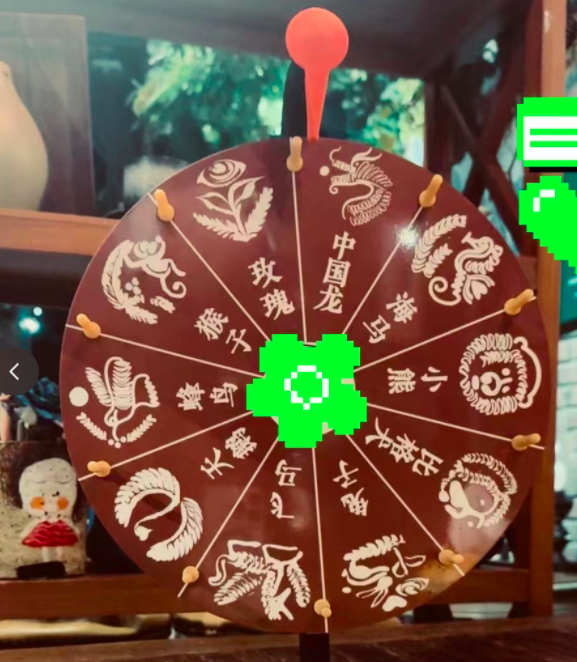
Therefore, for baristas considering using a latte art wheel, it is recommended to first master the preparation process for all patterns on the wheel and practice the more difficult designs repeatedly to ensure stable performance under varying milk flow rates and foam conditions. Additionally, adjustments can be made based on customer preferences, such as offering “easy” or “advanced” pattern options to balance fun with practical difficulty.
In summary, the latte art wheel is an interactive and creatively expressive tool that enhances customer engagement and showcases a barista’s skill level. But finding the right balance between fun and pressure is a key consideration for every barista looking to incorporate this feature.
The above content is compiled by CoffeeHunters, a coffee news website.


