







Introduction:In recent years, some consumers have frequently demanded refunds from coffee shops on the grounds of "poor flavor," with some cases even suspected to involve the same individual. This article delves into the common tactics behind such incidents, shares real-world case responses, and offers practical advice for businesses to protect their rights—helping shop owners identify malicious complaints and safeguard their interests.
Recently, a customer in Wuhan who often requested refunds citing "allergies" sparked industry discussion. Now, a similar situation has resurfaced—coffee shop owners have encountered multiple customers frequently demanding refunds for "incorrect beverage taste," suspected to be the same person switching stores to repeat the tactic. Such behavior not only disrupts shop operations but may also fuel a trend of malicious claims.
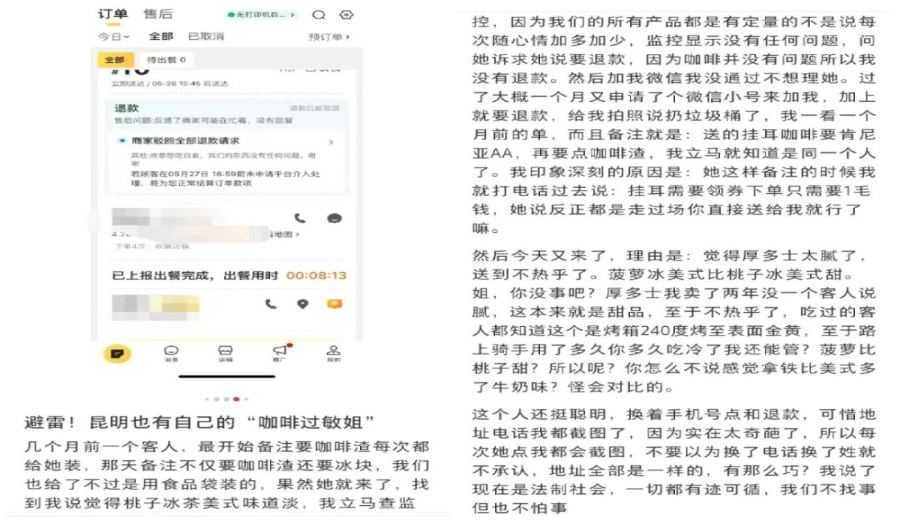
According to multiple shop owners, this particular customer often placed orders for delivery and requested refunds based on subjective reasons such as "too weak," "too sweet," or "too greasy" in flavor. One owner recalled that the first time they encountered this female customer, she requested a refund for a peach iced tea americano, claiming it had "insufficient flavor." After reviewing surveillance footage and confirming the preparation process was correct, the owner denied the request and even declined her suggestion to add her as a friend.
About a month later, the customer contacted the same shop owner again via WeChat, presenting photos of the product to demand a refund. The owner noticed from the label information that the drink in the photo was the same peach iced tea americano previously denied a refund, suspecting the use of an alternate account, and again refused the refund.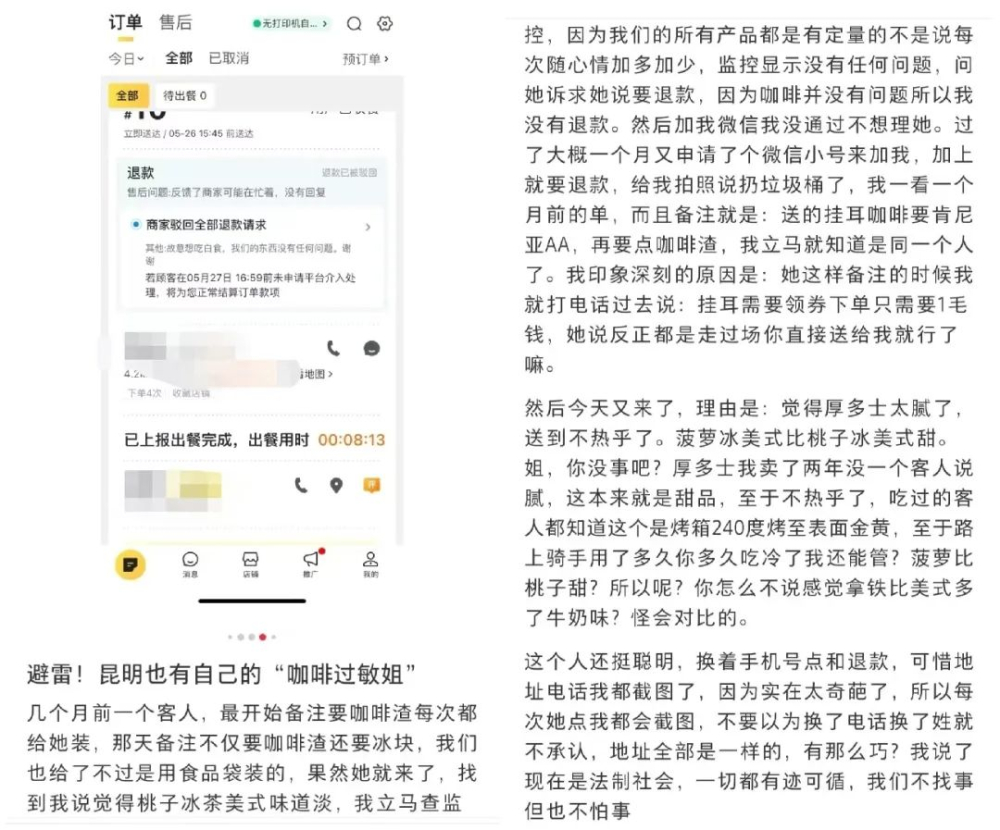
Most dramatically, subsequent orders were later refunded for reasons such as "meal too greasy" or "too sweet." Although the ordering person and phone number differed, the delivery address was identical, leading the owner to suspect it was the same individual. Statistics showed the customer placed around six to seven orders, three of which involved flavor-related refund requests. While no actual losses were incurred, the repeated incidents troubled the owner, prompting a social media post to warn fellow shopkeepers.
After the post went up, several shop owners responded, noting that by comparing order phone number endings and delivery addresses, they too had encountered the same customer using similar excuses for refunds—including "too weak" or "too sweet" subjective claims. Some chose to compromise to retain customers, while others stood firm and refused unreasonable demands.
In fact, such refund requests under various pretexts are rampant in the food and beverage industry. Some customers even make serious accusations like "finding foreign objects" or "experiencing discomfort after consumption," subsequently demanding compensation for medical expenses. Many businesses, aiming to avoid negative reviews that could hurt their trade, often opt to settle quietly, hoping the customers will return in the future.
However, excessive accommodation can backfire. As reported by Red Restaurant Network, one man repeatedly placed flies in takeout meals and extorted over 8,000 yuan from 29 shops; in Shanghai, a consumer fabricated claims of "finding hair or wire" in nearly 200 delivery orders over three years, demanding refunds and compensation. Both individuals were eventually sentenced to seven months in prison and fined.
Industry insiders note that such refund claims are usually for small amounts, and the photos or videos provided by customers often appear as strong evidence, easily misleading people into believing them. When weighing the cost of filing a complaint against the simplicity of direct compensation, businesses often choose the latter—unintentionally encouraging those who deliberately look for trouble.
Faced with such complaints, experts advise businesses to first internally review their processes and preserve evidence such as surveillance footage, order details, and communication records. If no fault is found, they should assert their rights according to platform rules or legal channels rather than always conceding—this is the most effective way to curb malicious refund behavior.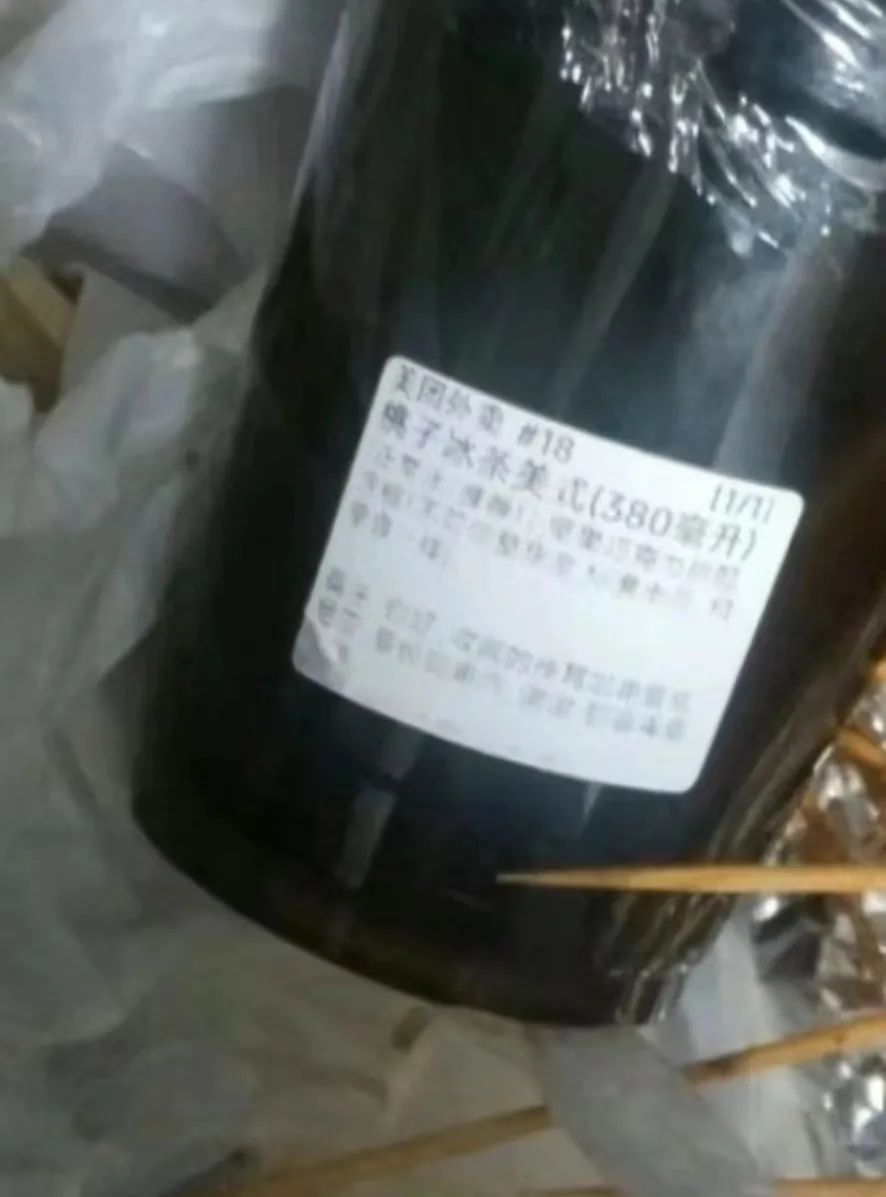
The above content is compiled by CoffeeHunters, a coffee news website.


