







Introduction:Myanmar is not just a hotspot frequently featured in the news; it is also a coffee-producing region with great potential. This article will take you on a deep dive into the historical roots of coffee cultivation in Myanmar, explore the geographical environments and variety distributions of key producing areas such as Shan State and Mandalay, and analyze the local production model dominated by smallholder farmers as well as future development plans. This will give you a more comprehensive understanding of this unique yet lesser-known coffee origin.
Myanmar, a Southeast Asian country often in the spotlight due to the situation in northern Myanmar, actually possesses considerable coffee-growing potential. From the British colonial period, to the introduction by Catholic missionaries, and up to the recent alternative cropping programs in collaboration with the United Nations, Myanmar’s coffee industry has gradually forged a unique developmental path.
The Republic of the Union of Myanmar is located at the heart of Southeast Asia, bordering countries such as China, India, and Thailand. It features diverse terrain and a climate suitable for coffee cultivation. The country mostly has a tropical monsoon climate, with humid and rainy summers and dry, cool winters. Coupled with significant day-night temperature variations in mountainous regions, these conditions provide an excellent natural environment for growing high-quality Arabica coffee.
The history of coffee cultivation in Myanmar dates back to the late 19th century, when British colonists began agricultural development in the region. However, it wasn’t until the 1930s, when Catholic missionaries introduced coffee seedlings to the northern Shan State area, that local cultivation truly began. What truly prompted the systematic development of the coffee industry was the “Coffee Instead of Opium” program launched in the 1980s through a collaboration between the government and the United Nations, aiming to reduce drug crops and support a legitimate agricultural economy.
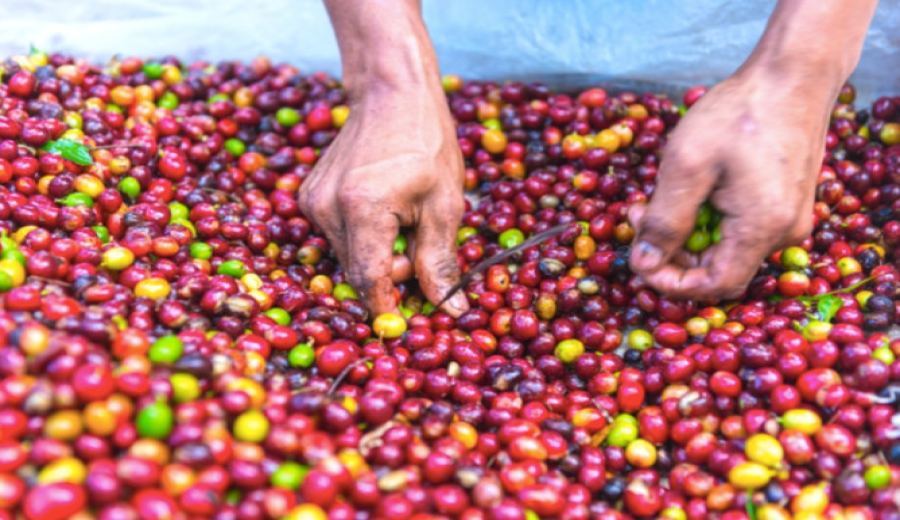
Currently, Myanmar’s coffee is mainly produced in several regions of northern Shan State, including Nawnghkio, Ye-U, Pokkoku, as well as Pyin Oo Lwin in central Mandalay Province. These areas are mostly operated by small-scale farmers, with each household typically cultivating less than one hectare of land using traditional, meticulous farming methods. Up to 80% of the coffee beans produced are Arabica varieties, primarily for export, while the remaining Robusta is mostly for domestic consumption.
In terms of varieties, Myanmar grows many classic and improved Arabica types, such as Caturra, Catimor, Bourbon, Typica, S795, and SL34. These varieties each have distinct characteristics, are suited to different altitudes and processing methods, and also influence the final flavor profiles.
Myanmar’s coffee-growing regions are concentrated in highland areas at elevations between 800 and 2,000 meters. Among them, Shan State, located on the plateau and home to the mighty Salween River — one of Asia’s longest rivers — and adjacent to China’s Xishuangbanna in Yunnan, enjoys a cool climate with notable day-night temperature differences, making it an ideal environment for Arabica coffee. Mandalay Province, with its fertile volcanic soils and diverse microclimates, has also gradually emerged as an important coffee-growing area.
In recent years, Myanmar has been consistently committed to expanding coffee cultivation acreage and improving quality. In 2024, the country’s total coffee-growing area reached 279,000 acres (approximately 113,000 hectares), with plans to further expand to 300,000 acres (around 121,000 hectares). The goal is to significantly increase both yield and international market share within five to ten years. This expansion plan also emphasizes technical training, upgraded processing techniques, and sustainable agricultural practices to meet the quality and certification requirements of international buyers.
In summary, although Myanmar coffee remains a niche player in the global market, its unique geographical conditions, diverse variety mix, and gradually maturing industry chain have made it an emerging origin worth watching. For coffee enthusiasts, understanding the characteristics of these producing regions and the background of their varieties can undoubtedly add depth and enjoyment to the tasting experience.
The above content is compiled by CoffeeHunters, a coffee news website.


