







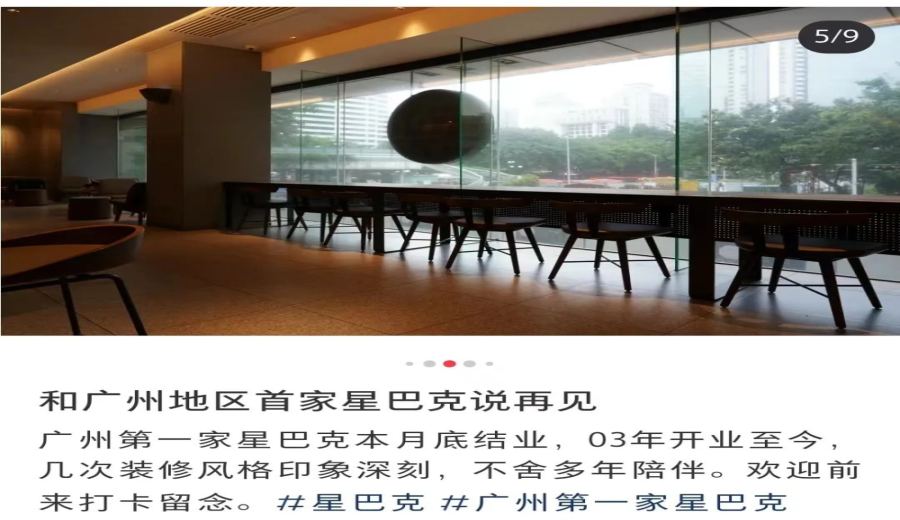
Introduction:Starbucks’ first store in Guangzhou is about to close its doors, marking the end of an era for this once 24-hour café that holds countless cherished memories. From adjusting its hours during the pandemic to now facing permanent closure, the story reflects the brand’s choices in expansion and market strategy. This article delves into the narrative behind Guangzhou’s first store, as well as the reasons behind the successive closures of long-standing outlets in cities like Shenyang and Hong Kong, offering insights into Starbucks’ evolving store layout and broader market trends.
Recently, news broke that the very first Starbucks store opened in Guangzhou would soon shut down, drawing significant attention and nostalgia from many customers. Once known for its round-the-clock service, this outlet was not only one of the earliest Starbucks in the area but also served as a backdrop for many personal moments and emotional memories. Whether it was late-night studying, romantic dates, or everyday breaks, the café had seamlessly become part of the rhythm of many people's lives.
However, impacted by the pandemic and subsequent brand strategy shifts, the store’s operating hours had already been shortened, no longer offering overnight service. Now, facing its final closure, numerous patrons who created memories here have expressed their fondness—leaving comments such as “the perfect spot for cramming for finals,” “where I had my first date with my husband over a decade ago,” and “I loved that window seat” that radiate warmth. Local residents also reflected on how this place was where they first tried coffee and became a sweet reward destination for their children.
Analysts point out that the store had long suffered due to nearby subway construction—not only seeing reduced foot traffic, but also losing neighboring shops that relocated because of noise and dust issues. These factors may have contributed to its operational difficulties. While Starbucks continues to expand globally, it has simultaneously been optimizing its store portfolio in certain markets by closing underperforming locations or those severely affected by external conditions.
According to market observation data, as of early 2024, Starbucks operates over 7,891 stores worldwide. Between January and April 2024, the brand opened 198 new outlets but also closed 59, including several that had been in business for more than ten years. Some of these closures occurred in prime urban locations, while others were due to lease expirations, rising rents, or shifting commercial district dynamics.
Not long ago, the Starbucks store at Shenyang MixC Shopping Mall, which had been in operation for 13 years, also announced its closure, leaving many local customers feeling sentimental. Since the mall’s opening, this store had been a fixture, holding nostalgic value for many coffee lovers in Shenyang. In the days leading up to its closure, numerous loyal patrons made special trips to take photos and bid farewell to the old store.
In Hong Kong, the Starbucks outlet located within The Alexandra Hotel in Central will also cease operations on the 9th of this month. Known for its quiet atmosphere and spacious seating, this branch had long served as a favorite spot for students and office workers to read and work. Once it closes, regulars who relied on this space will lose a familiar haven.

For Starbucks, while these long-standing stores boast loyal customer bases and emotional significance, facing realities such as rising rents, lease expirations, or changing neighborhood environments means closing some outlets can help the brand reallocate resources, focusing on locations with greater growth potential and further improving overall operational efficiency.
Yet, for many longtime customers, these stores represent far more than just places to buy coffee—they are vessels of memory. They recall the original look of the cafés, remember each round of renovations, and can even recount every moment spent there with friends and family. As these storied storefronts close one by one, a deep sense of loss and nostalgia naturally arises.
The lights going out at Starbucks’ first Guangzhou store may not be the brand’s first closure of a legacy outlet, nor will it be the last. But this wave of closures allows us to witness the brand’s strategic adaptations amid shifting market conditions, as well as the profound emotional bonds between consumers and the spaces they once cherished.
The above content is compiled by CoffeeHunters, a coffee news website.


