








Introduction:Recently, Mixue Tea’s new drink ‘Wan Li Mulan’ went viral due to a promotional campaign, but it also caused many consumers to experience insomnia and heart palpitations after drinking it, with some even seeking medical attention. Just how much caffeine does a cup of milk tea contain? This article takes an in-depth look at the actual caffeine and tea polyphenol levels in popular drinks such as ‘Wan Li Mulan’ and ‘Bo Ya Jue Xian’, explores the potential health risks of milk tea, and offers purchasing and consumption advice to help you avoid “energy-boosting landmines”.
Mixue Tea’s newly launched ‘Wan Li Mulan’ quickly became a hot topic thanks to the International Tea Day promotion of “7 days, 100 million free cups”. Not only did related topics frequently trend on social media platforms, but it also attracted a large number of consumers eager to try it. However, this medium-sized milk tea, which highlights tea aroma and a refreshing taste, left many people experiencing unexpected “aftereffects”.
Many consumers shared on social platforms that they suffered from severe insomnia and heart palpitations after drinking it, with some even needing to seek emergency medical care for electrocardiogram checks. Netizens joked, “No wonder it’s called Wan Li Mulan—drinking it really feels like you’re going off to war for your father.” Such reactions have led many to wonder: why does a seemingly ordinary milk tea have such a strong stimulating effect?
In fact, according to the brand’s publicly available product ingredient information, a medium 470ml cup of ‘Wan Li Mulan’ contains 31.8 milligrams of caffeine per 100 milliliters, which adds up to approximately149.5 milligramsof caffeine for the entire cup—almost equivalent to the caffeine content of two standard shots of espresso. For those sensitive to caffeine, such an intake can easily lead to physical discomfort.
In addition to caffeine, the drink also contains 62.3 milligrams of tea polyphenols per 100 milliliters. While not everyone will have a noticeable reaction to these compounds, some consumers with more sensitive constitutions may experience allergy-like symptoms, such as heart palpitations, insomnia, or even stomach discomfort.
In response to consumer feedback, Mixue Tea customer service explained that ‘Wan Li Mulan’ is based on black tea, and that insomnia and heart palpitations may be allergic reactions caused by tea polyphenols. They advised those who feel unwell to stop consuming the drink immediately and seek medical help. However, this explanation did not fully ease public concerns, especially since similar issues have also been reported with another of their best-selling products, ‘Bo Ya Jue Xian’, which netizens have jokingly dubbed ‘Bo Ya Jue Mian’ (Bo Ya Sleepless).
It’s worth noting that this is not an isolated incident involving a single brand. As early as 2020, the Haixian County Market Supervision Administration in Jiaxing, Zhejiang, conducted spot checks on 16 batches of milk tea and fruit tea on the market. The results showed that these drinks hadan average caffeine content of 198mg/kg, with the highest reaching 460mg/kg. Based on a common 500ml cup of milk tea, the caffeine intake could be equivalent to4.6 cans of Red Bull—a figure far beyond what many consumers expect.
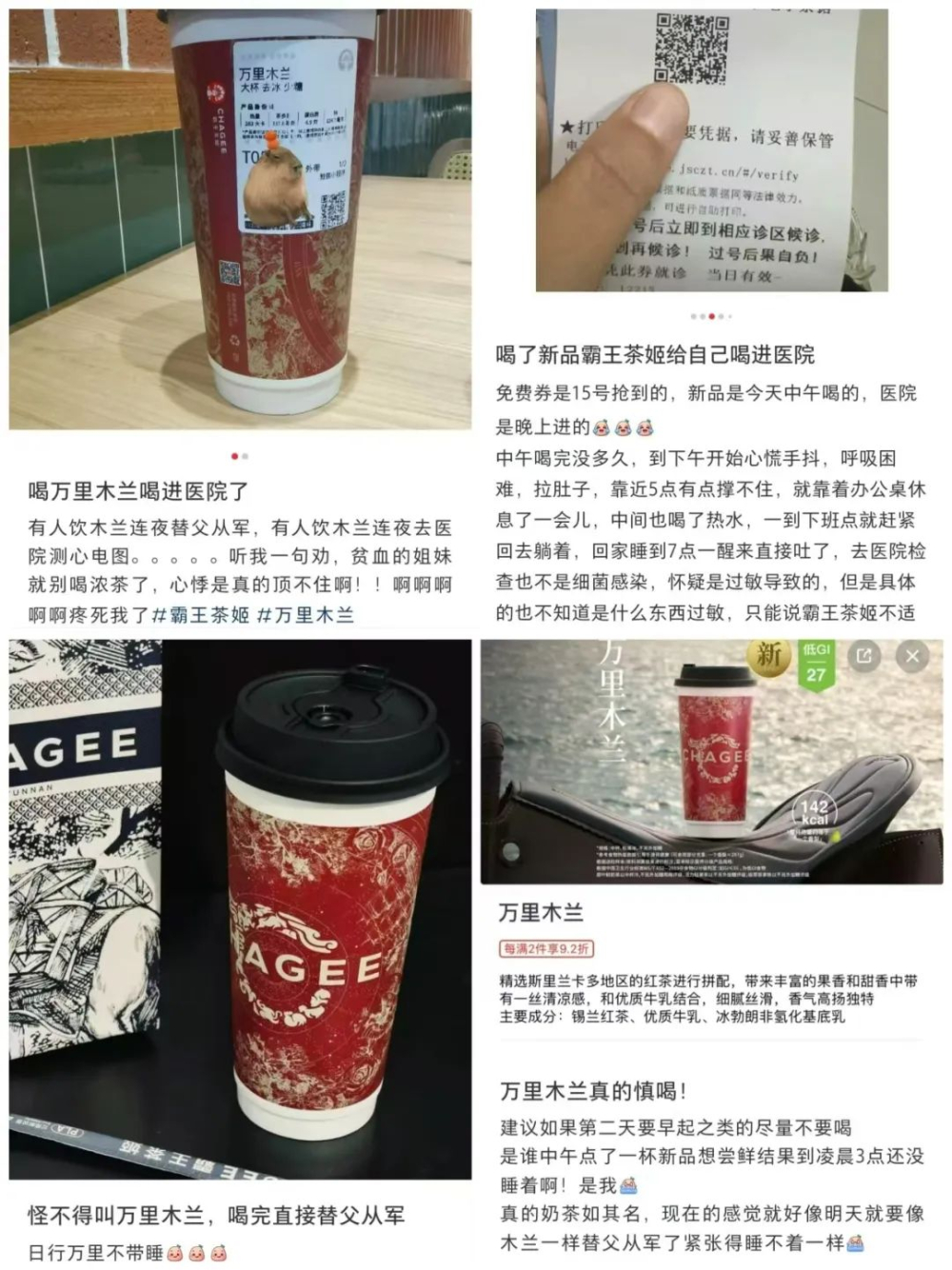
Generally speaking, many people assume that milk tea, because it contains milk and syrup, should be gentler than pure tea or coffee. In reality, if the tea leaves used in milk tea are not properly blended, their caffeine and tea polyphenol levels can be quite astonishing. Especially for high-intensity tea flavor drinks like ‘Wan Li Mulan’, the concentration of tea extraction and the type of base tea used can significantly influence the level of stimulation in the final product.
For consumers, when choosing high-caffeine flavored milk teas, it’s advisable to pay attention to the ingredient information on the product description, particularly any indications of caffeine and tea polyphenol content. If the product does not clearly state these figures, it’s recommended to opt for a smaller size for a trial or avoid consuming it after the evening to reduce the risk of sleep disruption or heart palpitations.

Industry insiders point out that in addition to emphasizing product features in marketing, brands also have a responsibility to provide clear information, including the content of key ingredients such as caffeine and tea polyphenols that may affect health. This allows consumers to make informed choices based on their own conditions, avoiding discomfort—or even the need for medical treatment—due to lack of awareness.
In summary, a seemingly everyday milk tea may contain stimulating components comparable to coffee. Understanding the true caffeine content of drinks and controlling the timing and amount of consumption appropriately can help you enjoy the flavor of tea beverages while also taking care of your physical and mental wellbeing.
The above content is compiled by CoffeeHunters, a coffee news website.


