








Introduction:Amid the recent boom in coffee entrepreneurship, enticing advertisements have emerged claiming that one can become a "shop manager without any capital investment," promising to teach coffee skills and offer high commission splits. However, these offers often conceal hidden costs such as tuition fees and renewal charges, trapping newcomers in a cycle of paid labor. This article dissects common partnership model pitfalls, analyzes real operational data, and teaches you how to identify false business opportunities—helping you avoid becoming an unpaid "front-of-house employee" for a coffee shop.
In today’s thriving coffee industry, the role of a "coffee shop manager" is often seen as the ideal blend of entrepreneurial dreams and professional expertise. Yet, a recent recruitment ad claiming that one can become a café manager "without any capital" has raised eyebrows in the industry. While it promises free training and high commissions on the surface, it actually involves multiple hidden fees, leaving many entrepreneurial newcomers trapped in a cycle of paid work.
The so-called "no-capital-required" gimmick actually requires applicants to first pay a registration fee to attend coffee courses, where they learn basic brewing techniques and SCA certification knowledge. After completing the course, they must meet store scheduling requirements and can only continue as a manager without fees in the second year; if they fail to meet the conditions, they must pay again to extend the partnership. This model appears to offer technical training and hands-on management experience, but in reality, it shifts the training costs onto the applicants.
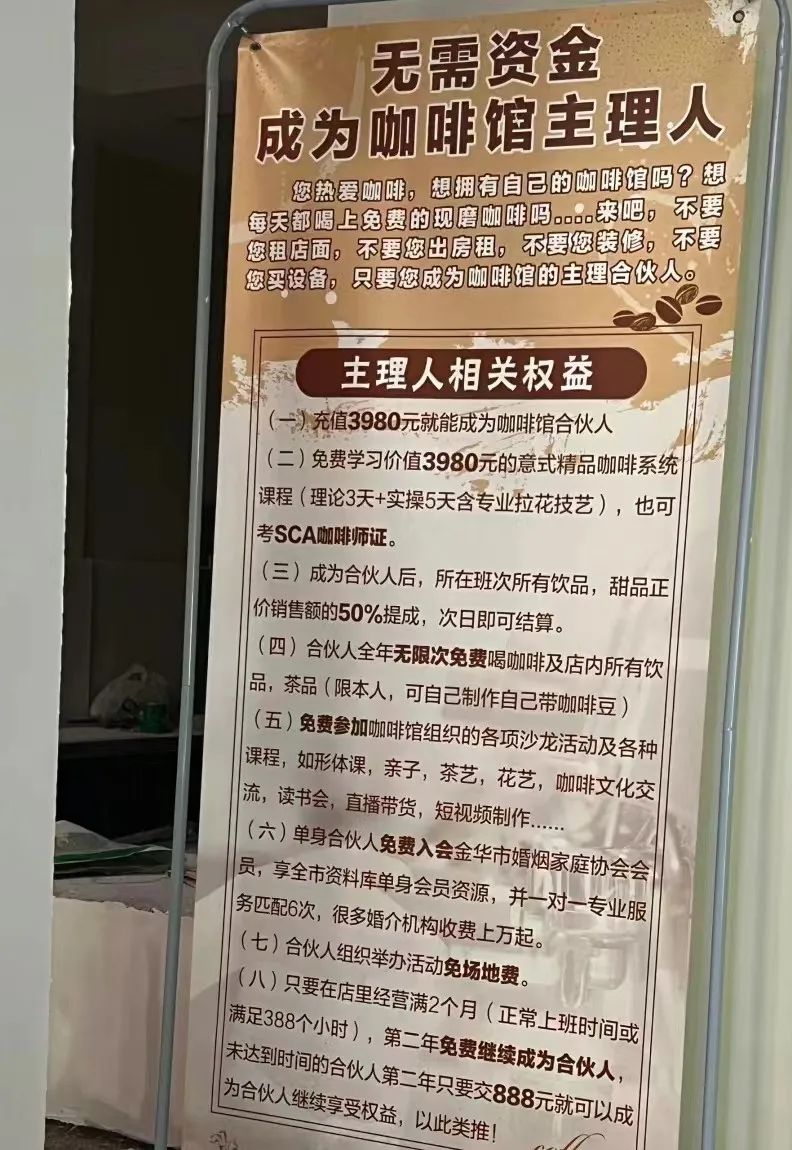
The advertised 50% revenue commission may seem like an attractive profit-sharing opportunity, but it masks the harsh realities of running a business. According to industry statistics, the average daily revenue of a typical community coffee shop ranges between 3,000 and 8,000 yuan, but newly opened stores or those in less favorable locations may earn as little as a few hundred yuan per day. In such cases, even with a 50% split, the actual income may not be enough to cover basic living expenses, let alone recover the upfront course fees.
A deeper analysis of this type of partnership model reveals three typical traps: first,upfront fee structures,including registration fees, textbook fees, and other charges; second,renewal condition restrictions,such as mandatory working hours or sales targets; and third,opaque commission structures,where essential expenses like material costs and rent allocations are not clearly deducted. Experienced coffee shop owners point out that some organizations further squeeze the manager’s actual earnings by imposing high commissions or reducing wholesale costs.
Compared to the franchise systems of well-known brands, legitimate partnership models typically disclose detailed financial statements, clearly outlining the cost-sharing ratios and providing real operational data as reference. Entrepreneurs should check the business registration details of their potential partners, verify their operational history and store performance, and avoid making decisions based solely on verbal promises.
Before entering the coffee industry, newcomers are advised to follow a three-step verification process: first, visit the actual partner stores to observe their operations, including foot traffic and customer return rates; second, request a full breakdown of cost structures, particularly material procurement costs and staffing; and third, consult industry insiders to understand the market reputation of the brand or partnership model. Remember, genuine business opportunities never require exorbitant upfront fees and should provide clear risk assessments and exit mechanisms.

While the entry barrier to the coffee industry may be relatively low, the professional knowledge and management skills required for sustainable operation should not be overlooked. Entrepreneurs should focus on improving their brewing techniques, customer service experience, and cost control abilities, rather than seeking quick, free, or low-cost business shortcuts. Only through systematic learning and practical accumulation can one build a sustainable coffee business in a competitive market.
The above content is compiled by CoffeeHunters, a coffee news website.


