







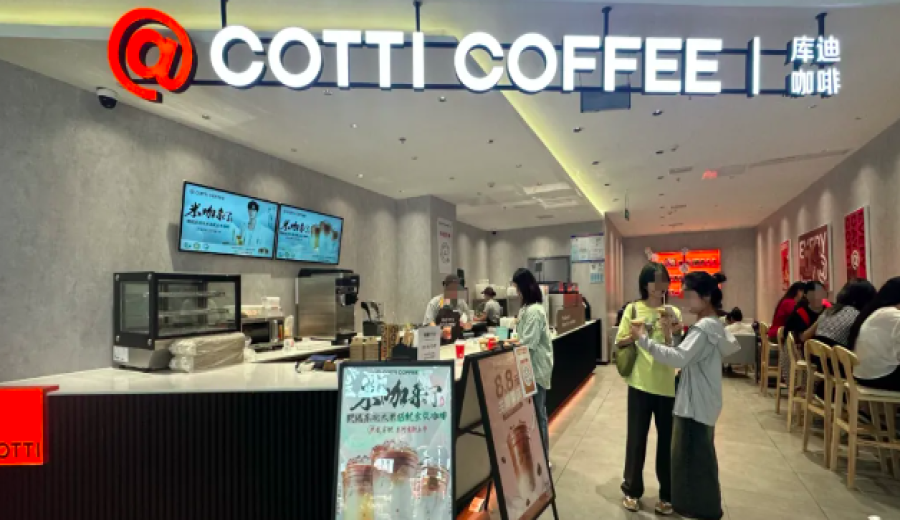
Introduction:Kudi Coffee has launched an ultra-compact store format called "COTTI Express," which only requires one square meter of space. By adopting a "store-within-a-store" model, it significantly lowers investment barriers and expansion costs, attracting partnerships in small to medium-sized venues. However, this high-density layout strategy has raised concerns among existing franchisees about internal competition, the impact of convenience store private labels, and food safety management. Can this innovative model help the brand capture market share, or does it hide potential risks? This article takes an in-depth look at the pros, cons, and challenges of the store-within-a-store model.
Traditional chain coffee shops usually require a certain amount of space for tables, chairs, brewing equipment, and inventory storage, resulting in larger area planning. But in recent years, there has been a trend toward minimalism in the market. Recently, Kudi Coffee announced the launch of its new store format, "COTTI Express," which focuses on the "store-within-a-store" model. It is understood that the minimum store area can be compressed toone square meter, greatly reducing investment thresholds and operational complexity.
This model is not Kudi’s first attempt. Earlier, Manner and Lianjia, as well as Tim Hortons and Sinopec’s Easy Joy, had similar partnership cases. By sharing space with existing retail or service businesses, they rapidly expand their brand presence at low cost. These "parasitic" stores can quickly penetrate high-footfall areas such as convenience stores or corners of restaurants, offering grab-and-go coffee products without the need for standalone storefronts.
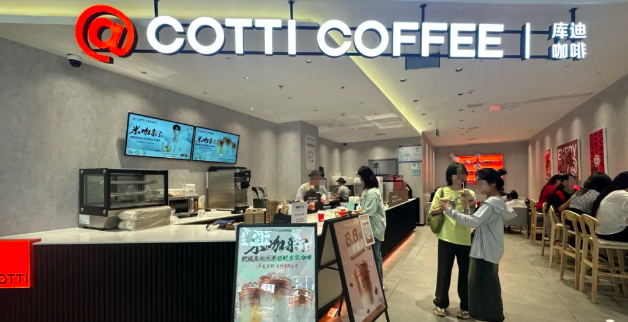
It is understood that Kudi’s COTTI Express is not only compact in size, but also has relatively low investment costs and break-even points. It can be embedded in various daily life scenarios, such as restaurants, mall service areas, or even gas station convenience stores. The brand stated that these mini-stores will complement traditional large outlets, allowing consumers to easily purchase coffee in more everyday settings, thereby further increasing brand exposure and convenience.
The brand’s Chief Strategy Officer further pointed out that this store-within-a-store strategy can "get infinitely close to customers," making it particularly suitable for densely populated urban areas where rents are high. If investors choose the right locations, they may achieve a return on investment or even profits in a short period. For entrepreneurs hoping to enter the coffee market with low barriers, this is undoubtedly an attractive option.
However, this rapid expansion model has not gained unanimous approval from all franchisees. Some franchisees operating conventional stores have expressed concerns, believing that once a large number of store-within-a-store outlets are deployed, they will directly compete with existing stores—especially in small business districts or within the same area—potentially diverting the already limited customer base and affecting the sales performance and profitability of original stores.
Other industry insiders pointed out that currently, convenience store chains such as FamilyMart, 7-Eleven, and Lawson have launched their own private-label coffee brands, which are competitive in both price and convenience. For brands like Kudi to carve out a share in these venues, apart from pricing advantages, they will need to invest more effort in product differentiation and brand loyalty—the challenges are not insignificant.
More critically, when the store area is only one square meter, the space for equipment placement and operation becomes extremely limited. The industry generally worries that in such a cramped space, not only could the brewing process be hindered, but it may also affect thequality control and food safetyof the coffee. For example, details such as the storage environment of coffee beans, refrigeration conditions for milk, and the cleanliness and maintenance of equipment all need to be strictly managed; otherwise, hygiene and quality issues may easily arise.

For the brand, the store-within-a-store model allows for the lowest-cost and fastest way to expand market coverage. Especially at this stage, when market competition is fierce and expansion speed is slowing, this flexible strategy offers new growth possibilities. However, whether it can balance expansion with quality, consumer experience, and the interests of franchisees will be key to the success or failure of this model.
In summary, Kudi’s COTTI Express store-within-a-store model is a double-edged sword. While it provides a low-barrier, highly flexible expansion path, it also comes with challenges such as intensified internal competition, brand dilution, and quality control risks. Whether it can truly help the brand capture market share in the future still depends on the execution details and market feedback.
The above content is compiled by CoffeeHunters, a coffee news website.


