








Introduction:Many people wonder: if the raw material cost of a cup of coffee is as low as a few yuan, yet the selling price is often twenty yuan or more, why is it still difficult for a coffee shop to break even in the short term? This article takes an in-depth look at the real operational challenges faced by independent coffee shops and chain brands in areas such as raw material procurement, rent and labor costs, and brand constraints. It helps you understand the gap between ideal and reality, and provides practical references to help aspiring entrepreneurs make more rational decisions.
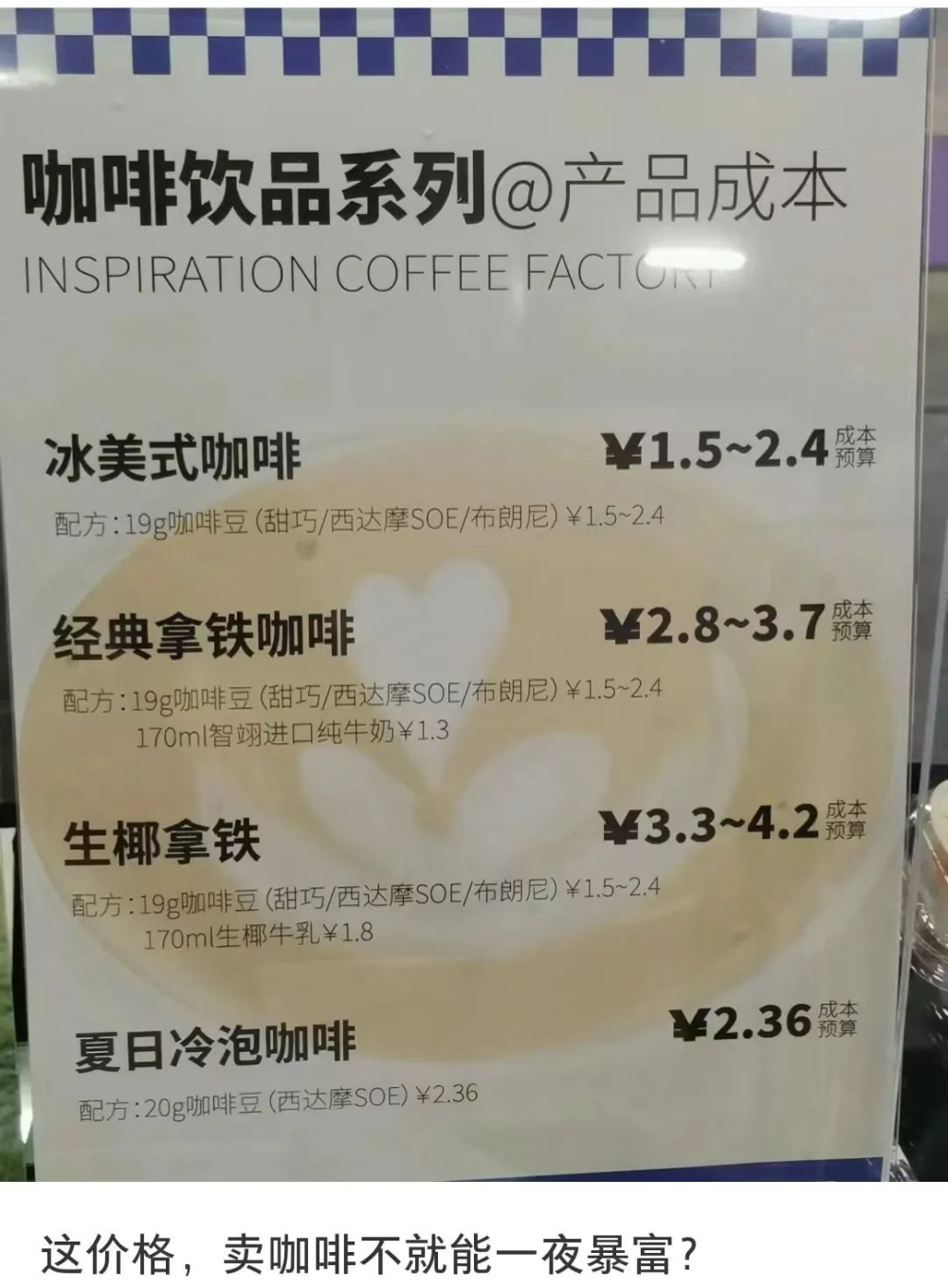
You may have heard that the raw material cost of an iced Americano might be as low as 1.5 yuan, and a coconut latte around 4.2 yuan. At the common market selling price of 20 yuan, the profit seems very substantial. But in reality, many coffee shop owners say that opening a coffee shop is far more difficult than imagined. Especially for small independently operated shops, due to limited purchasing volume, it’s hard to secure the industry’s lowest raw material prices. Not to mention other fixed and variable costs such as labor, rent, utilities, and consumables — the dream of breaking even quickly or even getting rich overnight is often just that: a dream.
This article will start from the two business models of independent coffee shops and chain coffee shops, and break down their respective cost structures and operational challenges in detail. This will help you view the real issues of opening a coffee shop in a more comprehensive and realistic way.
A netizen once saw data at an exhibition showing that among four common coffee drinks on the market, the cheapest was an iced Americano at 1.5 yuan in raw material cost, while the most expensive was a coconut latte at 4.2 yuan. If an iced Americano is sold at 20 yuan and 100 cups are sold per day, the monthly revenue can reach 60,000 yuan, seemingly yielding profits of tens of thousands — giving the impression that opening a coffee shop is a lucrative business.
But the reality is not so simple. Even though the cost of coffee raw materials is becoming more transparent, and many coffee enthusiasts can brew at home at low cost, running a physical coffee shop involves far more complexities than home brewing. From rent, equipment, staffing, to daily operational losses and unexpected situations, all are important factors affecting profitability.
Let’s first talk about independent coffee shops. Many people think that as long as you find a good location, have distinctive décor, and invest in professional coffee machines and grinders, you can open smoothly and quickly recoup your investment. However, due to their small scale and limited raw material procurement, independent coffee shops find it hard to obtain the ultra-low ingredient costs that large supply chains or chain brands can. Cases where each cup’s raw material cost is less than 5 yuan, as circulated online, are in fact very difficult for most independent shops to achieve.
In addition, if the store lacks a clear stylistic positioning or signature products, it can easily fall into the dilemma of “relying on good days” — with low foot traffic on weekdays, only picking up slightly on weekends or holidays, leading to volatile revenue and unstable income. To attract customers, many independent shop owners invest in décor style, product diversity, or even cross-industry operations (such as combining baking or apparel), but these attempts often come with higher initial investment and operating costs, further lengthening the payback period.
If you then factor in expenses such as staff salaries, utility bills, packaging materials and consumables, and daily raw material losses, many independent coffee shops may remain at a loss or barely break even in the first few months, or even the first half year of operation. Breaking even in the short term is definitely not easy.
So, is joining a chain coffee brand another “sure-profit” path? On the surface, chain brands have higher market recognition, and consumers generally trust their quality and service, which theoretically brings more stable foot traffic and seems to help speed up the return on investment.
An industry insider once revealed that for some chain brands, the raw material and packaging cost of a cup of coffee is about 5.5 yuan. Adding rent, personnel, and utilities, the total cost is generally kept under 9 yuan. If a store can sell an average of more than 400 cups per day, it has the potential to turn a profit, and the payback period is relatively manageable. Some regional chain brands also state that husband-and-wife franchisees, if able to sell 200 cups per day, can earn about 20,000 yuan a month, and potentially break even within 6 to 10 months.

But in reality, the first hurdle of joining a chain brand is the franchise fee, which ranges from over a hundred thousand to several hundred thousand yuan — already a significant investment for many entrepreneurs. In addition, chain brands usually set unified product pricing. Even if the actual cost of a cup of coffee is less than 9 yuan, the brand may still set the selling price at 9.9 yuan, meaning the profit margin is not as generous as outsiders imagine. To improve overall profitability, higher sales volumes are required — which poses a big challenge in terms of store location, operational capability, and the competitive market environment.
Overall, whether you’re running an independent shop or joining a chain, opening a coffee shop comes with numerous real-world challenges. Low raw material costs are only a small part of the overall cost structure. What truly affects break-even and profitability are rent, labor, daily operational expenses, and whether you can build a stable customer base and brand loyalty.
Therefore, for those entrepreneurial dreamers who are passionate about coffee, before stepping into this industry, it is essential to thoroughly understand the various cost structures and operational realities. Avoid letting the gap between ideals and reality lead to outcomes contrary to your expectations. Running a coffee shop is not just about loving coffee — it’s a comprehensive business that requires careful calculation, execution, and market insight.
The above content is compiled by CoffeeHunters, a coffee news website.


