







Introduction:Guatemala’s coffee cultivation area is expanding, but smallholder farmers still face challenges such as high fertilizer costs, labor shortages, and insufficient processing facilities. This article provides an in-depth analysis of the current state of the country’s coffee industry, explores the survival strategies of smallholders amid climate change and market fluctuations, and offers practical advice on cultivation and processing to help you understand both the challenges and opportunities of Guatemalan coffee.
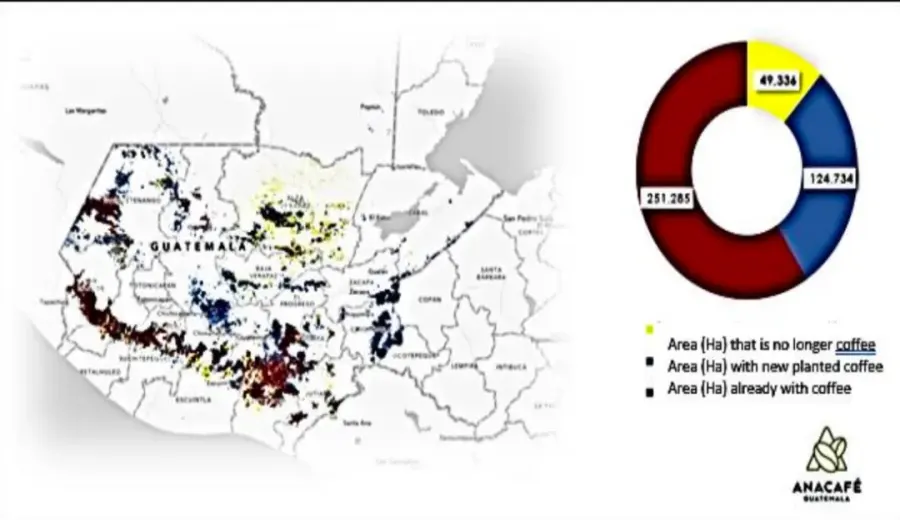
The Guatemalan National Coffee Association (Anacafé) recently updated the country’s coffee cultivation map, showing an increase in the nation’s coffee-growing areas and further clarifying the distribution structure among large, medium, and small farms. However, despite the expansion in planting area, overall production has not increased proportionally. Smallholder farmers continue to face multiple pressures, including soaring fertilizer prices, labor shortages, and a lack of coffee processing infrastructure.
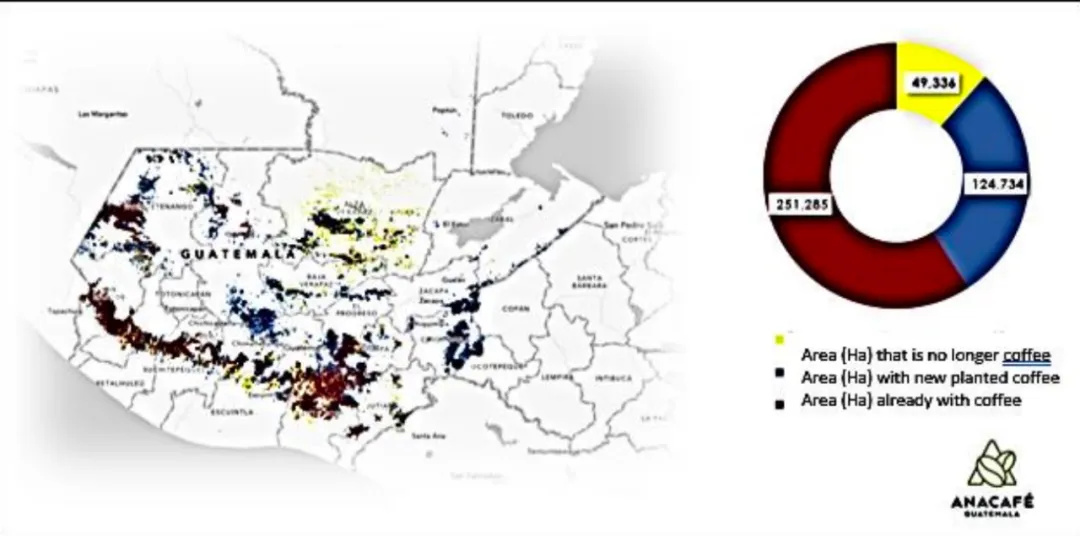
According to the latest statistics, Guatemala currently has 251,265 hectares of stable coffee plantations, with an additional 124,734 hectares being newly planted or previously unaccounted for, while 49,336 hectares of land that no longer grows coffee have been deducted. The data shows that there are 354 large farms, accounting for just 0.28% of total production; 3,636 medium-sized farms make up 3%; and smallholder farmers represent nearly 97% of the total, contributing 25%, 31%, and 44% to the overall harvest, respectively.
For the 2024/25 marketing year, Guatemala’s coffee cultivation area is expected to reach 376,000 hectares, with approximately 1.6 billion mature coffee trees. However, despite growth in both cultivation and harvested areas, production has not seen a significant increase, making it even more crucial for the country’s coffee industry to focus on improving quality and ensuring sustainability.
Notably, 97% of the country’s coffee producers are smallholder farmers, who are facing numerous challenges. First, the global rise in fertilizer prices has significantly increased the cost of fertilizers, forcing many small-scale coffee growers to reduce their fertilizer usage, which will directly impact both the current and future coffee yields. In addition, many smallholders are beginning to seek low-cost technologies as alternatives to traditional, high-cost production methods.
Another pressing issue is the lack of processing facilities. Due to the absence of their own processing equipment, smallholder farmers often have to rely on intermediaries or some larger farms for coffee processing. However, the processing fees charged by large farms are usually 10% higher than those of intermediaries, further increasing the economic burden on smallholders. Moreover, most smallholders sell their products in the form of coffee cherries, with the price for every 100 pounds of cherries in the 2023/24 season being only $21 to $22—far below the price level of green coffee beans.
In the market, the price gap between specialty coffee beans and commercial coffee beans continues to narrow, decreasing from $18 to just $3. This trend poses a significant challenge for Guatemalan coffee farmers who primarily produce specialty coffee.
To address these issues, Anacafé is actively promoting various services and implementing sustainable profitability programs to support coffee growers. Currently, 21,358 hectares of land and 3,282 coffee income projects are participating in these initiatives. Additionally, the association is encouraging the cultivation of Robusta coffee to diversify farmers’ planting structures and broaden their income sources. Currently, Arabica varieties account for about 99% of Guatemala’s coffee production, with Robusta making up only around 1%, though the latter’s proportion is gradually increasing.
In addition to economic and market challenges, climate factors also pose a major threat to smallholder farmers. The upcoming rainy season may be affected by the La Niña phenomenon, and is expected to be more intense than in previous years. According to forecasts from Guatemala’s meteorological department, the rainy season will begin in mid-May, intensify gradually in June and July, and rainfall is expected to exceed normal levels.
Predictions indicate that average cumulative rainfall will be higher than usual in Guatemala’s northern transverse zone, western Caribbean region, southern central highlands, Boca Costa, and Pacific region. In particular, the capital city of Guatemala City and its surrounding areas may experience storms. These regions are home to numerous coffee-growing areas, and heavy rains could trigger disasters such as floods or landslides. In response, municipal governments have begun clearing drainage channels, but farms and other stakeholders also need to take preventive measures in advance to minimize potential losses.
The above content is compiled by CoffeeHunters, a coffee news website.


