







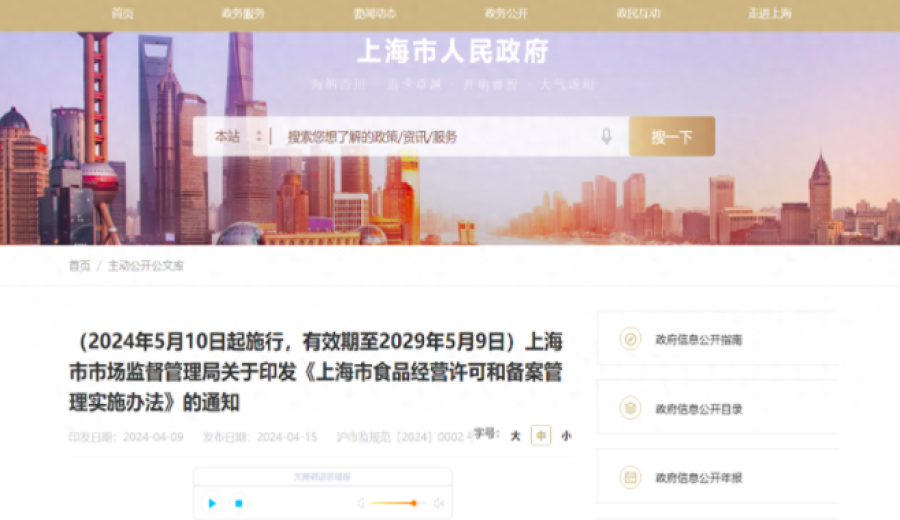
Introduction:Shanghai is set to implement a new version of its Food Business Management Measures on May 10, 2024, significantly relaxing restrictions on the mixed operation of coffee and food services. The new rules remove the 6-square-meter production space requirement, allowing non-food businesses such as bookstores and clothing stores to apply for licenses to prepare their own beverages. The updated regulations change the term “prepared on-site for sale” to “prepared and sold on-site,” streamline business categories, and relax requirements for the sale of simple prepared foods such as sliced cucumbers. This article provides an in-depth analysis of the details of the policy changes to help businesses seize new opportunities and stay compliant with food safety guidelines.
The Shanghai Municipal Government recently issued the “Shanghai Food Business Licensing and Filing Management Implementation Measures,” which will officially take effect on May 10, 2024. The most notable highlight of this new regulation is the elimination of the secondary directory licensing items, breaking away from the previous framework that issued licenses based on specific business types. Instead, it adopts a more flexible classification based on primary business formats, greatly promoting mixed-format business operations.
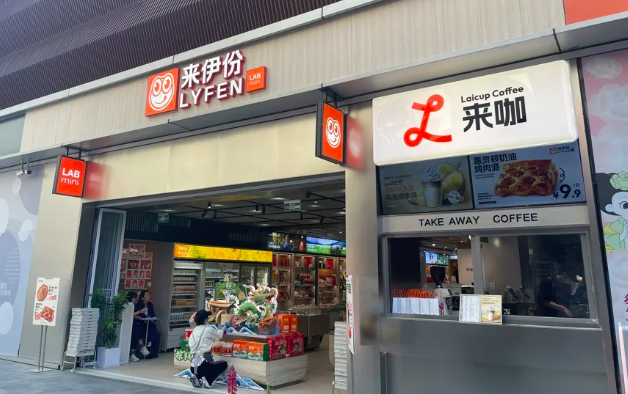
Specifically, beverage businesses such as coffee shops and bars can now coexist with other types of businesses within the same premises. Even non-food businesses such as bookstores and clothing stores, which were previously unrelated to food services, can legally apply to prepare and sell their own beverages, including freshly made coffee and tea drinks. This offers unprecedented operational flexibility for business owners.
The new policy also adjusts the terminology from “prepared on-site for sale” to “prepared and sold on-site,” and simplifies the previously complex list of 19 business categories into four main types: hot food, cold food, raw food, and self-prepared beverages. This not only makes the application process more straightforward but also gives operators greater freedom in product development.
Notably, the new regulations explicitly remove the previous minimum 6-square-meter production space requirement. In the past, many businesses were unable to meet this rigid requirement due to space constraints, preventing them from expanding into food and beverage services. With this threshold now removed, not only do small shops or those with unique spatial designs benefit, but it also encourages more diverse business model innovations.
For example, Anta, a well-known sportswear brand, had previously been unable to set up coffee preparation areas in some of its Shanghai stores due to difficulty in allocating a continuous compliant space of at least 6 square meters. Now that the new rules have taken effect, the brand has immediately begun planning in-store coffee corners and has stated that if the pilot is successful, it will consider rolling out the concept to other branches, demonstrating the appeal of the new measures to non-traditional food and beverage operators.
Additionally, the new regulations make adjustments to previously controversial practices such as “slicing cucumbers,” which involved simple food preparation. In the past, although the preparation process was not complex, a dedicated operation area was still required, leading to penalties for many small shops or street vendors who did not meet the criteria. The new rules now allow basic food handling such as slicing cucumbers or brewing tea to be carried out in designated zones, as long as food safety is ensured, significantly lowering the compliance barrier.
However, industry reactions to the new policy are mixed. Some experts are concerned that relaxing beverage preparation restrictions for non-food businesses may intensify market competition and impact traditional coffee shops and restaurants. At the same time, some consumers have expressed concerns about food safety, fearing that simplified space requirements, if not properly managed, could increase potential risks during food preparation.
Overall, Shanghai’s new food business regulations aim to stimulate market vitality and meet diverse consumer needs by removing multiple restrictions. However, whether the benefits of the policy will truly materialize, and how food safety standards can be effectively maintained while relaxing restrictions, remains to be seen and validated through practical implementation.
The above content is compiled by CoffeeHunters, a coffee news website.


