







Introduction:The recently launched "Superboy – Boyfriend Power Comes Back Strong" series by yogurt brand Blueglass, which includes traditional Chinese medicinal ingredients such as Cistanche and ginseng alongside controversial advertising copy, has sparked debate over the boundary between wellness marketing and promotion. This move not only raised questions among consumers but also prompted an investigation by the Shanghai Municipal Administration for Market Regulation. This article delves into the risks behind the product design and advertising strategy of the series, as well as the gains and losses of the brand’s edgy marketing approach.
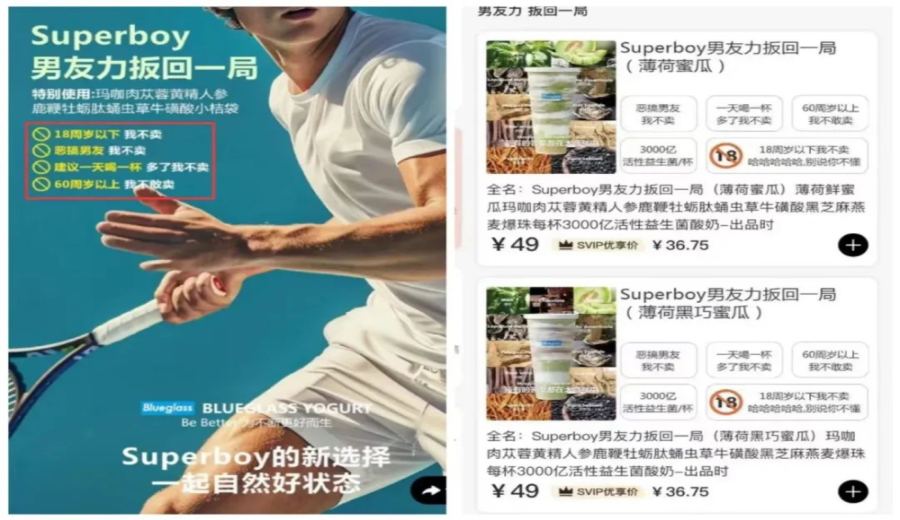
In recent years, the healthy beverage market has become increasingly competitive, with many brands beginning to incorporate traditional herbal elements to attract consumers. The newly released "Superboy – Boyfriend Power Comes Back Strong" series by yogurt brand Blueglass adds traditional Chinese medicine ingredients such as Cistanche, Polygonatum, ginseng, deer antler peptide, and oyster peptide to its yogurt, aiming to create a wellness drink with an image of "kidney nourishment and vitality enhancement." However, although these ingredients are considered to have regulatory effects in traditional Chinese medicine, they are extremely rare in modern beverage products, drawing significant public attention.
While the series aims to reinforce an image of "boyfriend power" centered around wellness, its promotional approach has stirred controversy. The official product posters label two of the drinks as "18+", accompanied by suggestive copy such as "Not for sale to those under 18" and "I don’t sell to guys who play pranks on their boyfriends." These slogans present a stark contrast with the concept of traditional Chinese herbal wellness, prompting many netizens to question whether the marketing edges too close to the line—blurring the boundaries between health drinks and sexual innuendo.
In fact, such "edgy" or borderline marketing tactics are not uncommon in the market. Take Yedao (Coconut Tree) coconut juice as an example: the brand was once fined 400,000 yuan by the Longhua Branch of the Haikou Municipal Administration for Market Regulation due to vulgar ad copy such as "Use coconuts to wipe your breasts" and "There are few flat-chested girls in the South Pacific." However, despite repeated penalties, Yedao’s sales performance has remained unaffected,with annual sales in 2023 still exceeding 5 billion yuan, showing that some consumers still show a certain level of acceptance toward such high-profile marketing.
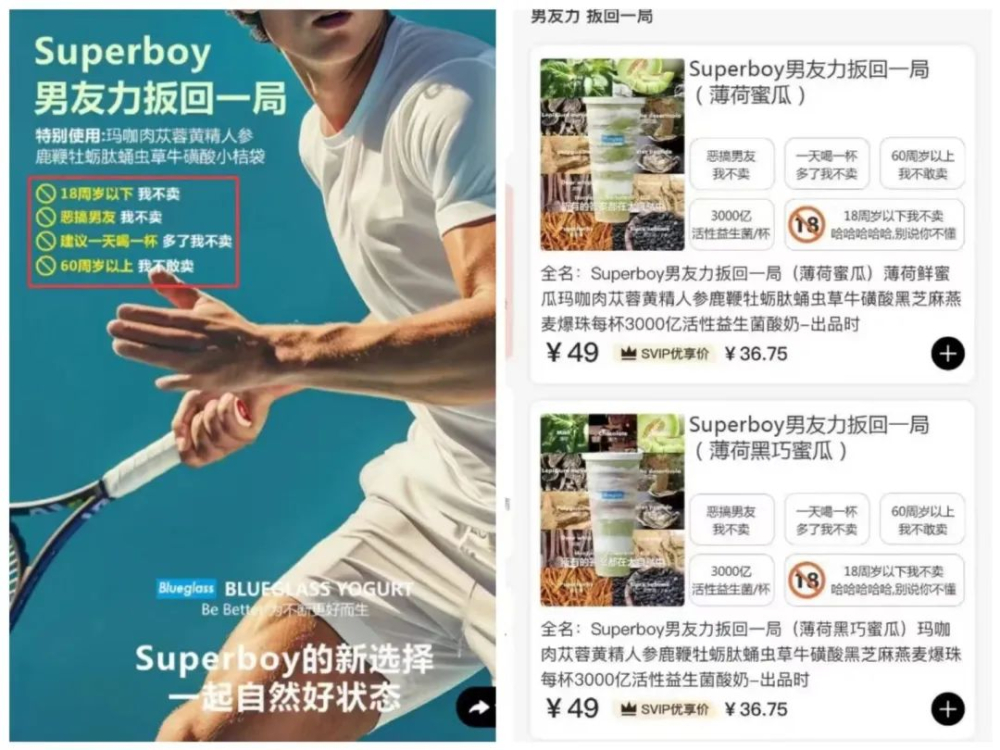
Returning to the Blueglass incident, after the advertisement stirred heated discussion, the Shanghai Municipal Administration for Market Supervision swiftly stepped in to investigate. Under public pressure, the brand promptly revised the controversial copy and re-released the products. However, industry insiders generally believe that even if the brand corrects its mistakes in time, the negative impression left on consumers may not be easily erased. Once a brand is labeled as "controversially popular" or engaging in "vulgar marketing," its long-term brand image could be profoundly affected.
From a marketing perspective, brands often try various innovative methods to stand out in a competitive market, including cross-industry collaborations, celebrity endorsements, or, as in Blueglass’s case, blending traditional Chinese medicine with wellness concepts. However, how to attract attention while maintaining professionalism and ethical boundaries becomes a major challenge for brand management.
Experts point out that the wellness beverage market holds huge potential, especially given the modern trend toward health and functionality. However, when using special ingredients such as traditional Chinese medicine, brands must not only consider the scientific basis and safety of the products themselves but also carefully plan their marketing language to avoid touching sensitive social nerves. Otherwise, even if short-term traffic and attention are gained, it may ultimately damage the brand's reputation in the long run.
In summary, the controversy surrounding Blueglass’s "Boyfriend Power" series is not just a case of marketing misstep by a single brand, but also reflects the ongoing tension in the current beverage market between innovation and regulation. For consumers, in addition to paying attention to whether the products are actually effective, it is also important to view various marketing tactics rationally and avoid being misled by overly exaggerated advertising claims.
The above content is compiled by CoffeeHunters, a coffee news website.


