








Introduction:Are you unfamiliar with Lungo and often confuse it with Long Black? In fact, Lungo is a variation of espresso, achieved by adjusting extraction time and volume to deliver a distinctly different taste and strength. This article will delve into the definition of Lungo, how it differs from Long Black, Ristretto, and standard espresso, and teach you how to adjust modern extraction parameters to avoid bitterness pitfalls and enjoy a well-balanced Lungo.
Many coffee enthusiasts still have only a vague understanding of Lungo, often mistakenly thinking it’s the same as Long Black. In reality, Lungo also belongs to the espresso family, just like Ristretto, and is a pure coffee extracted directly from an espresso machine without any additives. Its main difference from traditional espresso lies in the extraction volume: a standard espresso typically uses about 20 grams of coffee grounds to extract around 40 milliliters of coffee; Ristretto reduces the volume to about 30 milliliters, resulting in a more concentrated and intense flavor; whereas Lungo extends the extraction time, increasing the volume to about 100 milliliters, and consequently has a relatively lower concentration.
Looking back at history, the creation of Lungo is closely tied to the technical limitations of early espresso machines. At that time, machines operated at pressures of only 1.5–3 bar, making it difficult to fully extract the complete flavors of coffee in a short time. As a result, the method of extending extraction time was adopted, using more hot water to draw out substances. Although this reduced concentration, it compensated for the lower extraction efficiency. Today, modern espresso machines are far more efficient, and using the old parameters to make Lungo can easily lead to over-extraction and excessive bitterness. However, with appropriate adjustments to extraction variables, it’s still possible to produce a Lungo that suits modern palates.

When people first encounter this type of coffee, they often get confused by the names and brewing methods. To help clarify, we’ll break down the origins of Lungo, its core differences from Long Black and Ristretto, and share how to optimize parameters to brew a balanced, non-bitter modern Lungo.
First, let’s take a look at the often misunderstood Long Black. This drink, which differs significantly in preparation order from Americano, is characterized by “adding espresso first, then water.” In contrast, Americano is made by “pouring water first, then adding espresso.” Beyond the order, the amount of water added also varies markedly: Americanos usually contain more water, resulting in a lower overall concentration; Long Black, on the other hand, uses less water, making the coffee stronger and the flavors more pronounced.
(There’s already a detailed article on Long Black—interested readers can refer to: "What is Aussie Black?") Lungo, however, belongs entirely to another category, differing significantly in both preparation method and flavor profile from the aforementioned two.
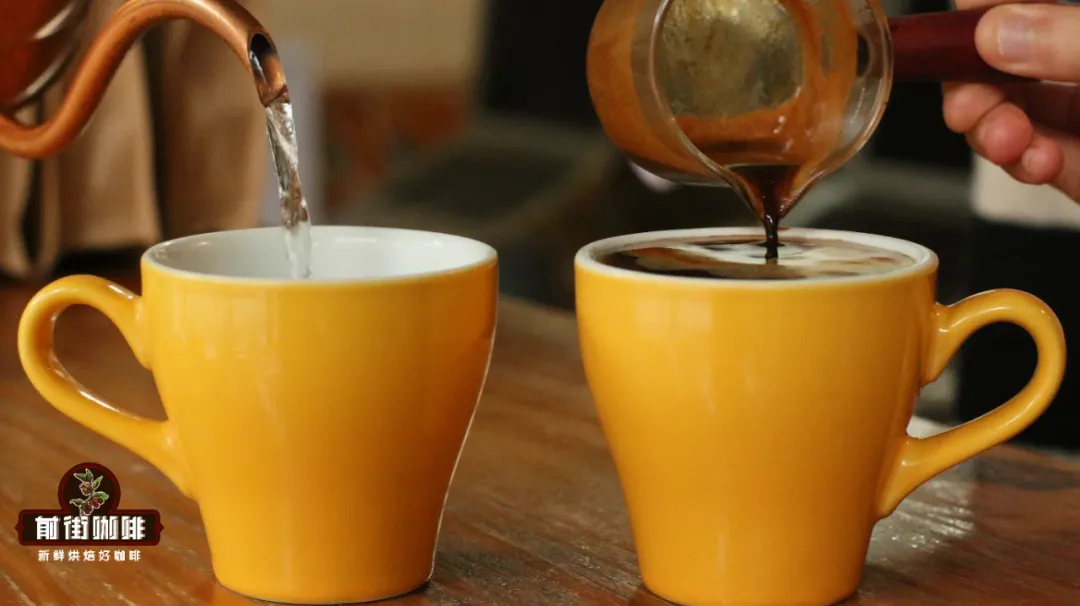
So, what exactly is Lungo? Although its brewing process differs slightly from traditional espresso, like Ristretto, Lungo also originates from the espresso system and is a pure coffee extracted directly from an espresso machine without any added ingredients.
For example, a standard espresso typically uses 20 grams of coffee grounds to extract about 40 milliliters of coffee liquid, which is considered the benchmark for a balanced flavor and strength. Ristretto, using the same amount of coffee, reduces the extraction volume to about 30 milliliters by shortening the extraction time or adjusting the flow rate, resulting in a more concentrated extraction, with stronger and more layered flavors. In contrast, Lungo extends the extraction time, allowing more hot water to pass through the coffee puck, increasing the volume to about 100 milliliters, thus lowering the overall concentration and resulting in a lighter flavor.
From a modern perspective, the logic behind Lungo—extracting with a liquid volume five times that of the coffee grounds—can indeed raise concerns about over-extraction. After all, if nearly all the soluble substances in the coffee beans are released, the bitter components will inevitably increase significantly, making the taste overly bitter and even unpleasant to drink.
“If you extract everything from the coffee, the bitter substances released will definitely overwhelm the taste buds!” This is a common consensus among many baristas. However, under the technological conditions of early espresso machines, this approach was a necessary compromise.

Early espresso machines operated at pressures of only 1.5–3 bar, far below today’s standard of 9 bar, making it difficult to fully extract the aroma and flavor compounds from coffee in a short time. To improve extraction efficiency, the solution at the time was to extend the extraction time, using more hot water to draw out more soluble substances. The result was a coffee with a lower overall concentration, but at least achieving basic extraction, and within the buffering effect of the larger volume, the flavor was still acceptable to consumers at the time (by the standards of the era).
With technological advancements, modern espresso machines can now achieve high-quality extractions in a short time with higher pressure and efficiency. Therefore, the long extraction times originally used to compensate for extraction efficiency are no longer necessary. However, this brewing method hasn’t completely disappeared—it has simply been given a new name: Lungo, which in Italian means “long” or “extended,” distinguishing it from traditional espresso.
Despite Lungo’s unique historical background and technical significance, its limited applicable scenarios have prevented it from being widely promoted over the years, which is why many consumers still confuse it with Long Black today. Using the old extraction parameters to make Lungo will inevitably result in an overly bitter and undrinkable coffee. However, with the continuous evolution of coffee taste preferences and extraction techniques, we can still adjust parameters to create a “modern Lungo” that better suits contemporary palates.
So, how can you brew a modern Lungo with balanced flavors and without excessive bitterness? The key lies in controlling extraction efficiency to avoid over-extraction.
Since the extraction efficiency of modern espresso machines has greatly improved, using long extraction times with high flow rates can easily lead to the excessive release of bitter substances. Therefore, it’s recommended to adjust parameters such as grind size, extraction time, and water temperature to reduce the amount of extraction per unit of time. Even with extended extraction times, extraction efficiency can be effectively controlled to maintain balanced flavors.
Specifically, you can try using a slightly coarser grind, paired with a moderate water temperature (around 90–92°C), and keep the extraction time between 30–40 seconds, fine-tuning based on actual extraction results to achieve clear flavors, balanced acidity and sweetness, and a non-bitter taste. With these modern adjustments, Lungo is no longer just a relic of the past, but a coffee option that can fit into daily drinking, offering depth and smoothness.
The above content is compiled by CoffeeHunters, a coffee news website.


