








Introduction:Have you noticed that certain well-known coffee-growing regions often feature just a few fixed varieties? For example, Brazil favors Bourbon, while Jamaican Blue Mountain is almost exclusively Typica. This phenomenon is actually closely related to historical diseases, varietal adaptability, and scientific research promotion. This article delves into how leaf rust has reshaped global coffee cultivation patterns, and introduces you to several lab-bred varieties including Catuai, SL28, SL34, Ruiru 11, and H1. You’ll learn why they’ve become the dominant cultivars in their regions today, along with practical bean recommendations to help you make smarter choices.
When you walk into a café or browse an online store to select coffee beans, you might have noticed that certain famous regions are almost synonymous with specific varieties. For instance, Brazil is dominated by Bourbon, and Jamaican Blue Mountain is practically equivalent to Typica. This concentration isn’t just because these varieties are well-suited to the local climate and soil, but also closely tied to the history of coffee diseases over the past century—especially the ravages of leaf rust.
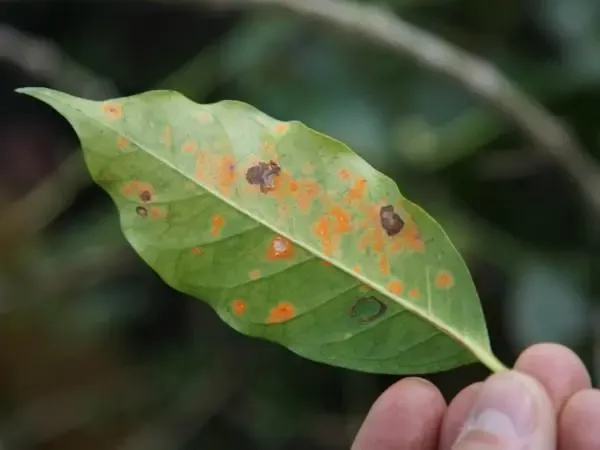
Going back to the late 19th century, coffee-growing regions in the Eastern Hemisphere—including many countries in Asia and Africa—experienced the most severe recorded outbreak of coffee leaf rust. This disaster nearly wiped out the local Arabica coffee trees and gradually shifted the industry’s center westward to the Americas. In response to the threat of disease, some countries turned to planting the more disease-resistant Robusta, while others invested heavily in establishing national coffee research institutions dedicated to breeding varieties that combined disease resistance, high yield, and good flavor. This is also why many regions today have long cultivated specific lab-bred varieties.

Some of the more commonly grown lab-bred varieties in global coffee cultivation today include Kenya’s SL28, SL34, and Ruiru 11, Latin America’s popular F1 hybrid H1, and the widely planted Catuai. Most of these varieties have undergone long-term trials and improvements, possess specific disease resistance and adaptability, and have gradually become the main cultivars in their respective regions.
Take Catuai, for example. It was developed by the São Paulo State Agricultural Institute (IAC) in Campinas, Brazil, through a cross between Mundo Novo and Caturra. The standout traits of Catuai are its compact plant size and high yield, making it highly suitable for dense planting. This has led to its rapid adoption across many countries in the Americas. Its stable productivity and environmental adaptability have made it a top choice for many medium-sized farms.
In East Africa’s Kenya, SL28 and SL34 are the local star varieties. These two varieties originated in the late 1930s when the Kenyan government commissioned the then-Scott Agricultural Laboratories (now known as the National Agricultural Laboratories) to evaluate 42 candidate varieties. The assessment focused on yield, disease resistance, drought tolerance, and flavor performance, with the varieties named using the lab code “SL” followed by a number. SL28 and SL34 stood out for their outstanding cup quality and relatively high yield, though they are also susceptible to certain diseases.
Another important Kenyan variety, Ruiru 11, was developed as a response to the major outbreak of coffee berry disease (CBD) in 1968. That year, the CBD epidemic caused bean production to drop by about 50%, prompting the coffee research institute in the Ruiru region to launch a breeding program aimed at developing a new variety resistant to CBD. After years of effort, the research team constructed a complex parent line with multiple desirable traits from varieties such as K7, SL28, N39, and Rume Sudan. In 1985, Ruiru 11 was finally introduced. This variety is not only immune to CBD and resistant to leaf rust, but also offers stable yields and decent quality—though it is relatively prone to nematode infestation.

Therefore, when selecting coffee beans from the Kenyan region, SL28, SL34, or Ruiru 11 are usually the main varietal options. For example, some well-known roasters’ Kenyan single-origin offerings use these varieties, delivering pronounced berry and citrus notes with bright acidity and rich layers.
As for the F1 hybrid H1, it represents another significant breeding achievement. H1 is the result of an F1 selection program jointly initiated by France’s Centre de Coopération Internationale en Recherche Agronomique pour le Développement (CIRAD) and the Central American Coffee Organization (ROMECAFE), with assistance from CATIE (Centro Agronómico Tropical de Investigación y Enseñanza) and the Inter-American Institute for Cooperation on Agriculture (IIAC). The program screened hundreds of varieties to select parent lines including Caturra, Catuai, Catimor, Sarchimor (a hybrid of Villa Sarchi and Timor), and the ancient African wild variety Rume Sudan. Using artificial pollination techniques, pollen from T5296 (a descendant of Sarchimor) was applied to Rume Sudan. Over five years, 100 new-generation lines were developed, from which 20 promising individuals were selected for further propagation.
H1 is the standout among this first generation of F1 hybrids, resulting from a cross between T-5296 and Rume Sudan. This variety not only delivers excellent flavor performance, but also boasts approximately 22% higher yield than traditional American varieties, along with strong resistance to leaf rust. However, like other varieties, it is also somewhat susceptible to nematodes. Currently, H1 is more widely planted in Costa Rica and is chosen by many specialty coffee farms. When brewed, it often exhibits delicate flavors of tropical fruit, honey, and caramel.
In summary, the concentration of specific varieties in many coffee-growing regions today is not merely a historical coincidence, but the result of the interplay between disease resistance needs, scientific research, and natural adaptability. From Catuai’s high-yield, compact stature, to the classic flavors of SL28 and SL34, to Ruiru 11’s multi-disease resistance, and H1’s high yield and F1 advantages—these lab-bred varieties not only support the stability of the global coffee supply chain but also bring diverse and premium flavor experiences to coffee enthusiasts.
The above content is compiled by CoffeeHunters, a coffee news website.


