







Introduction:An in-depth exploration of the sun-dried coffee beans produced in Alo Village, Bensa Town, a highly regarded area within Ethiopia’s Sidamo region. From the origin of the region’s name and its geographical and climatic characteristics, to the unique traits of the coffee variety and processing methods, this article will take you on a journey to understand how these richly flavored, multi-layered beans make their way from the high-altitude mountains to your cup. It also provides practical V60 pour over parameters to help you fully experience its distinctive aroma and taste.
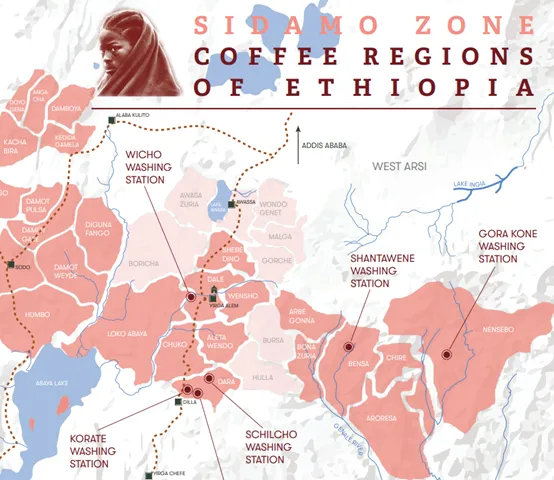
When it comes to specialty coffee from Ethiopia, Sidamo is undoubtedly a name that cannot be overlooked. This region, located on the plateau of the East African Rift Valley, boasts abundant rainfall, suitable temperatures, and fertile soil, giving rise to numerous coffees with distinct floral and fruity notes. Moreover, Sidamo coffees generally exhibit vibrant acidity, a full body, and an enticing combination of spicy and berry-like flavors. In the cupping experiences of coffee enthusiasts, this region is often widely praised for its complex layers and long-lasting aftertaste.
However, the name “Sidamo” has actually undergone a historical and linguistic evolution. The indigenous ethnic group is the Sidama, whose language and culture even include the Fiche Chambalala New Year celebration, which has been recognized by UNESCO as an intangible cultural heritage. Early colonial powers misread or transformed “Sidama” into “Sidamo,” a term that was, to some extent, considered to carry discriminatory connotations. It wasn’t until the 1990s, when Ethiopia implemented ethnic autonomy and federalism, that the Sidama people regained their official name. Yet, because “Sidamo” had already gained international recognition through its coffee, even though the official name is now Sidama, most consumers still commonly use the old term Sidamo.
Among the many micro-regions under Sidamo, Bensa Town in the south has consistently stood out. In the 2020 and 2021 COE (Cup of Excellence) competitions, multiple coffee farms from Bensa Town frequently ranked high, with the town even securing five championship titles in 2021. The town and surrounding areas such as Arbegona, Bura, and Bona Zuria are situated at elevations between 1800 and 2300 meters above sea level, making them typical high-altitude coffee-growing zones. The high-altitude environment not only slows down the ripening process of coffee cherries but also aids in the accumulation of flavor compounds, resulting in coffees that often feature high complexity, balanced sweetness and acidity, and vibrant fruity notes.
The coffee varieties grown in Bensa are diverse, including both local traditional landraces such as Dega, Wolisho, and Kurume, as well as numbered varieties developed by Ethiopia’s Jimma Agricultural Research Center (JARC), such as the renowned 74158 and 74165. The latter have achieved remarkable success in recent COE competitions, demonstrating high quality potential and consistent flavor profiles. These varieties, cultivated in high-altitude environments, are particularly capable of expressing bright acidity and rich complexity.
Bensa offers a wide range of coffee processing methods, including washed, natural (sun-dried), and red honey. Among them, washed Bensa coffees typically exhibit clear acidity, citrus notes, and a clean mouthfeel; while natural processing enhances sweetness and fruity aromas, highlighting intense tropical fruit and berry characteristics. This article focuses on introducing the sun-dried coffee from Alo Village in Bensa Town, which has recently become a focal point of attention among many professional roasters and coffee enthusiasts.
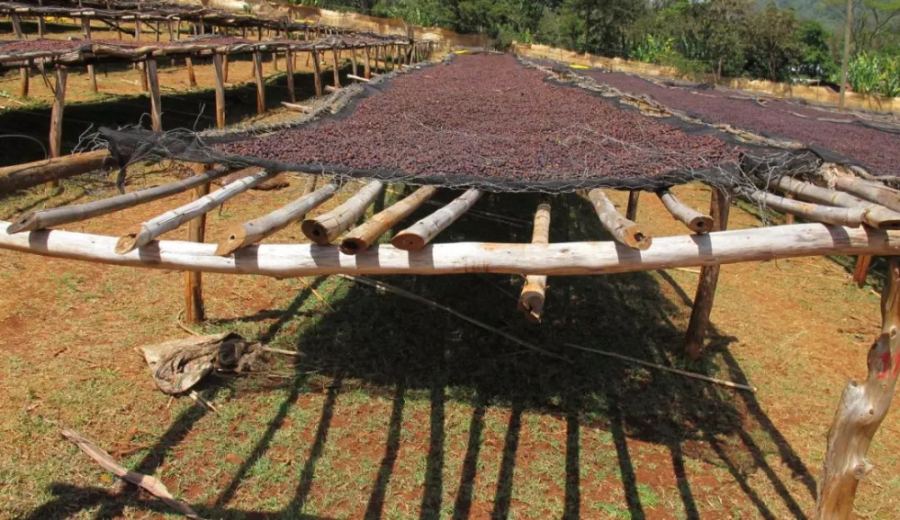
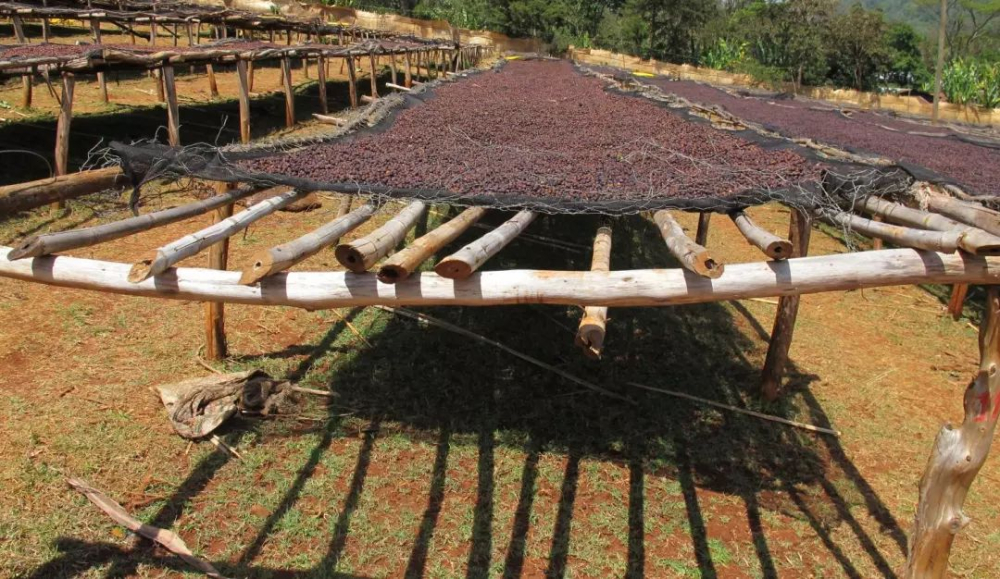
The Alo Village sun-dried coffee is exceptionally meticulous from the harvesting stage. Farmers select only fully ripe coffee cherries, which undergo initial sorting at the Hatessa processing station. During this process, cherries are graded not only by appearance but also by skin color to further eliminate underripe or overripe fruits, ensuring that every cherry entering the sun-drying process reaches the ideal maturity. Next, the cherries are evenly spread on raised beds, and during the first three days, they must be frequently turned—usually every 2–3 hours—to prevent mold or localized overheating, which could lead to undesirable flavors.
The sun-drying process typically lasts 14 to 18 days. During this period, turning frequency and bed thickness are adjusted according to weather conditions to ensure uniform drying of the coffee cherries. The final moisture content must be reduced to 11.5% below a certain level before entering the storage phase. This rigorous processing procedure is key to creating the sweet, aromatic, and well-balanced profile of the Alo sun-dried coffee.
Through cupping, this Ethiopian Alo Village sun-dried coffee reveals an exceptionally captivating floral and fruity profile. The dry fragrance clearly presents notes of magnolia, pineapple, yellow peach, and small Taiwanese mango, accompanied by a gentle fermented sweetness that makes one eager to taste it. Upon brewing, the tropical fruit acidity and sweetness immediately unfold, with distinct flavors of pineapple, passionfruit, and perfumed lemon, paired with a subtle black tea-like richness, offering clear layers and a long-lasting aftertaste. As the temperature cools, characteristics of stone fruits such as yellow peach and dried apricot become more pronounced, while the acidity remains bright, making the overall cup very balanced and dynamic.
For home brewers looking to pour over this coffee, it is recommended to use a V60 filter cone with the following parameters to fully highlight its floral-fruity aromas and full body: set the water temperature to 92–93°C, use 15 gramsof coffee grounds, and aim for a 1:15(grind size recommendation: fine sugar-like consistency, approximately 20-mesh sieve with 78% extraction rate). Employ the three-pour method—start with a bloom using twice the amount of coffee grounds (approximately 30 grams) for 30 seconds, then pour in a circular motion up to 125 grams , wait for the water level to drop, then pour up to 225 grams. The total brew time should be controlled at around 2 minutesto achieve a pour over coffee with clear flavors and distinct layers.
The above content is compiled by CoffeeHunters, a coffee news website.


