







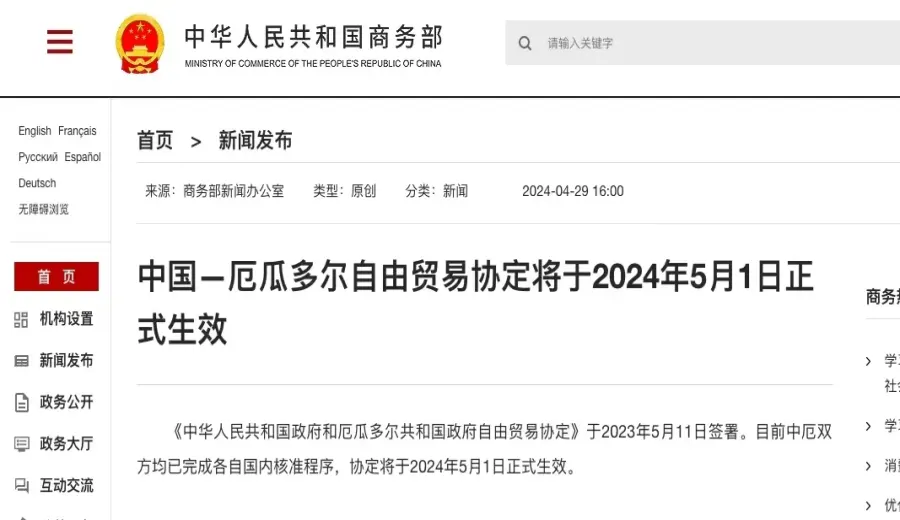
Introduction:Starting from May 1, 2024, the Free Trade Agreement between the Government of the People's Republic of China and the Government of the Republic of Ecuador officially came into effect. Approximately 90% of tariff lines between the two sides will be gradually eliminated, with 60% of them enjoying zero-tariff treatment on the first day of implementation. Key agricultural exports from Ecuador such as coffee, bananas, and cocoa will see their import tariffs in the Chinese market reduced from the current 5%–20% to zero over time, opening up new business opportunities for local exporters. This article details the highlights of the agreement, Ecuador’s current economic challenges, and how this policy will shape the future landscape of coffee trade.
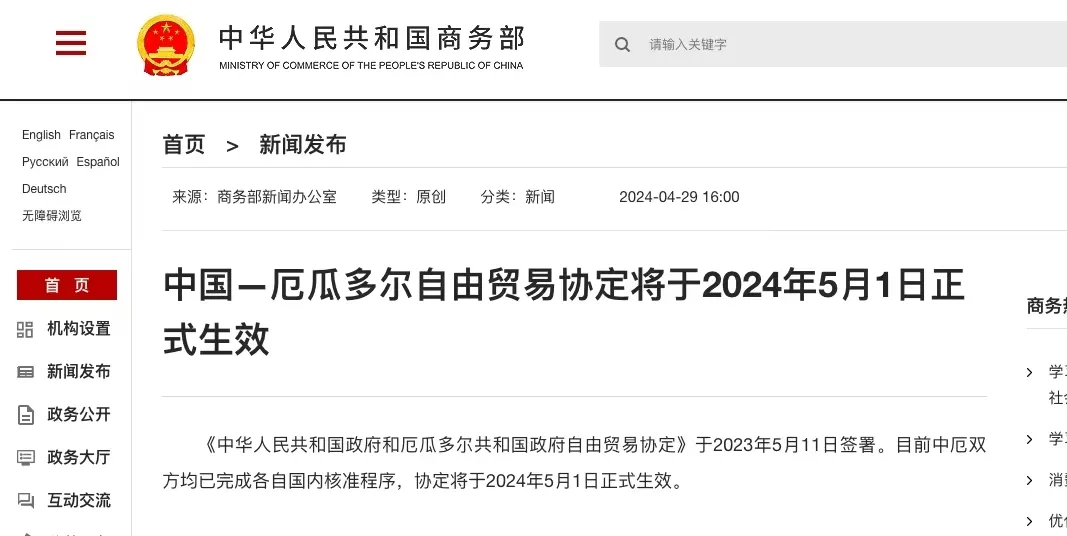
After negotiations, China and Ecuador formally signed the Free Trade Agreement between the Government of the People’s Republic of China and the Government of the Republic of Ecuador on May 11, 2023. Following the completion of their respective domestic approval procedures, the agreement officially took effect on May 1, 2024. This marks a new stage in the economic and trade cooperation between the two countries, and is expected to significantly boost bilateral trade flows, particularly opening up a broader Chinese market for Ecuadorian agricultural exports.
According to the agreement, China and Ecuador will phase out tariffs on around 90% of tariff lines in a stepwise manner. These tariff lines cover the main categories of export goods for both countries, with as much as 60% of them achieving zero tariffs on the day the agreement takes effect. For example, Chinese exports to Ecuador—including plastic products, chemical fibers, steel products, machinery, electrical equipment, home decor, automobiles and parts, as well as lithium batteries—which previously faced import tariffs of 5%–40%, will gradually be reduced to zero. This will help Chinese manufacturers further expand their presence in the Ecuadorian market.
For Ecuador, the agreement is equally significant. Popular agricultural exports to China such as bananas, shrimp, fish and fish oil, fresh and dried flowers, cocoa, and especially coffee—which previously were subject to import tariffs of 5%–20% in the Chinese market—will also gradually see those tariffs eliminated. This will greatly enhance the price competitiveness of Ecuadorian agricultural products in China, helping local farmers and exporters expand their market reach, while offering Chinese consumers more diverse and affordable choices.
In addition to tariff reductions, China and Ecuador will also establish closer coordination mechanisms in multiple trade-related areas, including rules of origin, customs procedures and trade facilitation, sanitary and phytosanitary measures, technical barriers to trade, trade remedies, dispute settlement, investment cooperation, e-commerce, competition policy, and economic cooperation. The implementation of these measures will help improve the transparency, efficiency, and stability of bilateral trade, create a more business-friendly environment for enterprises, and further deepen the economic and trade ties between the two countries.
It is worth noting that Ecuador has faced multiple economic challenges in recent years, including severe domestic droughts and strained diplomatic relations. It is understood that about 75% of Ecuador’s electricity relies on hydropower, but due to the El Niño phenomenon, the country has experienced serious droughts, with water levels in many rivers and reservoirs dropping significantly. Since April 16, power rationing measures have been implemented in various parts of the country, impacting production and exports. In addition, Mexico’s severance of diplomatic ties with Ecuador has also negatively affected trade flows between the two countries, particularly in agricultural exports.
Against this backdrop, the entry into force of the China-Ecuador Free Trade Agreement provides a new growth opportunity for Ecuadorian agricultural exports. Especially for the coffee industry, one of Ecuador’s important cash crops, future access to the Chinese market will benefit from lower tariff barriers. This is expected to attract more Chinese consumers to try its uniquely flavored coffee beans, further expanding its international market presence.
Notably, in recent years, China has also actively pursued zero-tariff treatment with several African countries, including Angola, Gambia, Mali, Madagascar, Mauritania, and the Democratic Republic of the Congo (DRC), covering 98% of tariff lines for products from these nations. These include coffee, palm oil, cotton, cocoa, fruits, seafood, and spices. This move not only promotes China-Africa economic and trade cooperation but also gives global consumers the opportunity to enjoy high-quality agricultural products from diverse origins.
In summary, the implementation of the China-Ecuador Free Trade Agreement will not only enhance the liberalization and facilitation of trade and investment between the two countries, but is also expected to unlock the potential for deeper trade and investment cooperation. It will drive a comprehensive upgrade in the quality of bilateral economic and trade relations, bringing tangible economic benefits and development opportunities for businesses and people in both nations. For coffee enthusiasts, seeing more Ecuadorian coffee options on the market in the future will be one of the direct benefits brought by this agreement.
The above content is compiled by CoffeeHunters, a coffee news website.


