







Introduction:The "Smoke-Toned Oolong" milk tea launched on World Book Day featured a literary collaboration between Lelecha and Yilin Publishing House, with cultural icon Lu Xun as the joint promotional figure. However, the slogan "Old Smoke-Toned, New Youth" sparked widespread controversy. CCTV's official website strongly criticized the campaign for trivializing a cultural figure, leading to the swift removal of related merchandise. This article delves into the incident, examining the creative boundaries and social responsibilities of tea beverage brands when collaborating with historical figures.
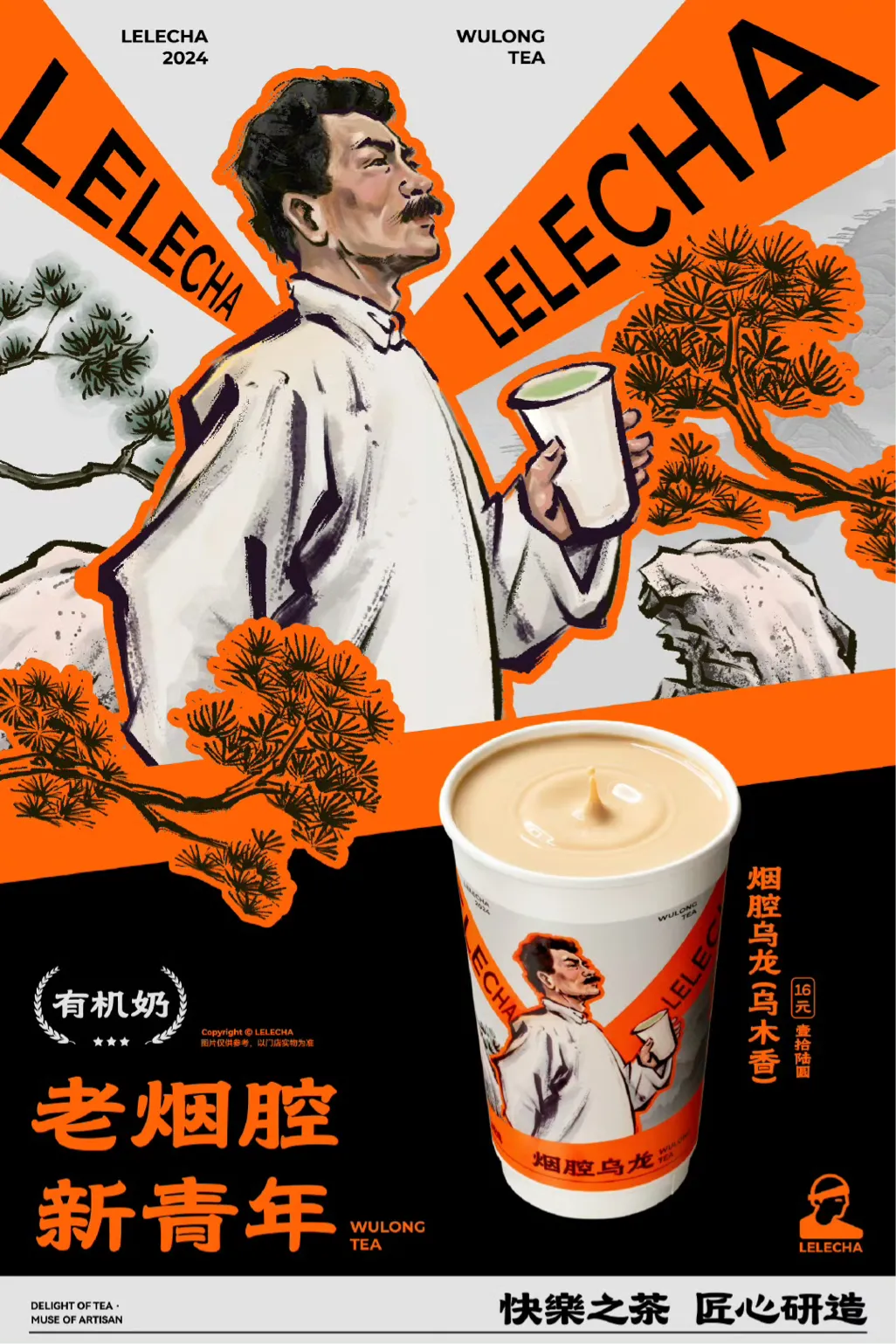
On April 23, World Book Day, Lelecha partnered with Yilin Publishing House to release the collaborative "Smoke-Toned Oolong" milk tea, with the campaign centered around the writer Lu Xun. The product's main visual featured a portrait of Lu Xun holding a milk tea cup with his head held high, set against a backdrop of pine tree elements, adorned with classic quotes from his works. In addition to the drink packaging, the series also included merchandise such as booklets, acrylic stands, and paper bags featuring Lu Xun’s portrait. The slogan "Old Smoke-Toned, New Youth" became the focal point of the controversy.
The term "Old Smoke-Toned" quickly drew discussion, as its pronunciation resembles the Shanghainese dialect term "Old Smoke Gun," which can easily evoke associations with smoking habits. Hu Bao, author of the well-known Shanghainese novel "Longtang," pointed out that "Old Smoke Gun" occasionally carries a derogatory connotation in local daily usage. He called on the "New Youth" of today to focus on inheriting the spiritual essence of Lu Xun, rather than using expressions like "smoke-toned." He believes such wording is inappropriate for commercial advertisements.
CCTV's official Weibo account subsequently posted a critique, directly condemning the collaboration for excessively commercializing the image of a literary master, particularly highlighting the inappropriateness of the term "Old Smoke-Toned." The commentary emphasized that Lu Xun’s works are known for their depth, seriousness, and concern for the nation and its people, and that his overall image is not suitable for commercial, entertainment-driven advertising. It reminded the industry that innovation must have limits, and cross-industry collaborations should not mistake vulgarity for humor.
Faced with public pressure, Lelecha responded swiftly.On April 28, reporters checking Lelecha’s official mini-program found that while the "Smoke-Toned Oolong" product was still available for purchase, it no longer used the special Lu Xun-themed cup design, reverting to the brand’s standard cups.Staff at multiple Lelecha outlets in Shanghai confirmed that most of the collaborative cups and merchandise had sold out by the 27th, and all stores had ceased selling products featuring Lu Xun’s image.
Meanwhile, the collaborative post published by Lelecha’s official Weibo account on April 23 had been deleted, along with other promotional content across official channels. When contacted by reporters, a brand representative stated that the controversial copy and related merchandise had been taken down. As for whether they would be relisted in the future, further arrangements from headquarters were needed, and no clear answer could be provided at the moment.
Since opening its first store in Shanghai in 2016, Lelecha has rapidly risen to fame with star products like the "Dirty Bun" and "Dirty Tea." At the end of December 2022, the brand was acquired by Nayuki for 525 million yuan, which took a 43.64% stake, making it an affiliated enterprise. In April 2023, Lelecha announced the opening of franchised stores to accelerate market expansion. As of April 2, it had 428 stores nationwide, with over 80% concentrated in East China.
In fact, this Lelecha collaboration controversy is not an isolated case. In the past, numerous tea beverage brands have attempted cross-industry collaborations with historical figures or writers. For example, on the same day last year, Heytea collaborated with People's Literature Publishing House to release merchandise featuring the images of Lu Xun, Zhu Ziqing, Hu Shi, and Lin Huiyin. Meanwhile, Shanghai Auntie launched cup sleeve designs featuring Lu Xun’s image when opening a new store in his hometown of Shaoxing.
This incident highlights how tea beverage brands, in seeking creative collaborations, must strike a balance between commercial marketing and cultural respect. How to attract younger consumers while avoiding the excessive commercialization and misinterpretation of historical figures has become a critical issue the industry cannot ignore.
The above content is compiled by CoffeeHunters, a coffee news website.


