







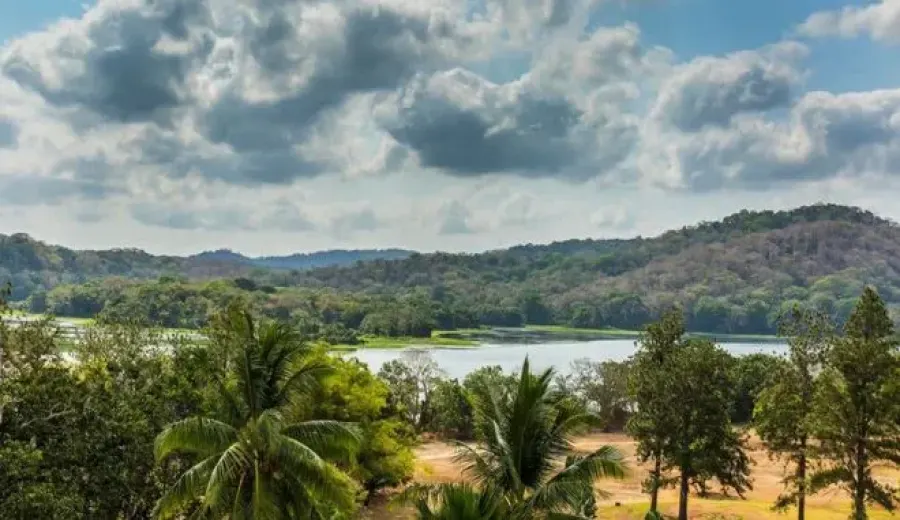
Introduction:According to official Panamanian climate change research, by 2050, local rainfall will significantly decrease while temperatures will continue to rise, directly threatening the growing environment and yields of high-value cash crops such as coffee. This article provides an in-depth analysis of Panama’s climate change trends over the next thirty years, explores the potential impacts on coffee cultivation, and offers key data and practical insights to help readers understand the possible flavor shifts in specialty beans like Geisha.
Panama’s government recently released a simulation study on climate change projections for 2050 to 2070, indicating that due to global warming, the country’s future rainfall patterns will undergo significant changes, with the national average temperature continuing to rise, posing serious challenges to agricultural production. Among them, major export crops such as coffee and bananas will face risks of unstable yields and quality due to shifting climatic conditions.
The report shows that by 2050, the annual rainfall in some key agricultural and hydropower regions of Panama is expected to decrease by approximately 2.80%, and this trend may worsen further by 2070. At the same time, both maximum and minimum temperatures are rising across much of the country, with maximum temperatures projected to increase by 0.8°C to 1.75°C, and minimum temperatures by at least 1.1°C—some areas could see increases of up to 2.18°C by 2070.
Changes in temperature, especially the rise in minimum nighttime temperatures, will directly disrupt the efficiency of photosynthesis in plants, shorten the natural cooling cycle of the soil, and promote the proliferation of pests and diseases, adversely affecting the growth cycle and final yield of crops.Especially in coffee cultivation, even subtle changes in microclimate can alter the flavor profile of coffee beans. For example, the renowned Geisha variety is extremely sensitive to variations in temperature and humidity.
About 1.71 million hectares of Panama’s land are arable, and more than 20% of the labor force is engaged in agriculture-related work. In addition to staple food crops such as rice, corn, and beans, bananas, sugarcane, and coffee are important cash crops in Panama, most of which are destined for export trade. However, as climate change intensifies, the stable supply and quality of these crops will face unprecedented challenges.
In terms of rainfall distribution, the projected annual precipitation change by 2050 is expected to range between -2.82% and +4.38%, and by 2070, this range may expand to -4.04% to +6.87%. Notably, key areas with important hydropower facilities and major agricultural zones in Panama are expected to see significant rainfall decreases, estimated at nearly 2.80%, which not only threatens irrigation water for agriculture but also puts pressure on the country’s energy supply.
Experts point out that due to the influence of the El Niño phenomenon, Panama has experienced a significant drought every three years in recent years. The increased frequency of droughts also directly affects the operation of the Panama Canal—the world’s vital trade route, especially critical for energy and food transportation between North America and Asia. However, due to continuously declining water levels, canal authorities have had to implement vessel restrictions multiple times and even temporarily suspended operations of some hydropower facilities to ensure normal channel operations.
On the other hand, heavy rain and flooding are also non-negligible risks. Under certain climate scenarios, short-duration extreme rainfall events in specific areas will become more frequent, leading to soil erosion, farmland inundation, and damage to infrastructure. As early as 2022, Panama experienced floods caused by persistent heavy rainfall, resulting in damaged farmland and significant economic losses. At that time, the agriculture department warned that flooded fields would pose serious challenges to that year’s crop harvest.
René López, head of the NAP (National Adaptation Plan for Climate Change) project, emphasized that although such climate scenario simulations represent only one possible future pathway, their analytical findings are highly valuable for formulating agricultural policies, adjusting planting strategies, and protecting critical infrastructure. These predictions can help decision-makers prepare in advance to ensure the stability of food security and energy supply.
For coffee enthusiasts around the world, if the unique microclimatic conditions of Panama’s coffee-growing regions—especially the renowned Boquete area—are altered by climate change, it will directly impact the flavor profiles of various specialty coffees, including Geisha. Industry insiders remind consumers to stay updated on regional climate information and try comparing coffee batches from different years to perceive the subtle effects of environmental changes on flavor complexity.
The above content is compiled by CoffeeHunters, a coffee news website.


