







Introduction:Although Ecuador is not a major coffee-producing country, its unique geographical environment gives rise to Arabica beans with a balanced acidity and sweetness. From the highland areas of the Andes Mountains to the Galápagos Islands, the microclimates and varieties of different regions create distinctive flavor profiles. This article provides an in-depth analysis of Ecuador’s major coffee-growing regions, commonly cultivated varieties, and the evolution of processing techniques from traditional to modern methods, along with practical bean selection advice to help you find beans suited to your brewing style.
Among the many South American coffee-producing countries, Ecuador may not be as well-known as Brazil or Colombia, but its coffee potential should not be underestimated. This equator-straddling nation, with its high-altitude volcanic soils in the Andes and diverse microclimates, produces Arabica coffee beans that strike a balance among acidity, sweetness, and bitterness. From the northern highlands to the southern province of Loja, and even the Galápagos Islands in the Pacific Ocean, Ecuadorian coffee is gradually moving toward specialty-grade quality. This article will detail the geographical distribution of the country’s coffee-growing regions, major cultivated varieties, the evolution of processing methods, and offer practical bean selection references.
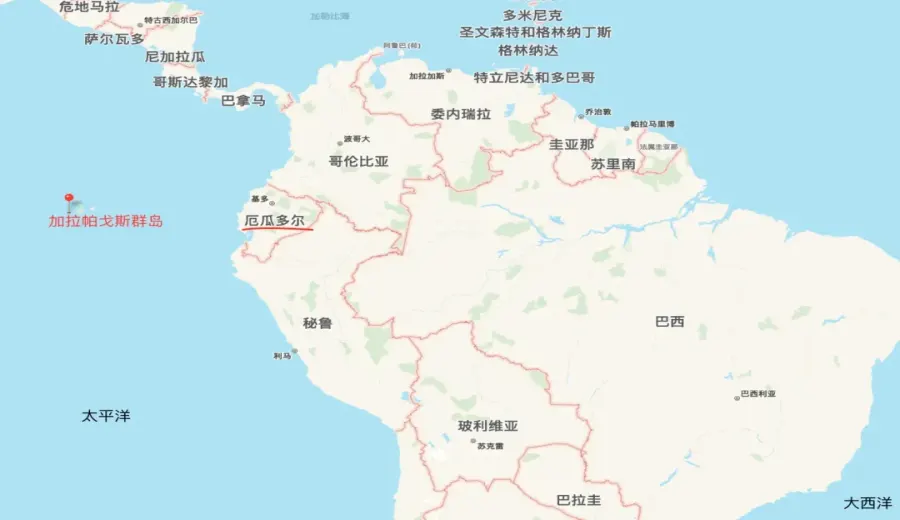
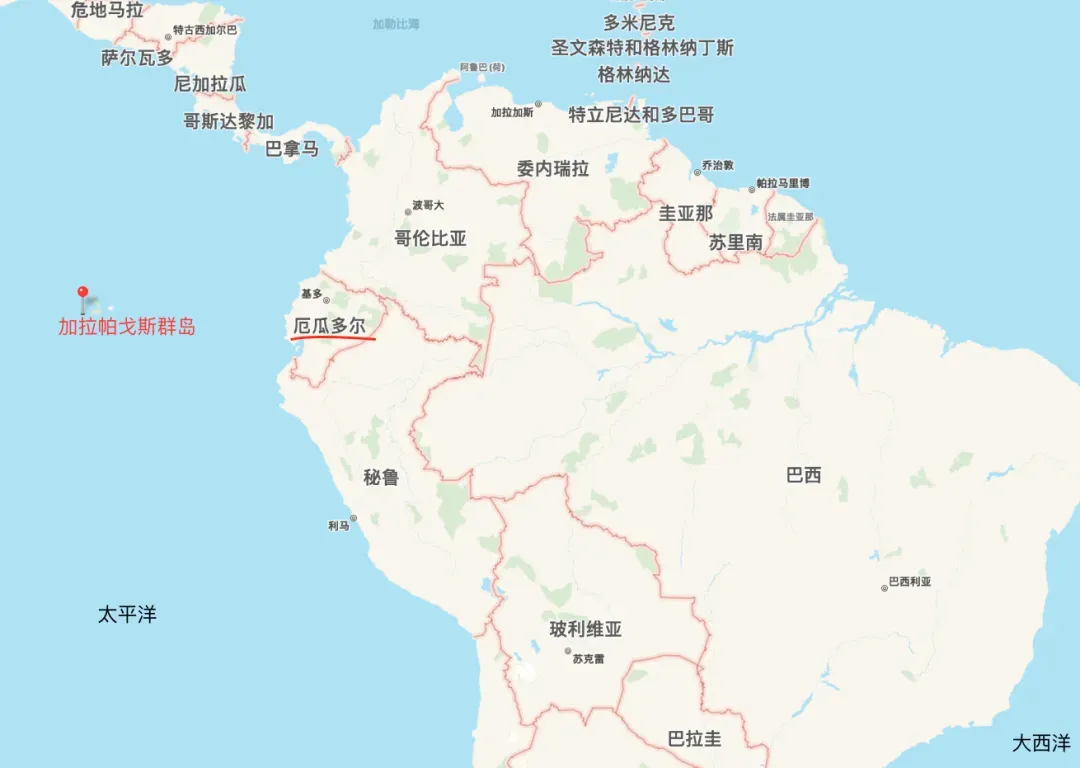
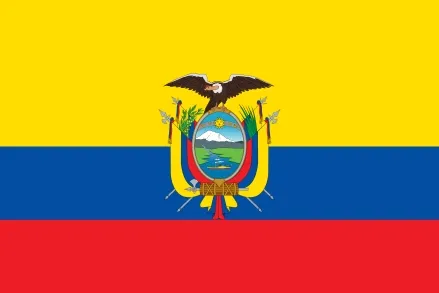
The Republic of Ecuador is located in northwestern South America, bordering Colombia to the north, Peru to the south, and the Pacific Ocean to the west, covering a land area of 256,370 square kilometers, including approximately 8,010 square kilometers of island territory. Its flag consists of three horizontal stripes in yellow, blue, and red, with yellow occupying half the area, symbolizing the country’s resources and sunshine; blue represents the sky and ocean; and red commemorates the martyrs who fought for independence. The national coat of arms features Chimborazo, Ecuador’s highest peak, alongside the Mayan-inspired "Inti Raymi Sun" and the zodiac signs, showcasing its historical and geographical characteristics.
The country’s terrain is diverse, divided into four major regions: the western coastal area, the central Andean highlands, the eastern Amazon basin, and the Galápagos Islands. The western coastal region has a tropical rainforest climate, with temperatures around 23–25°C; the central mountainous basins feature a tropical savanna climate, while the mountainous areas have a subtropical forest climate, with elevations above 4,000 meters remaining snow-covered year-round and the rainy season concentrated from December to June of the following year; the eastern Amazon region is hot, humid, and rainy throughout the year, with annual rainfall reaching 2,000–3,000 millimeters. Such a climate, along with fertile volcanic soils, provides ideal conditions for coffee cultivation.
Ecuador’s Arabica coffee is primarily grown in the highland volcanic areas of the central Andes, with a harvest season from approximately March to October, known for its balanced flavors. The northern highlands, including the provinces of Carchi, Imbabura, and Pichincha, produce coffee renowned for its balanced acidity, sweetness, and bitterness.Southern Highlandsencompass the provinces of Loja, Azuay, and Zamora-Chinchipe, which feature higher altitudes, moderate acidity and sweetness in the coffee, and delicate aromas. Among them, Loja Province, with elevations up to 2,100 meters, has a harvest season from June to September. It was an important city during the Spanish colonial period and the first region in the country to combine hydroelectric and wind power generation; Zamora-Chinchipe Province, at an elevation of about 1,900 meters, has a harvest season from May to August.
Pichincha Province, named after the Pichincha Volcano within its borders, boasts rich volcanic soils and water resources from the Alambi River, making it an important origin of the Sidra variety. The Galápagos Islands (also known as the Turtle Islands), although planted at elevations of only 200–300 meters, have a microclimate similar to a high-altitude environment, with temperatures not exceeding 30°C. There are two harvest seasons per year, and the region employs fully organic farming practices without pesticides. Production is scarce but the quality is unique, with Bourbon as the main variety.
Robusta coffee is mostly planted in the lowland western provinces of Manabí, Guayas, and El Oro, as well as the eastern provinces of Napo and Orellana, where the hot and humid climate is suitable for Robusta growth.
Ecuador’s cultivated Arabica varieties include Bourbon, Typica, Sidra, and Caturra, among which Bourbon remains the mainstream.In the early days, the quality of the country’s coffee was relatively unstable, and some producers, in order to save costs, harvested coffee cherries directly after they were fully ripe on the tree, resulting in what is called the “cafe en bola” (ball coffee) processing method, leading to significant fluctuations in quality. With the rise of the specialty coffee trend, Ecuador has collaborated with international research institutions to improve processing techniques. Currently,washed processing is the mainstream, and in COE (Cup of Excellence) competitions, most award-winning batches use washed or anaerobic washed processes.
For consumers looking to try Ecuadorian coffee, it is recommended to prioritize washed Sidra batches from Pichincha Province for their rich flavor layers; or opt for organic Bourbon from the Galápagos Islands to experience its unique island character. These two beans can fully showcase the regional distinctiveness and refinement of Ecuadorian coffee.
The above content is compiled by CoffeeHunters, a coffee news website.


