







Introduction:Jamaican Blue Mountain coffee is renowned worldwide for its rarity and delicate flavor profile. The geographical conditions, regulatory systems, and classic coffee varieties behind it are even more worthy of in-depth exploration. This article will take you from Jamaica’s natural environment to understand the legal boundaries of the Blue Mountain growing region and its strict quality control mechanisms, explore the cultivation advantages of the Clifton Estate, analyze the characteristics of the Typica variety, and share practical brewing experiences — allowing you to fully grasp the essence of this top-tier coffee.
Although located in the Caribbean, Jamaica is one of the few places in the world capable of producing exceptional coffee. Among them, Blue Mountain coffee, with its limited yield and long cultivation history, is hailed as the finest in the coffee world. Not only is its production limited, but its unique flavor and growing environment have also made it the dream taste for many coffee enthusiasts.
Jamaica is the third-largest island in the Caribbean, situated in the northwest of the region, facing Haiti across the Jamaica Channel. Geographically, the eastern part is mainly mountainous, while the central and western regions consist of hills and limestone plateaus. There are not many surface rivers, but there are numerous caves. The climate here is tropical rainforest, with the rainy season concentrated in May to June and September to November each year, and the dry season from December to March of the following year. The annual average temperature across the island is about 27°C. The central and northern parts receive abundant rainfall, with temperatures steadily maintained between 22 and 32°C. Coupled with the fresh air, high humidity, frequent fog, and rainfall in the high-altitude mountainous areas, these factors together create an environment ideal for cultivating premium coffee.
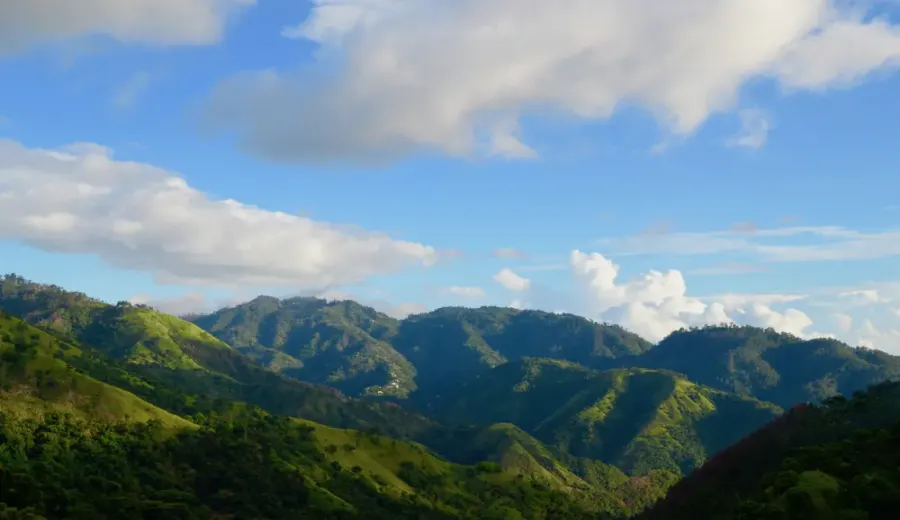
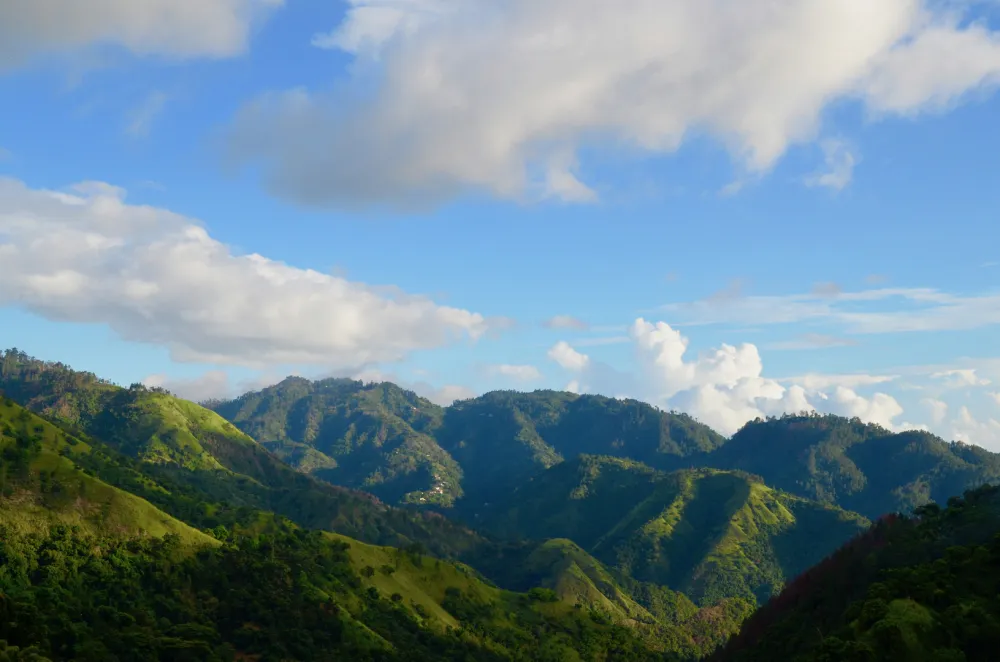
The Blue Mountain coffee growing region is located in the Blue Mountains of eastern Jamaica, at elevations between 1,000 and 1,700 meters. This mountain range is named for the blue-hued glow reflected from its peaks under sunlight, resembling the ocean. As a volcanic mountain range, its soil is rich in minerals. With fresh air, consistently humid climate, and year-round foggy conditions, it provides ideal growing conditions for coffee trees. The main variety planted locally is Blue Mountain Typica, a strain that has adapted and evolved over more than two hundred years in the region, exhibiting relatively stronger disease resistance compared to the original Typica.
Since the late 19th century, the Jamaican government has been committed to improving the quality and management of the coffee industry. In 1891, official regulations were enacted to promote the popularization of coffee cultivation techniques and the improvement of infrastructure, ensuring that coffee could undergo centralized processing and grading. In 1944, the Central Coffee Clearing House was established to oversee the review of all exported coffee. By 1950, the Jamaica Coffee Industry Board (CIB) was officially formed. This organization merged with other entities in 2018 to become JACRA (Jamaica Agricultural Commodities Regulatory Authority). Nowadays, every barrel of Blue Mountain coffee beans must go through its rigorous scrutiny. The original Coffee Industry Regulation Act also clearly defined the "Blue Mountain Coffee Growing Region," limiting the designation of Jamaican Blue Mountain coffee to only Typica variety grown within four administrative regions — Saint Andrew, Saint Thomas, Portland, and Saint Mary — at elevations between 915 and 1,700 meters.
Among the many Blue Mountain coffee estates, the Clifton Estate is considered one of the representatives, with a history dating back to the mid-18th century (around 1750). The estate’s coffee planting areas and processing facilities are located at high altitudes with an average elevation of about 1,310 meters. This uniquely advantageous location allows it to enjoy ample sunlight, abundant precipitation, and mineral-rich volcanic soil — providing an exceptionally ideal growing environment for coffee trees.
It is worth mentioning that Blue Mountain coffee is one of the very few coffee types exported in wooden barrels. Only Jamaican Blue Mountain (divided into No. 1 to No. 3 and PB grades) and Jamaican High Mountain (including High Mountain Supreme and High Mountain PB) are permitted to use wooden barrels. The barrel specifications come in three sizes: 70 kg, 30 kg, and 15 kg. Among them, Blue Mountain No. 1, as the highest grade, must meet a screen size of 17 or above, with a defect ratio not exceeding 2%, and moisture content controlled between 10% and 12.5%. The barrel lid is stamped with an exclusive trademark. Other grades of Blue Mountain coffee are exported uniformly in 60 kg jute sacks.
The primary variety planted for Blue Mountain coffee is Typica, which, along with Bourbon, is one of the oldest coffee varieties, both originating from southwestern Ethiopia. Typica coffee trees have ridge-shaped leaves with sharp tips, green or slightly bronze-colored foliage, longer fruit node spacing, and mostly red fruits when ripe, with slender-shaped coffee beans. This variety prefers high-altitude environments, and Typica grown at higher elevations often delivers superior flavor, though it tends to have lower yields and is more susceptible to diseases such as leaf rust, nematodes, and berry diseases. Currently, besides Jamaica, Typica can also be found in countries such as Peru and Papua New Guinea.
From a practical brewing perspective, a certain coffee brand’s offering of Jamaican Blue Mountain No. 1 coffee beans — processed using the washed method and medium-to-dark roast — showcases a rich mouthfeel while retaining a hint of gentle fruit acidity. It is recommended to use a KONO filter, with a 1:15 coffee-to-water ratio, and brew at 90°C. During the brewing process, you can first detect a subtle floral aroma, followed by a delicate citrusy acidity upon tasting, then layers of nuttiness and cocoa emerge. The overall mouthfeel is smooth and the flavor well-balanced — making it an excellent choice to experience the classic flavor profile of Blue Mountain coffee.
The above content is compiled by CoffeeHunters, a coffee news website.


