








Introduction:An in-depth exploration of the characteristics of the four major coffee-growing regions in Papua New Guinea, an analysis of the most representative Typica variety in the area, and a detailed breakdown of the flavor profile and optimal brewing parameters of the Bird of Paradise coffee beans from Sigri Estate — providing pour over enthusiasts with a comprehensive bean selection and extraction guide.
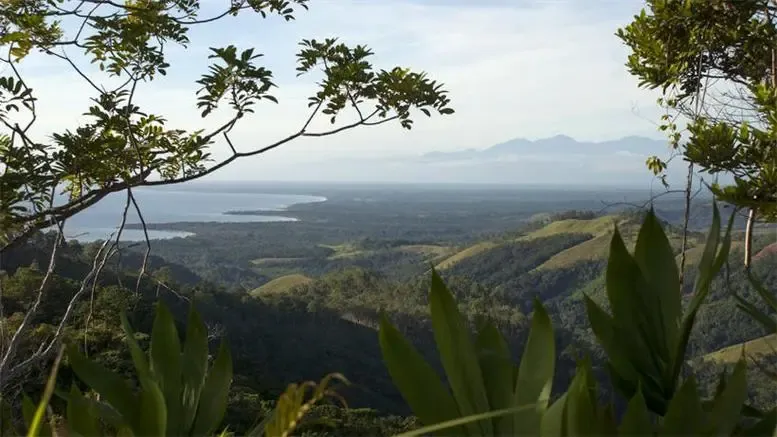
Located in the southwest Pacific, Papua New Guinea is an island nation composed of more than 600 islands. It borders Indonesia to the west and Australia to the south. The entire territory is mountainous and boasts rich volcanic soil and high rainfall, creating a natural environment highly suitable for coffee cultivation. The country’s coffee-growing regions are mainly concentrated in the Western Highlands, Eastern Highlands, Chimbu, and Jiwaka — among which the Typica variety is the most renowned. Due to its growing environment being similar to that of Jamaica Blue Mountain, it is often referred to as the "Little Blue Mountain." Among them, the Bird of Paradise coffee beans produced by Sigri Estate are a classic example of washed Typica.

Papua New Guinea, officially known as the Independent State of Papua New Guinea, is located in the South Pacific and includes numerous large and small islands, over 600 of which are scattered across vast seas. The country shares a western border with Indonesia and faces Australia across the Torres Strait to the south, forming part of the Melanesian archipelago. Not only is its natural landscape magnificent, but the design of its national flag is also rich in symbolism. Divided diagonally into red and black sections, the red represents courage and strength, with a golden bird of paradise (also known as the national bird and a symbol of freedom and hope) depicted above. The black section features white stars of the Southern Cross, highlighting its location in the southern hemisphere.
The country covers an area of approximately 462,800 square kilometers, with a terrain dominated by mountains. The central region features the Central Mountain Range, while parallel mountain ridges are found in the north and south, and the southern part consists of plains and lowlands. The climate is mainly divided into two types: tropical rainforest climate in lower-altitude areas and mountain climate at elevations above 1,000 meters. The rainy season is concentrated from November to April of the following year, while the dry season spans from May to October. Coastal areas have average temperatures ranging between 21–32°C, slightly cooler in mountainous regions by about 5–6°C. Annual rainfall can reach up to 2,500 mm, combined with fertile volcanic soil, creating ideal conditions for coffee cultivation.

Currently, coffee cultivation in Papua New Guinea is mainly distributed across four major regions: Western Highlands, Eastern Highlands, Chimbu, and Jiwaka. Among these, the Western and Eastern Highlands are the primary areas for growing the Typica variety, with occasional small amounts of Catimor and Bourbon. The Western Highlands Province is the largest and most densely populated coffee-producing region in the country, with coffee generally grown at altitudes between 1,000 and 1,800 meters. Well-known production areas such as the Waghi Valley in Mount Hagen are also home to Sigri Estate. The Eastern Highlands Province is located in the central part of the country, traversed by the Bismarck Mountain Range, with a wider range of growing altitudes extending from 400 meters up to 1,900 meters. Many small-scale coffee farmers are concentrated in the northern valleys, who send their harvested coffee cherries to local processing facilities after the harvest season.
Although Chimbu Province accounts for only 7.47% of the country’s total coffee production, its mountainous terrain produces coffee that often exhibits complex flavors such as dark chocolate, red apple, and stone fruit, making it quite distinctive. Jiwaka Province is located in the central highlands and is home to the Waghi River, surrounded by steep volcanic mountain ranges on both sides. It is the country’s third-largest coffee-producing region, contributing about 12% of the total output, with planting elevations mostly between 1,400 and 2,000 meters. The high-altitude characteristics give the coffee from this area distinct regional flavors.
When discussing coffee in Papua New Guinea, one cannot overlook the Typica variety. This ancient variety, as renowned as Bourbon, originated in the southwestern part of Ethiopia. Its plant characteristics include slender leaves, sharp leaf tips, colors mostly green or bronze, longer fruit internodes, and mostly red mature fruits, with the coffee beans being slender in shape. Typica thrives in high-altitude environments. Although its yield per unit is relatively low and it is susceptible to threats such as leaf rust, nematodes, and berry diseases, it can exhibit extremely high flavor potential under suitable conditions. In addition to Papua New Guinea, this variety is also found in Peru, Jamaica, and other places. The island-like climate, volcanic soil, and high-altitude geographical conditions similar to those of Jamaica are key reasons why it is hailed as the "Little Blue Mountain."
Taking the Bird of Paradise coffee beans produced by Sigri Estate as an example, this washed Typica from the Western Highlands is grown at altitudes exceeding 1,500 meters and refined through the washed processing method, showcasing an exceptionally balanced flavor profile. When medium-dark roasted, it clearly delivers rich notes of caramel, cocoa, and almonds, with a smooth and full-bodied mouthfeel. As the temperature drops, a gentle citrus-like acidity can be appreciated. The overall performance is layered and well-defined, making it suitable for coffee lovers who enjoy delicate flavors and balanced taste profiles.
If choosing to brew this coffee using the pour over method, it is recommended to use a KONO filter cone, with a coffee-to-water ratio set at 1:15 and water temperature controlled around 89°C. These extraction parameters can fully highlight its sweetness and nutty characteristics, while retaining moderate acidity, resulting in a more three-dimensional overall flavor. Note that pouring should be done in stages, with a pre-wetting bloom followed by steady pouring, which helps achieve a complete release of the coffee’s flavors.
The above content is compiled by CoffeeHunters, a coffee news website.


