








Introduction:Want to easily brew a rich-flavored, refreshing cold brew coffee at home, but always feel your results aren’t as professional as those from coffee shops? In fact, by mastering key steps — including appropriate steeping time, suitable coffee bean selection, correct stirring methods, and precise filtration techniques — you can significantly improve the quality of your cold brew. This article details the four core elements that influence cold brew flavor and provides practical advice and parameters, so you can enjoy a professional-grade iced coffee experience at home from now on.
As summer arrives, cool and refreshing cold brew coffee becomes the go-to pick-me-up for many. Don’t want to wait in line at cafés, but still hope to enjoy a uniquely flavored iced coffee anytime at home? Actually, making cold brew isn’t very difficult — you only need coffee beans, water, an airtight container, and a refrigerator to get it done. However, many people who follow online tutorials often find their homemade cold brew lacks the rich, smooth taste of café versions. So what’s going wrong?
In fact, the flavor performance of cold brew hinges on four key details: control of steeping time, selection of coffee beans, stirring before and after extraction, and precision in filtration. Mastering these elements can effectively enhance the complexity and mouthfeel of your cold brew.

Cold brew is made by mixing ground coffee with cold or room-temperature water, then letting it sit in a low-temperature environment (around 4–10°C) for several hours, before filtering out the grounds using a filter medium to obtain a refreshing, low-acid iced coffee. This brewing method doesn’t require heat — just a clean airtight jar, water, and a refrigerator. It’s perfect for summer enjoyment.
Compared to pour over or espresso brewing, cold brew has a higher margin for error. Whether it’s coffee-to-water ratio, grind size, or even steeping time within a certain range, you can usually still produce cold brew with decent flavor. But if you’re aiming for better taste and aroma, there are still several key aspects to watch.
Generally, light to medium roasted coffee beans are more suitable for cold brew. These beans have brighter acidity and pronounced fruity and floral characteristics, which can showcase richer layers under low-temperature extraction. In contrast, dark roast beans often feature intense flavors with smoky undertones, making it harder to highlight subtle traits in cold brew.
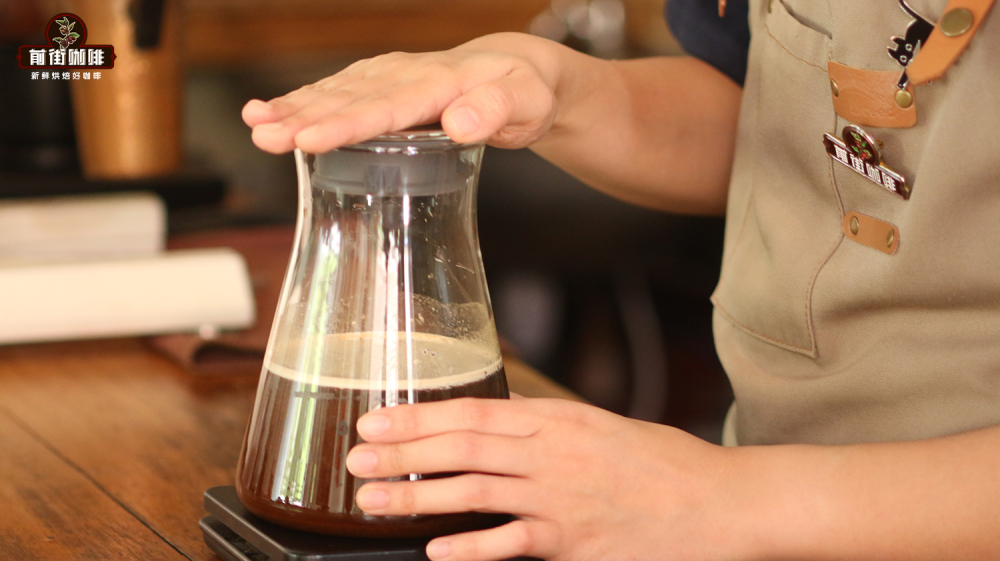
However, some coffee enthusiasts report that even when using the same beans and recipe, their homemade cold brew differs noticeably in flavor from commercial shop versions. The following commonly overlooked details may be the key factors affecting your cold brew results.
1. Recommended steeping time: 8 to 18 hours
Because cold brew uses cold water for steeping, the extraction process is much slower than hot water brewing. This means we need more time to allow the aromatic compounds and sweet-and-sour components in the coffee to fully release, while avoiding over-extraction or under-extraction. The generally recommended steeping time is8 to 18 hours, with the most ideal range typically falling between10 to 16 hours.
Experiments have compared how different steeping times affect cold brew flavor: samples steeped for 4 hours often have weak aroma and taste as light as water; those steeped for 24 hours tend to develop noticeable over-extracted bitterness. Meanwhile, coffee steeped for10 to 16 hoursusually achieves a good balance of sweet and sour with a rich mouthfeel. If you’re worried about forgetting the time, you can start steeping between 7–9 PM and filter it between 7–9 AM the next day, naturally falling within the safe range of 10 to 14 hours.
2. Avoid using overly fresh coffee beans
Many believe “the fresher the beans, the better,” but this isn’t necessarily true for cold brew. Freshly roasted coffee beans contain a lot of carbon dioxide, which can hinder the release of aromatic compounds. Especially in the cold, static environment of cold brew, these gases are even harder to dissipate naturally, reducing extraction efficiency.
Therefore, it’s recommended to use coffee beans that areat least 10 days post-roastfor cold brew. This not only helps with aroma release but also allows the coffee’s layers to express more fully. If you prefer fruity and fresh notes, choose washed medium-to-light roast beans; if you like sweetness-forward flavors, honey-processed beans or specialty regional blends are also great options.
3. Stir thoroughly before and after extraction
Many people, when making cold brew, simply add water and place it in the fridge without stirring — overlooking the importance of agitation. Without stirring, coffee grounds tend to settle at the bottom, leading to uneven contact with water. Some grounds don’t get effectively extracted, resulting in a final coffee that’s weak in flavor or has sediment. Therefore, it’s advised to stir the coffee and water mixture after combining them, using a stirring stick, long spoon, or simply shaking the container to ensure all coffee grounds are evenly saturated. After steeping, give it another gentle stir before filtering to help improve overall extraction uniformity and final mouthfeel.
4. Double filtering for smoother, cleaner taste
Filtration is one of the most direct steps affecting the mouthfeel of cold brew. Common filtering tools include filter screens, filter paper, French press filters, or metal filters — each varies in pore size and ability to block fine particles and oils. Even seemingly fine filters may still let through extremely fine particles, causing an oily sheen on the coffee surface and a slightly rough texture.
To achieve a smoother, clearer drinking experience, it’s recommended to perform a second filtration with high-density filter paper after the initial filtering. This effectively traps ultra-fine particles and condensation oils. After filtering, let the coffee liquid sit in the refrigerator for 3–4 hours to allow flavors to further stabilize and integrate, resulting in a rounder, more layered taste.
The above content is compiled by CoffeeHunters, a coffee news website.


